Target faces uneven labor markets as unemployment varies by state
Target’s hiring and retention pressure this summer will vary sharply by state, from tight labor in low-unemployment markets to easier applicant flow in softer ones.
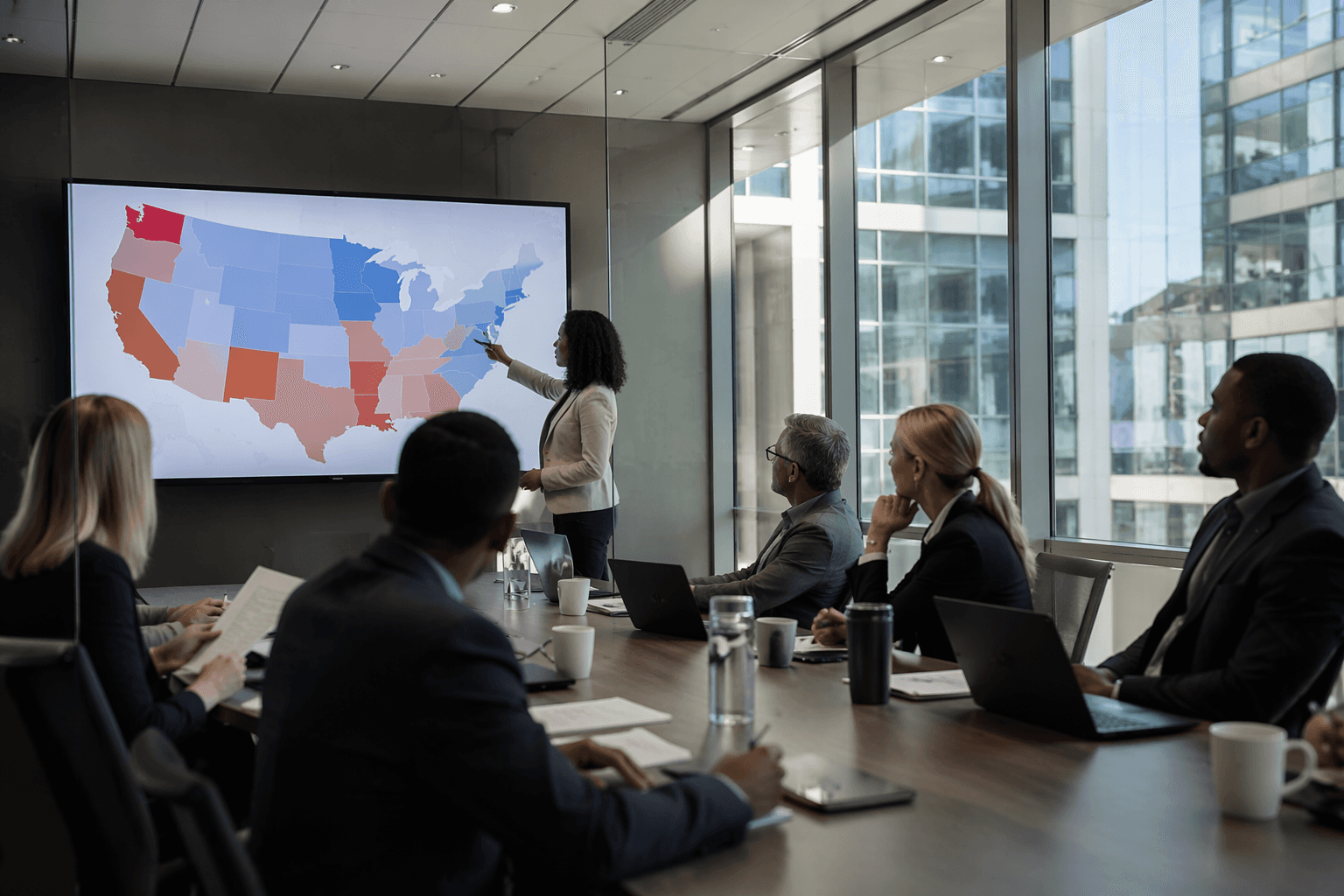
In May, South Dakota’s unemployment rate was 2.1 percent, while the District of Columbia stood at 6.1 percent and California at 5.3 percent, a spread that can change how fast applicants appear, how hard retention gets and how much wage pressure managers feel on the floor. A Target store in South Dakota is not hiring in the same labor market as one in California or Washington, D.C.
The state map is still split
The Bureau of Labor Statistics’ May summary shows a labor market that is stable on the surface but uneven underneath. Unemployment rates fell in only six states, rose in two and held steady in 42 states and the District of Columbia, while the national rate stayed at 4.3 percent, unchanged over the month and over the year.
Eighteen states had unemployment rates below the national figure, while seven states and the District of Columbia were above it. For Target, that means the same pay band can feel generous in one market and merely competitive in another.
The payroll side is just as mixed. Nonfarm employment increased in only two states and was otherwise essentially unchanged, so the job market is not heating up in a way that would quickly widen labor supply everywhere. Payroll employment is measured where establishments are located, while unemployment is measured where people live, so a store’s staffing reality does not always match the headline for its state.
What that means for Target’s stores and supply chain
Target’s footprint makes this uneven backdrop more than an abstract economic story. The company reported 1,995 U.S. stores and 70 supply chain facilities as of January 31, 2026, and said its U.S. hourly team members in stores and supply chain facilities, who make up the vast majority of the workforce, start in a wage range of $15 to $24 an hour. That means local labor conditions can hit nearly every part of the business, from front-end coverage to backroom work to distribution and sortation.
In a low-unemployment state such as South Dakota, hiring tends to be the harder lift because the applicant pool is tighter and competing employers are chasing the same workers. In higher-unemployment markets such as California or the District of Columbia, the candidate flow can be stronger, but managers can still face turnover, commute and wage pressure if a store is not the most attractive option in the area.
The six states that saw jobless-rate declines in May, Delaware, Massachusetts, Ohio, Rhode Island, South Carolina and South Dakota, are worth a closer look because they point to pockets where labor conditions may already be tightening again. Alabama and Kentucky moved the other way with rate increases, which can make those markets easier for hiring but not necessarily easier for keeping people once they are trained.
Why wage pressure may feel different store to store
Target’s own pay structure gives the company room to compete, but it does not erase local pressure. The starting wage range of $15 to $24 an hour has to work in markets where unemployment is low and worker options are broad, and in markets where unemployment is higher but retention can still be challenged by transportation, hours and competing service jobs.
The company is also trying to reset its broader operating model under CEO Michael Fiddelke. In Target’s 2025 annual report, Fiddelke said his focus is on getting Target back to growth, and Target’s March 2026 strategy update said the company will increase payroll and training as part of its growth plan for 2026 and beyond.
What to watch next
The next state unemployment reading arrives on July 21, 2026, when the BLS is scheduled to release June data at 10:00 a.m. Eastern time.
This article was produced by Prism’s automated news system from verified source data, official records, and press releases, then run through automated quality and moderation checks before publishing. The system is built and supervised by the people who set the standards it runs under. Read our full AI policy.
Did this article answer your question?