Target Hiring Remains Competitive as Job Openings Hold Steady
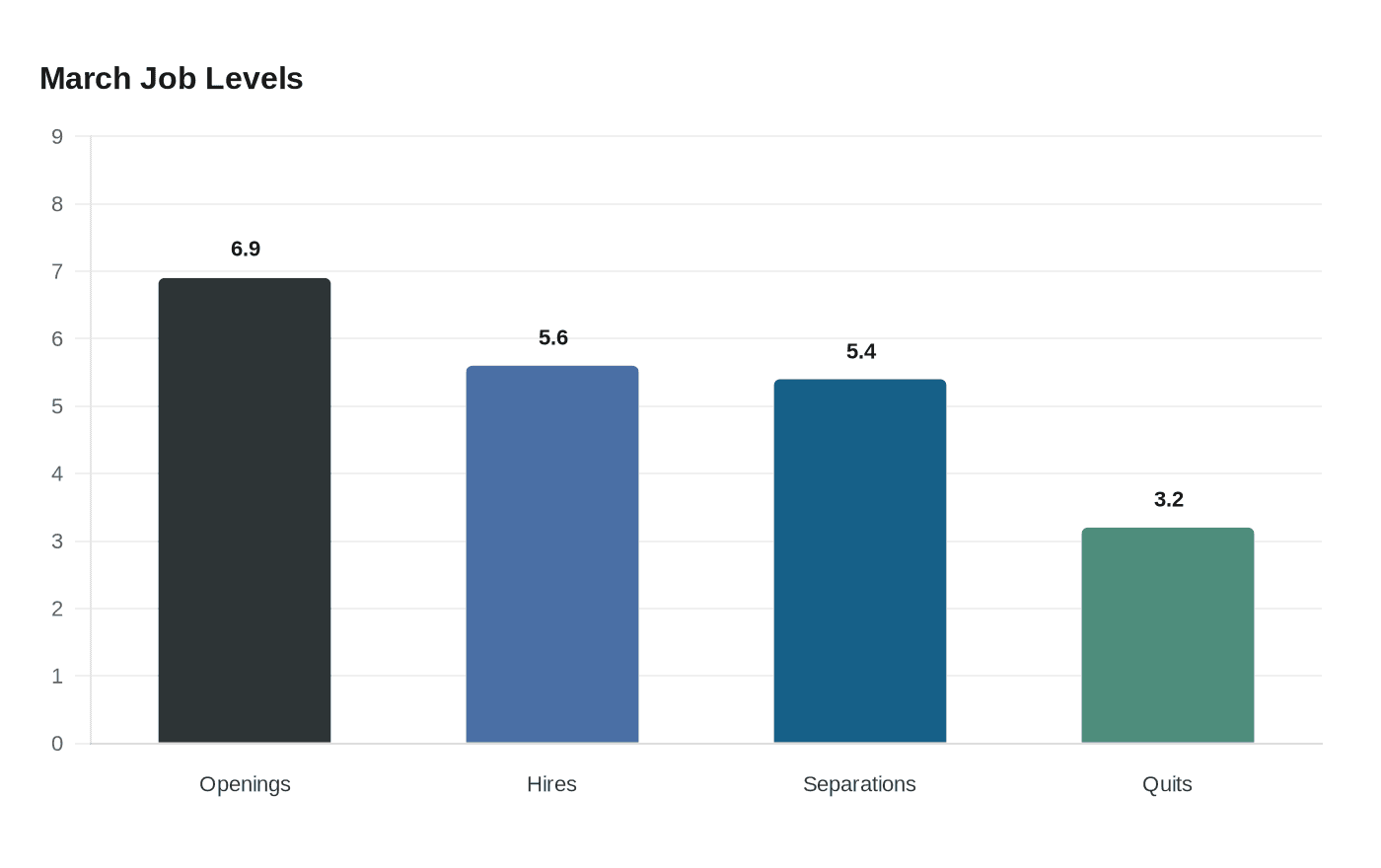
Job openings held at 6.9 million while quits stayed at 3.2 million, keeping pressure on Target stores, DCs, and schedules.
Target’s staffing challenge did not ease much in March. The latest labor turnover data showed job openings unchanged at 6.9 million, hires rising to 5.6 million and total separations holding at 5.4 million, a sign that employers are still filling roles but not in a labor market loose enough to relax on pay, scheduling or manager quality.
For Target leaders, that is the practical read: recruiting remains active, and so does turnover pressure. The Bureau of Labor Statistics said the March openings rate was 4.1 percent and the hires rate was 3.5 percent, while quits held at 3.2 million, little changed from February and down 285,000 from a year earlier. Workers still have options, just not quite the same amount of leverage they had when the post-pandemic labor scramble was at its peak.
The pressure points matter inside Target stores and distribution centers because the same labor pool is being pulled by frontline service and logistics jobs. BLS said hires increased in transportation, warehousing and utilities by 108,000 and in accommodation and food services by 124,000. That kind of movement can complicate scheduling in a store where cashiers, fulfillment workers, inbound teams and order pickers all depend on enough coverage to keep shifts from stacking up on the same people.
Target’s own scale shows why the JOLTS report matters so much. As of January 31, 2026, the company said it employed about 415,000 full-time, part-time and seasonal team members, and its stores fulfilled more than 97 percent of total Merchandise Sales in each of the last three years. With stores carrying that much of the company’s sales engine, a weak week of hiring or an unexpected run of quits can spill quickly into guest service, fulfillment timing and overtime.
Target also says its U.S. hourly team members in stores and supply chain facilities have a starting wage range of $15 to $24 an hour, which gives the company a real tool in a competitive market. But pay is only one part of the equation. The labor data suggests schedule stability, training and a path to move up inside the company will still decide whether experienced team members stay long enough to make that wage range work for both sides.
The March report also landed after a firmer January than first estimated. The BLS revised January job openings up by 294,000 to 7.2 million, hires up by 53,000 to 5.3 million and total separations up by 39,000. That matters because it suggests the spring hiring season began from a sturdier base than earlier numbers showed, even if March itself was more steady than hot. Against Target’s reported full-year 2025 adjusted earnings per share of $7.57, down from $8.86 in 2024, the message is clear: management still has to earn stability the hard way, one shift at a time.
This article was produced by Prism’s automated news system from verified source data, official records, and press releases, then run through automated quality and moderation checks before publishing. The system is built and supervised by the people who set the standards it runs under. Read our full AI policy.
Did this article answer your question?