Target Retail Media Strategy Hinges on Execution, Team Buy-In
Target's retail media push only grows if store teams, merchants and digital leaders buy in, or every app offer becomes another guest complaint.

The real lesson for Target
Retail media stops being a side project the moment it starts changing the shopping trip. That is the central message Target teams should take from the latest industry conversation: the winners are not the retailers with the flashiest ad tech, but the ones that can execute in stores, get leaders aligned and make the program make sense to the people serving guests.
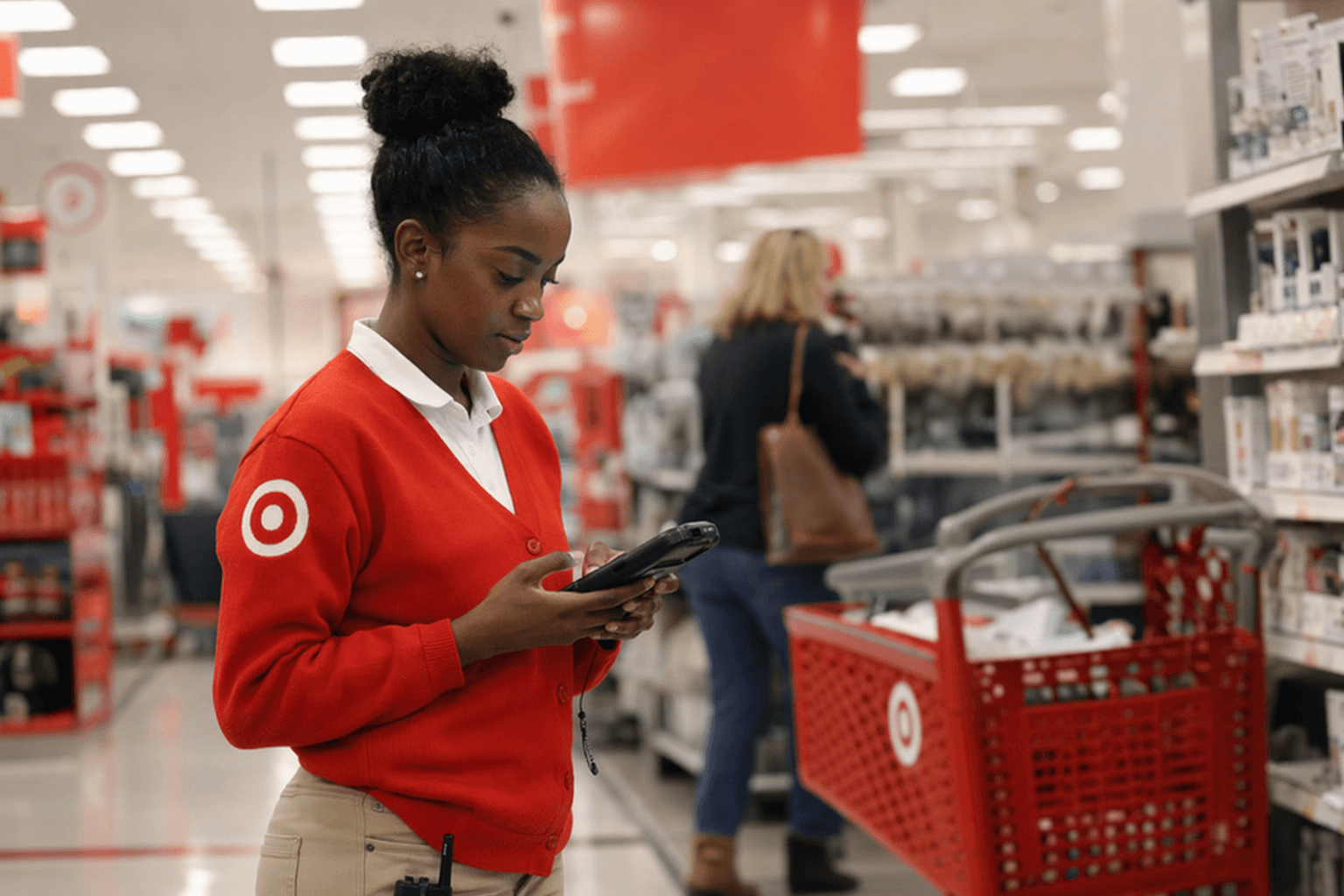
For Target, that matters because retail media already sits inside a much bigger customer ecosystem. A guest may see a personalized offer in the app, a promoted deal in a receipt, or a Target Circle prompt tied to a purchase, and if the store team cannot explain the logic behind it, the experience feels random instead of helpful. The difference between those two outcomes is not just marketing polish. It is training, operations and clear ownership.
Who has to buy in
The pressure to align does not sit with one team. Senior leaders such as Brian Cornell, Michael Fiddelke and Cara Sylvester have to keep retail media connected to the broader guest strategy, while merchants, digital teams, store leaders and guest services turn that strategy into something usable on the floor.
That is because retail media touches more than ad inventory. It affects how offers are surfaced, how loyalty messaging is explained, how vendors are briefed and how front-line teams respond when a guest asks why a deal showed up on a screen or in a receipt. If the people closest to the guest do not understand the system, even a strong network can stall after launch.
A durable program also needs buy-in from the teams handling data governance and vendor relationships. Target’s 2025 annual report says Roundel provides advertising services to vendors and other third parties, including marketplace sellers, which means the business is not just selling media inside the company. It is managing an external revenue stream that has to stay aligned with store execution and brand standards.
Why execution beats hype
Circle K, Love’s Travel Stops and Dollar General all point to the same lesson in retail media: scale and technology matter, but they do not carry the business alone. Their emphasis is on foundational execution, executive commitment and the ability to bring internal teams along so the work does not fade once the launch announcement is over.
That is where a lot of programs get stuck. Leaders often want the upside of retail media, but front-line teams are left with the extra questions, the extra guest confusion and the extra process steps. If the program does not clearly help the customer, it starts to feel like noise. If it does help the customer, it becomes part of the store’s service rhythm.
Target already knows how crowded this space is becoming. Differentiation now depends on whether the network is tied to actual shopping behavior, strong loyalty engagement and a guest experience that feels coherent across digital and physical touchpoints. Circle K and Dollar General highlight customer understanding and technology partners for a reason. In a crowded market, a retail media network has to be useful, not just available.
What that looks like on the store floor
For team members, retail media shows up in practical ways. More app-based prompts can mean more guests asking why one offer appeared and another did not. More personalized deals can create more questions at guest services. Sponsored placements can influence what people see before they ever reach the aisle, which means store teams are often the last line of explanation even when they did not create the campaign.
That is why retail media cannot be treated as a pure marketing project. It touches operations because teams need clear playbooks. It touches training because team members need to know how the offers work. It touches merchandising because the products tied to those offers still have to be in the right place at the right time. And it touches vendor relationships because brands expect proof that the network can move both awareness and sales.
When the system is built well, the guest sees a tighter link between the app and the store. When it is built poorly, the guest sees friction, and the store absorbs the frustration.
Why Target’s numbers matter
Target’s own results show that this is no longer a small bet. Roundel started in 2007 with five team members and is now an 800-plus-person organization fully integrated within Target. Since 2018, it has grown by nearly 50 percent. That is the profile of a business line that has moved well beyond experimentation.
The consumer side is just as important. Target said more than 13 million members joined Target Circle in 2024, the free loyalty program relaunched in April 2024, and Target Circle already counts more than 100 million members, making it one of retail’s largest loyalty programs. Target also planned to triple the Target Circle 360 membership base over three years, which shows how central paid membership has become to the company’s growth strategy.
The financial signals line up with that strategy. In Target’s fourth quarter and full-year 2025 earnings release, non-merchandise sales grew over 25 percent, membership revenue more than doubled and Roundel delivered double-digit growth. Same-day delivery powered by Target Circle 360 grew over 30 percent in the fourth quarter of 2025. Those are not vanity metrics. They show that loyalty, media and fulfillment are starting to reinforce one another.
The playbook for the next phase
Target’s March 2026 growth plan makes the direction even clearer. The company says it will keep scaling Roundel, Target Circle, Target Circle 360 and Target Plus, while also increasing payroll and training to improve the guest experience. It also outlined about $5 billion in capital investment, including more than $1 billion in additional capital expenditures and $1 billion in additional operating investments.
That combination is telling. Target is not only investing in the digital and media pieces of the business. It is also investing in the people and store-side execution that make those tools work. For a retail media network to last, the internal alignment has to be as deliberate as the ad targeting.
The practical test is simple: can a guest move from app to aisle to checkout without confusion, and can a team member explain the offer without guessing? If the answer is yes, retail media becomes part of the shopping experience. If the answer is no, it becomes one more system that gets in the way of it.
This article was produced by Prism’s automated news system from verified source data, official records, and press releases, then run through automated quality and moderation checks before publishing. The system is built and supervised by the people who set the standards it runs under. Read our full AI policy.
Did this article answer your question?