Target leans on stores as fulfillment hubs for speed and savings
Target’s stores are doing double duty: they sell to guests and now power most digital orders, making backroom accuracy and handoffs a frontline skill.

A missed pickup window, a wrong bin in the backroom, or a guest asking why an item shows available online but not on the shelf all point to the same shift at Target: the store is no longer just the place where sales happen. It is the engine that starts, stages, and finishes most of the company’s digitally originated business, which is why speed, accuracy, and handoff discipline now matter as much as the sales floor.
The store is the fulfillment hub
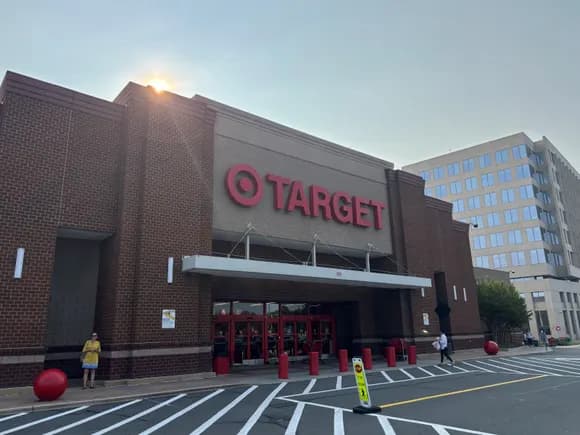
Target says its stores fulfill more than 96 percent of its merchandise sales, a figure that has held for the last three years. That is the clearest clue to how the company is organized now. The physical store network is not being treated as a legacy layer beneath digital commerce; it is the infrastructure that makes digital commerce work. In practical terms, that means the same building has to support walk-in shopping, Order Pickup, Drive Up, Shipt, and the constant flow of orders that need to be found, picked, staged, and handed off quickly.
The company’s 2024 annual report makes the logic explicit. Using stores as fulfillment hubs improves product availability, speeds up fulfillment, cuts shipping costs, and gives guests same-day options. More than 65 percent of digital sales were fulfilled through same-day options in fiscal 2024, and those options grew 7.7 percent from 2023, with double-digit growth in both Same Day Delivery and Drive Up. For anyone on the floor, that means the app, the backroom, and the parking lot are now tied together in one operating system.
What changes for team members, team leads, and ETLs
This is where the story stops being abstract and starts looking like shift work. A store that is responsible for speed and savings needs tight inventory accuracy, clean backroom organization, and fast handoffs between teams. Those tasks are no longer just operational housekeeping. They are what keeps Target’s same-day model from breaking down.
The new pressure points are easy to name:
- Inventory accuracy, so guests see the right item online and the team can actually find it.
- Backroom organization, so pick paths are fast instead of chaotic.
- Handoff speed, so Order Pickup and Drive Up stay reliable.
- Tech fluency, so team members can use the tools that tell them what to do next.
That changes where decision-making lives. The company’s annual report frames strategy around consumer-centricity, technology, efficiency, and sustainability, with a connected ecosystem of data, insights, and technology that includes artificial intelligence. In store terms, that means more work depends on shared systems and less on improvisation. The better the data, the less time teams spend hunting, waiting, or recovering from stock mismatches.
AI is now part of the store routine
Target has been clear that AI is not a side project. In June 2024, it said it would roll out Store Companion, a generative-AI chatbot for team members across nearly 2,000 stores by August. The tool is designed to answer on-the-job process questions, support store operations, and make jobs easier. That matters because one of the most time-consuming parts of store work is not physical labor alone, but the constant need to confirm process, policy, and sequence under pressure.
The company later tied Store Companion to a broader GenAI push across the business, and its annual report linked that effort to modernized AI-powered inventory management systems. The goal is to improve reliability and reduce out-of-stocks. For store teams, that is the difference between spending a shift reacting to missing product and spending more of it actually moving product. AI here is less about replacing judgment than compressing the time it takes to find an answer or spot a problem.
Target’s March 4, 2025 financial community meeting pushed that logic further. The company said it wants more than $15 billion in sales growth by 2030, and it is backing that target with investments in stores, supply chain, and technology. It also said it plans to grow third-party digital marketplace sales from about $1 billion in 2024 to more than $5 billion in 2030. That is a signal that the store network is being asked to support a broader assortment and more digital demand, not just more foot traffic.
More stores, not fewer, and a bigger role for the ones already open
If the strategy were really about shifting away from stores, Target would not be opening more of them. The company opened 23 new stores in 2024 and expected to open about 20 more in 2025. That expansion matters because it shows the store fleet is still a growth engine, not just a fixed cost to be trimmed. It also helps explain why Target keeps talking about speed, simplicity, and technology: the company wants the physical network to do more work, more efficiently.
Target also said updates and expansions across its supply chain network will move inventory with more speed, accuracy, and efficiency. That complements the store strategy rather than replacing it. The supply chain gets product closer to where it will be fulfilled, while the store becomes the place where that inventory is turned into a guest experience. The result is a system where the backroom, the app, and the parking lot are all part of the same promise to the customer.
Why this matters on a normal shift
On a normal day, the big strategy language collapses into smaller moments. A guest shows up for Drive Up and expects a fast handoff. A team member needs to find a SKU that the system says is there. A leader has to decide whether a location is ready to absorb more digital volume without losing in-store standards. Those are the moments where Target’s model either feels seamless or starts to fray.
That is why the most valuable skills inside the company are shifting toward operational precision and tool fluency. The store employee who can keep inventory clean, move orders fast, and use AI-assisted help without slowing down is doing work that is now central to sales, guest satisfaction, and cost control. Target’s message is not that stores matter less in the digital era. It is that stores matter more, because they are where the digital business becomes real.
This article was produced by Prism’s automated news system from verified source data, official records, and press releases, then run through automated quality and moderation checks before publishing. The system is built and supervised by the people who set the standards it runs under. Read our full AI policy.
Did this article answer your question?