Target pushes AI from pilot to storewide operations across 2,000 stores
Target took Store Companion from a six-month test to nearly 2,000 stores, tying AI to faster answers, inventory work and tighter execution.
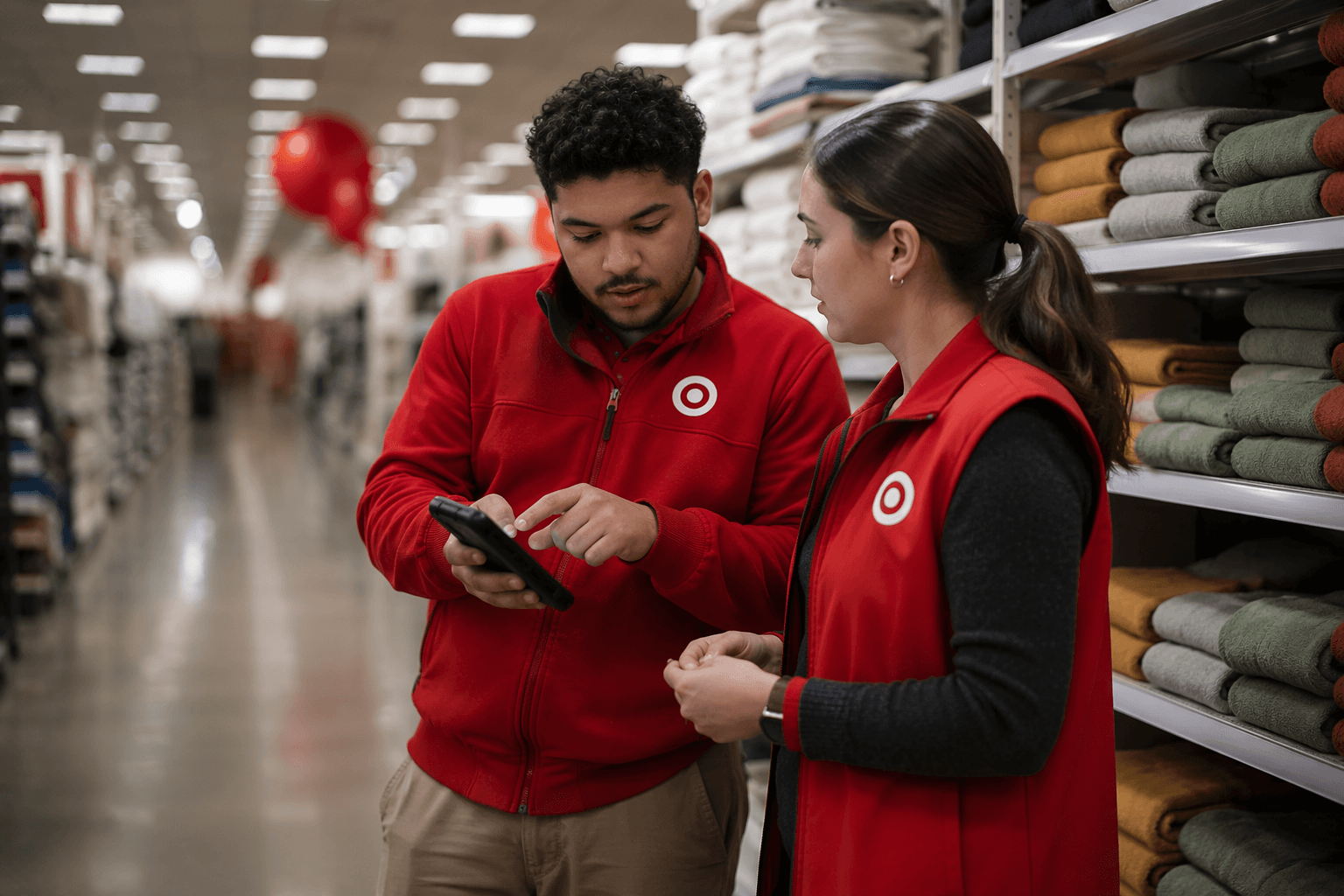
For a Target team member, the real AI question was never whether the tool looked impressive. It was whether a handheld could answer a process question fast enough to help on the sales floor, in fulfillment or at the service desk when a guest was waiting. Target said Store Companion would roll out to all of its nearly 2,000 stores by August 2024, reaching hundreds of thousands of team members as an app on specially equipped handheld devices.
Target built the tool from real FAQs and process documents from store teams across the U.S., moving from initial testing to planned rollout in just six months. The company said Store Companion was meant to answer on-the-job questions, coach new team members and support store operations management. That matters because the place where AI either works or fails is the same place store workers already feel every delay: a spotty network, a slow device or bad data can turn a promised shortcut into another task to fix.
That is why the shift now looks less like an AI pilot and more like an execution problem. In the store, AI has to help with daily work such as inventory checks, guest service handoffs and task prioritization, not just sit behind a corporate demo. Target’s own customer help pages underline the pressure on accuracy: quantities are limited, availability changes quickly and the company cannot guarantee that inventory information is always right. Shoppers can check the Target app or Target.com by store, but the company still tells them to call the store if they need confirmation.
Target has paired that store-level push with heavy capital spending. In its 2024 annual report, the company said it planned to invest more than $4 billion in stores, supply chain and technology, while opening 23 new stores in 2024 and expecting about 20 more in 2025. Target also said its first-party digital business reached $20 billion and that same-day services such as Drive Up and same-day delivery grew at double-digit rates. For store teams, that means more orders, more pressure on inventory accuracy and more reliance on systems that can keep up.
The company’s 2025 strategy update made the link even clearer. Target said it aimed to drive more than $15 billion in sales growth by 2030 and planned to modernize its core inventory management system with AI-powered technology to improve reliability and reduce out-of-stocks. Gretchen McCarthy, Target’s chief supply chain and logistics officer, said the company was using technology to tackle inventory management and trailer unloading, and that AI could improve forecasting, inventory positioning and decision-making.

That is where AI stops being a buzzword and starts changing the workday. If Target gets the device, data and network pieces right, the tools can shorten the distance between a question and an answer and take friction out of onboarding and routine store tasks. If those basics do not hold, the promise collapses on the floor, in the backroom and on the dock, where execution still decides whether the store runs on time.
This article was produced by Prism’s automated news system from verified source data, official records, and press releases, then run through automated quality and moderation checks before publishing. The system is built and supervised by the people who set the standards it runs under. Read our full AI policy.
Did this article answer your question?