Target scales back self-checkout as theft and frustration rise
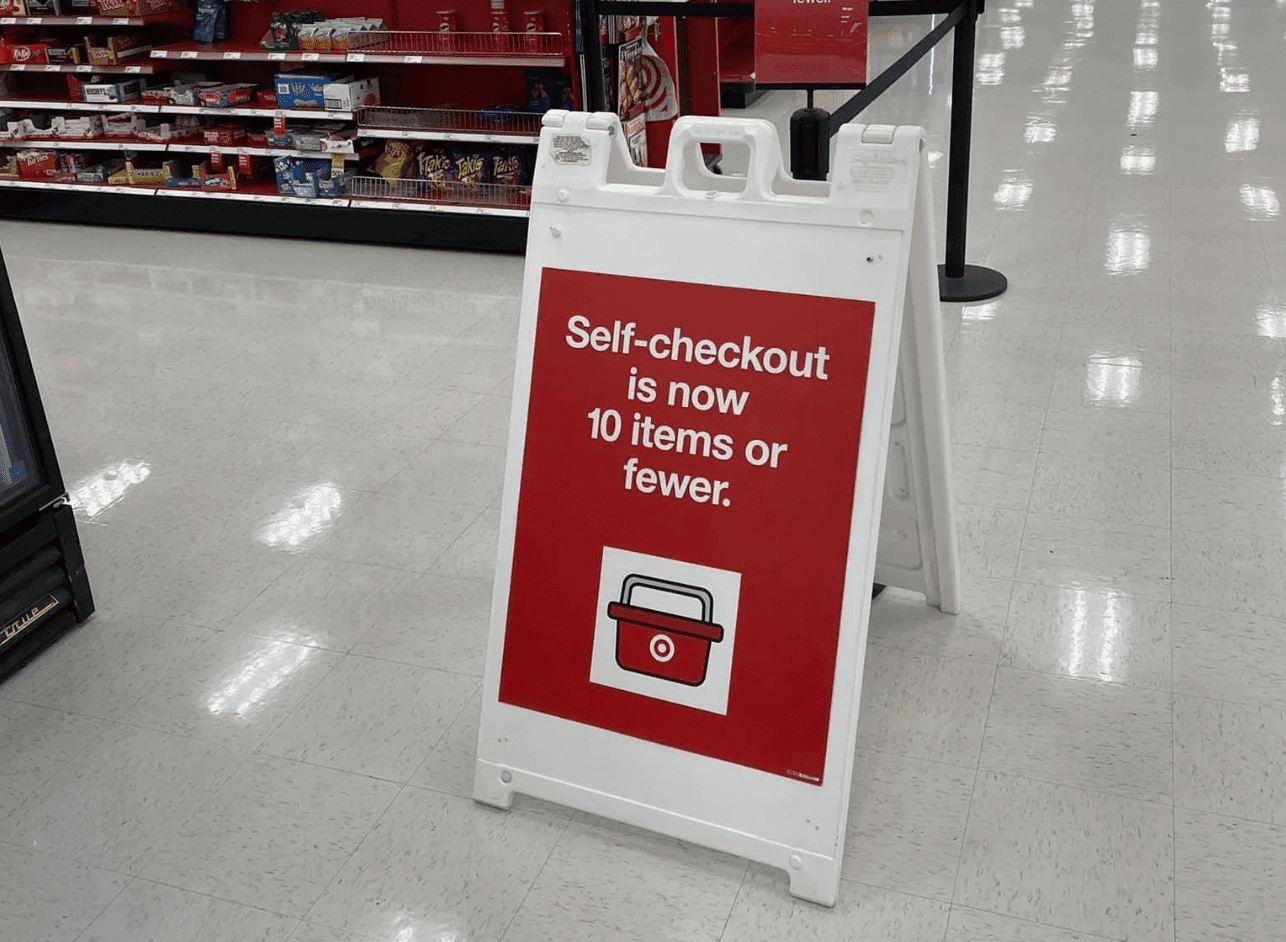
Target is trimming self-checkout to 10 items or fewer in most stores, shifting labor back to lanes, guest service and traffic control.
At Target, fewer self-checkout spots means more people needed in the lanes, at guest service and on the floor when scanners jam, baskets get flagged or guests get frustrated. The change is not just about theft. It is about where the store puts labor when speed starts colliding with reliability.
Target said in March 2024 it introduced Express Self-Checkout with a 10-item limit at most of its nearly 2,000 U.S. stores. By May 5, 2025, the company said the new setup had improved total transaction times by nearly 8% across self-checkout and staffed lanes, lifted checkout satisfaction scores by 5 points for wait times and 3 points for interactions, and pushed more guests back toward traditional staffed registers.
That matters on the floor because the workload does not disappear when a retailer scales back self-service. It moves. Team leads and executive team leaders have to watch lane mix more closely, staff for peaks more tightly and pull fewer people away from other tasks when checkout backs up. Guest service desks can become busier as more shoppers need help with price checks, exceptions and payment issues. Cashiers and service desk teams also need broader cross-training, since the same person may have to resolve a register problem, handle a guest complaint and keep the line moving.
Target’s annual report says the company is investing in technology to reduce friction for store teams so they can spend more time serving guests, while also raising standards by strengthening end-to-end reliability and investing in training and support. That is the real operations story behind the self-checkout pullback: not a retreat from technology, but a recalibration around staffed service moments that are harder to automate.

The theft backdrop is hard to ignore. The National Retail Federation’s 2024 retail theft study covered 164 retail brands representing $1.52 trillion in annual sales in 2023. Its 2023 National Retail Security Survey said the average shrink rate in fiscal 2022 rose to 1.6% from 1.4% a year earlier. The federation also said retailers in its theft study saw an average of 177 shoplifting incidents per day in 2023. For chains like Target, Walmart and Costco, that adds pressure to narrow where self-checkout makes sense and where a human should be watching the transaction.
Target has been here before. In October 2020, it rolled out contactless self-checkout and Wallet-based payment as a safety move during the holidays. In September 2025, it launched a nationwide accessible self-checkout experience designed with and for guests with disabilities. Together, those moves show a company still betting on self-service, but with tighter limits and more deliberate human support where the friction is highest.
This article was produced by Prism’s automated news system from verified source data, official records, and press releases, then run through automated quality and moderation checks before publishing. The system is built and supervised by the people who set the standards it runs under. Read our full AI policy.
Did this article answer your question?