Target spotlights internal mobility with expanded growth and training programs
Target is turning internal mobility into a map workers can actually use, with tuition-free education, leadership programs and role stories that show how to move up or across.

Target’s growth message is more than a slogan
Target’s clearest signal to workers is not hidden in a benefits brochure. It is in the way the company now frames career movement itself: as a normal part of the job. The culture page says the company is built around care, grow and win together, and the stories page translates that into real paths across stores, supply chain, store leadership, corporate functions and internships. For a team member trying to read the room, that matters because it suggests Target wants people to see the company as an ecosystem of jobs, not a single ladder inside one department.

That distinction is practical. If you are in an hourly role, the message is not just that you can be promoted where you stand. It is that you can learn the business, build skills in one area, and move into another function if you show the right mix of reliability, curiosity and leadership potential. The stories page is doing quiet work here: it gives employees examples they can recognize, instead of asking them to trust abstract culture language.
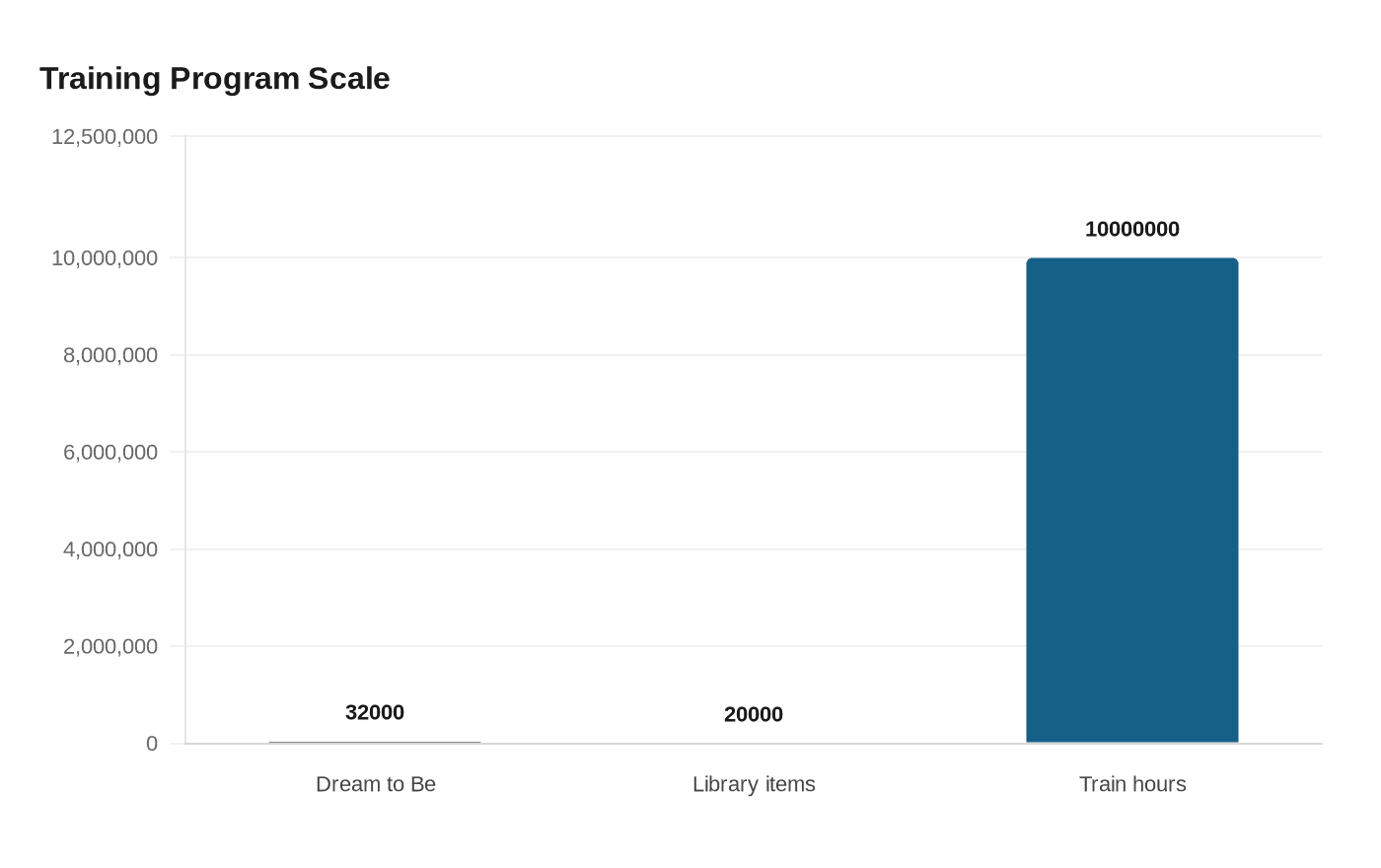
The programs behind the promise
Target’s growth and development page makes the internal mobility message concrete. The company says more than 32,000 team members have enrolled in Dream to Be since launch, that team members have access to a learning library with over 20,000 videos, books, audiobooks, activities, webinars and boot camps, and that employees complete 10 million hours of training annually. Those are not small numbers, and they show the company is spending real operating muscle on development instead of treating it as a side project.
The biggest clue for employees is that Target ties this to specific pathways, not just broad encouragement. The company highlights a six-month Store Director Development Program and says development is prioritized for interns, frontline leaders and senior-level talent. That tells you what the business considers valuable: not only tenure, but readiness, leadership habits and the ability to keep learning as the work changes. If you are looking for a path from the sales floor to a specialist role or a store leadership bench, those are the programs to watch.
What the company says it wants from its people
Target’s corporate strategy page reinforces that training is no longer being treated as separate from operating performance. The company says it will invest in training and career growth while also accelerating technology and improving the guest experience. In other words, the skills that matter are widening. Attendance and task completion still count, but so do digital fluency, service quality and the ability to work across functions as the business changes around you.
That broader expectation shows up again in Target’s 2025 Annual Report. The company says it is planning more than $2 billion in incremental investments across the business, including more than $1 billion in increased capital expenditures and another $1 billion in additional operating investments. It also says guests will see and feel more change in what Target sells and how it sells it in 2026 than they have in a decade. For workers, the message is simple: if the business is changing that quickly, then the people who move ahead are likely to be the ones who can adapt, learn new systems and understand more than one part of the store or supply chain.
How Target built the mobility machine
The clearest evidence that this push is strategic, not cosmetic, comes from Target’s work with UpSkill America and the Institute for Corporate Productivity. In a February 2024 paper, Target said it employs more than 400,000 people and began building a skills taxonomy and internal talent marketplace in 2021. It started with the top 10% of job profiles, which represented 75% of the workforce, a detail that tells you where the company thought mobility could have the biggest impact fastest.
That research also explains why Dream to Be looks the way it does. Target launched it with Guild so full- and part-time employees could get day-one tuition-free access to undergraduate and associate degrees, certificates and bootcamp programs through more than 40 colleges, universities and learning providers. The design choice matters: instead of making education feel like a distant perk for headquarters employees, Target built a system that front-line workers could use immediately. If you are trying to judge whether a company means what it says about growth, day-one access is a strong signal.
Leadership stories show the path can be real
Target’s public examples also show what internal mobility can look like over time. At NRF 2025, Brian Cornell said growth came from investing in, listening to and developing people. That fits with one of the company’s most useful examples: Abubakarr Bangura, who joined Target as an intern in 2004 and now oversees roughly 80 stores across multiple states. For employees, that is not just an inspirational story. It is proof that the company is willing to elevate people who come in through early-career channels and stay long enough to build operational trust.
Target also points to a program called Prepare for Next, which Cornell said is meant to develop the next generation of leaders. Bangura said the company co-created a six-month immersive program after store directors asked for tailored development. That detail is important because it suggests the leadership pipeline is not being designed only from the top down. Store leaders, who know the pressure points on the floor, helped shape the training that is supposed to feed the next layer of management.
What the corporate pipeline looks like
The same mobility story runs through Target’s graduate programs and internships. The company says its internships and multi-year, full-time professional development programs are built to train retail’s best talent for roles at Target. Its Finance Leadership Development Program is a three-year accelerated program in which participants act as senior managers and business partners for merchandising, stores, advertising, supply chain, property development and technology services.
That structure tells workers something useful about what Target values in future leaders. It is not enough to be strong in one silo. The company seems to prize people who can connect store operations with supply chain, advertising with property development, and finance with the guest experience. Target Arrows Supply Chain Leadership Development Program follows the same logic, using a three-part rotational model to build end-to-end knowledge and an internal network. In practice, the company is signaling that cross-training is not optional for advancement in the channels that matter most.
How to read the clues if you want to move
For a team member or team lead, the career messaging becomes easier to decode when you know what to look for. The most useful signals are the ones that show a company is building a future bench, not just filling open shifts.
- Look for programs with time limits and structure, such as the six-month Store Director Development Program or the three-year Finance Leadership Development Program.
- Pay attention to whether development reaches beyond headquarters. Target’s materials do this by naming frontline leaders, interns and store leadership.
- Watch for signs of cross-functional learning, such as rotational programs and stories that move across stores, supply chain and corporate teams.
- Notice whether education support is broad enough to fit hourly workers. Day-one tuition-free access through more than 40 schools and providers is a much stronger signal than a generic reimbursement promise.
Target is making the case that promotion is no longer the only story. The more important story is internal movement: learning a new function, building a broader skill set and becoming eligible for the next job before the old one is even finished. In a retail environment where technology, service expectations and store operations are all shifting at once, that kind of mobility is turning into the real career path.
This article was produced by Prism’s automated news system from verified source data, official records, and press releases, then run through automated quality and moderation checks before publishing. The system is built and supervised by the people who set the standards it runs under. Read our full AI policy.
Did this article answer your question?