Target Updates AI Shopping Terms, Shifting Responsibility for Agent-Placed Orders
Target now treats AI shopping agent orders as "authorized by you," even when the agent makes mistakes. Expect more disputes landing at your Guest Services counter.
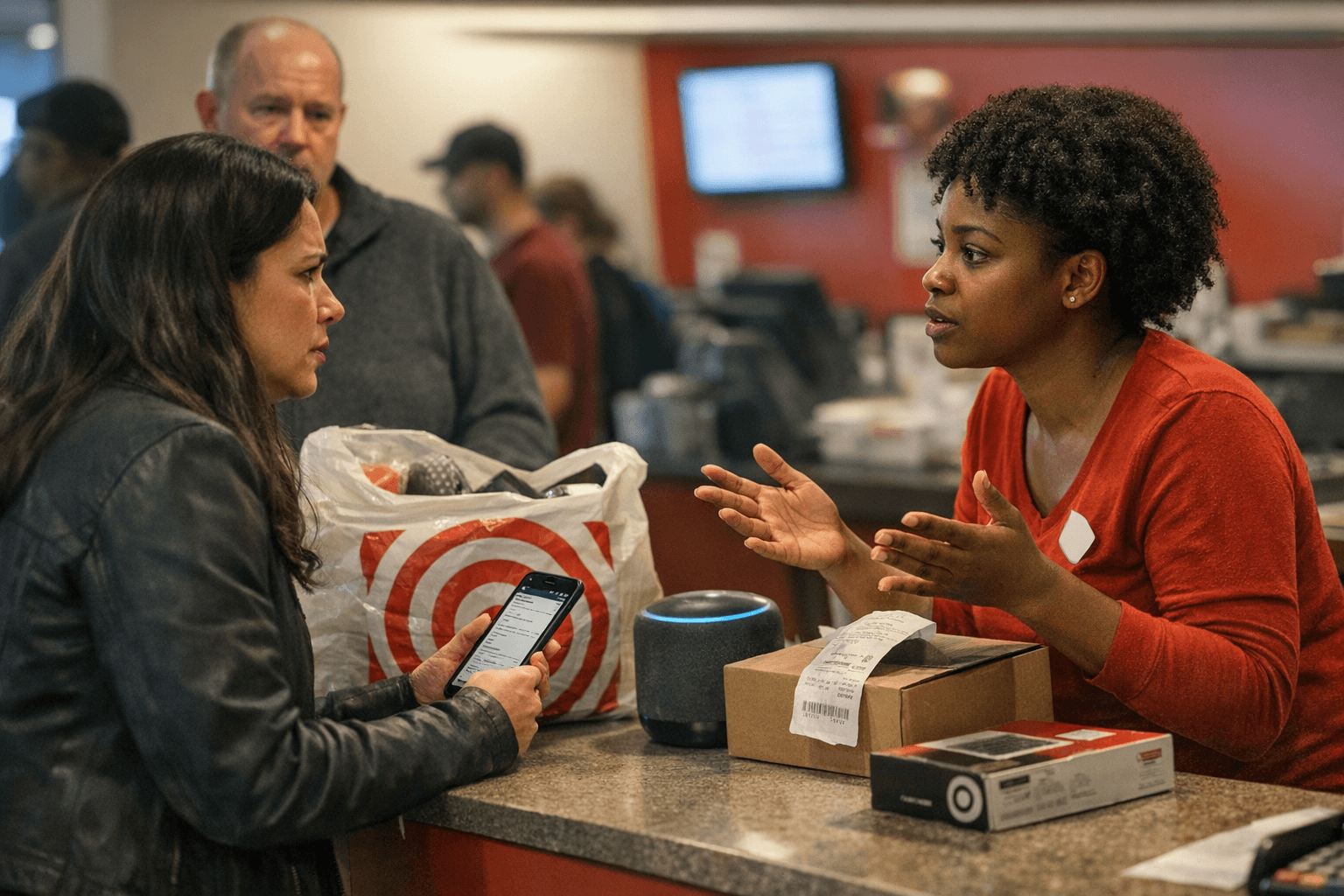
A guest steps up to your Guest Services desk with a cart full of items they swear they never ordered. Their phone shows a Target confirmation email, the order was already picked and packed by your Drive Up team, and now they want a full refund. Under Target's updated terms of service, the company's position is clear: the AI that placed the order acted in their name, which means the purchase counts as "authorized by you."
That scenario is coming to stores across the chain.
Target updated the terms governing its "Agentic Commerce Agents" during the first week of April 2026. Those agents are generative-AI shopping tools built with partners including Google's Gemini, with broader integrations tied to OpenAI's ChatGPT. The revised language states that actions taken by a consumer-authorized AI agent will be treated as transactions "authorized by you," and carries a notable admission: Target does not guarantee an agent will always act exactly as the user intends. Coverage of the policy changes spread across tech outlets between April 5 and 9.
That last part is what front-line teams should clock: Target wrote into its legal terms that its own AI can get things wrong, and when it does, the liability lands on the customer, not the company. The guest standing at your counter is almost certainly going to argue exactly the opposite.
For cashiers, fulfillment associates, Drive Up and Order Pickup teams, and guest service leads, expect increased volume in returns, order cancellations, refund requests, and in-person escalations. The most common failure modes will likely be wrong items, wrong quantities, unexpected substitutions, and more expensive selections than the guest intended.
When a guest arrives with one of these disputes, start with confirmation, not concession. Ask them to pull up the order in the Target app or their confirmation email and check whether it shows as "authorized." That status matters both for documentation and for determining the correct resolution path. Note the order number in the record and flag that the guest cited AI agent error; corporate digital and risk teams will need that trail to identify recurring failure patterns.
Store-level teams can generally process returns on AI-placed orders the same way they would any other order. What falls outside store authority: payment disputes the guest wants reversed at the billing level, and anything involving suspected fraud. Both route to corporate customer support, not the POS.
When a guest is frustrated, a de-escalation script should hit three beats: acknowledge what happened ("I can see this order wasn't what you expected"), confirm what the record shows ("Let me look at the order status with you"), and name the next step clearly ("Here's what I can resolve right now, and here's exactly where the rest goes"). The goal is to move the guest toward a resolution without leaving them in limbo or saddling team members with disputes that are above store authority to fix.
Team leads should start watching for early signals now: upticks in returns coded to app or online orders, spikes in manual POS adjustments, and any new FAQs from Guest Services or Ops. If contact volume climbs, flag it to People Ops before hourly team members absorb the full weight of an AI accountability gap that corporate and regulators are still sorting out.
Target is part of a broader retail industry push toward agentic shopping features, and its liability language mirrors moves by peers to limit corporate exposure for autonomous agent errors. More agent-driven commerce is built into Target's 2026 technology roadmap. This is the beginning of the friction, not the end of it.
This article was produced by Prism’s automated news system from verified source data, official records, and press releases, then run through automated quality and moderation checks before publishing. The system is built and supervised by the people who set the standards it runs under. Read our full AI policy.
Did this article answer your question?