Walmart warehouse union contract sets wage and scheduling benchmark for Target workers
Walmart’s first North American warehouse contract puts up to $5 more an hour, a pay-parity clause and temp-labor limits on the board for Target workers.

A Walmart warehouse deal in Mississauga, Ontario just set a new reference point for warehouse pay and scheduling across retail logistics. Unifor Local 252 members ratified a two-year contract by 93 percent on May 7, and the union said it was the first union contract negotiated with Walmart in North America.
The headline numbers are hard to miss. The agreement reportedly delivers wage gains of up to $5 an hour in year one, then another 3 percent in year two. It also includes a lump-sum payment of $4,250 to $8,750 tied to an unfair labor practice complaint, plus a “me too” wage clause that keeps members from falling behind if Walmart lifts pay for other warehouse workers in Canada. For Target workers watching warehouse standards, that combination matters as much as the hourly rate. It turns pay into a floor, not a one-time raise.

The contract also takes direct aim at staffing practices. Unifor said it includes a cap on short-term agency labor, after workers described temporary staff being used to keep part-time employees from reaching full-time status and to limit overtime for full-time workers. That is the scheduling fight many warehouse and retail workers recognize immediately: who gets the hours, who gets left floating, and whether the company uses contingent labor to avoid building a stable workforce.
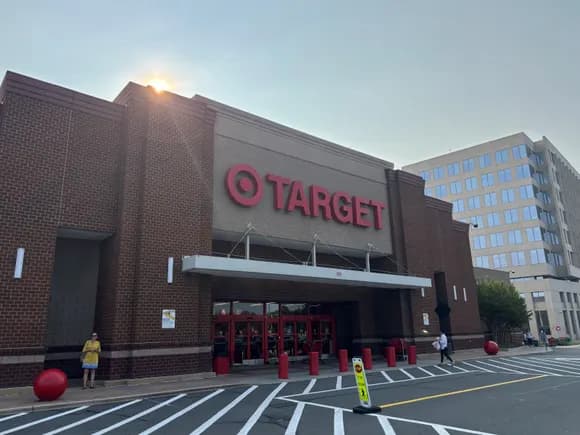
For Target teams, the comparison is indirect but important. Target’s 2025 annual report says fast fulfillment and in-stock performance are central to the company’s strategy, which means the warehouse layer matters every bit as much as the sales floor. If distribution staffing is shaky, stores feel it in backroom flow, replenishment, and order speed. Target’s own careers pages say it offers market-leading wages, benefits, and reliable scheduling, and Indeed’s April 2026 snapshot put Target warehouse worker pay at about $24.15 an hour. The Walmart contract gives workers a concrete benchmark to measure those promises against.
The Mississauga site became a test case well before this contract. Workers voted to join Unifor in September 2024 after a campaign that began in December 2023, and the Ontario Labour Relations Board certified the union to represent about 800 workers at the Maritz Drive warehouse. Unifor said the drive was fueled by concerns over wages, health and safety, and working conditions. Later, the union accused Walmart of excluding organized workers from company-wide wage increases given to non-union employees. Walmart denied the allegations and said it was acting in good faith and in compliance with the law.
Unifor leaders cast the settlement as bigger than one warehouse. Lana Payne said the members had “radically re-shaped fairness in the workplace,” while Samia Hashi said there is a clear union advantage in the warehouse industry. For Target workers, the practical takeaway is narrower and more useful: the bar on pay, predictability, and full-time access in warehouse work just moved, and the comparison now sits in public view.
This article was produced by Prism’s automated news system from verified source data, official records, and press releases, then run through automated quality and moderation checks before publishing. The system is built and supervised by the people who set the standards it runs under. Read our full AI policy.
Did this article answer your question?