Capri Pants Are Back: How Spring 2026 Runways Reinvented a Classic Silhouette
Versace, Ralph Lauren, and Bella Hadid have collectively killed the capri's awkward reputation; here's the fabric and fit logic that actually makes them work.
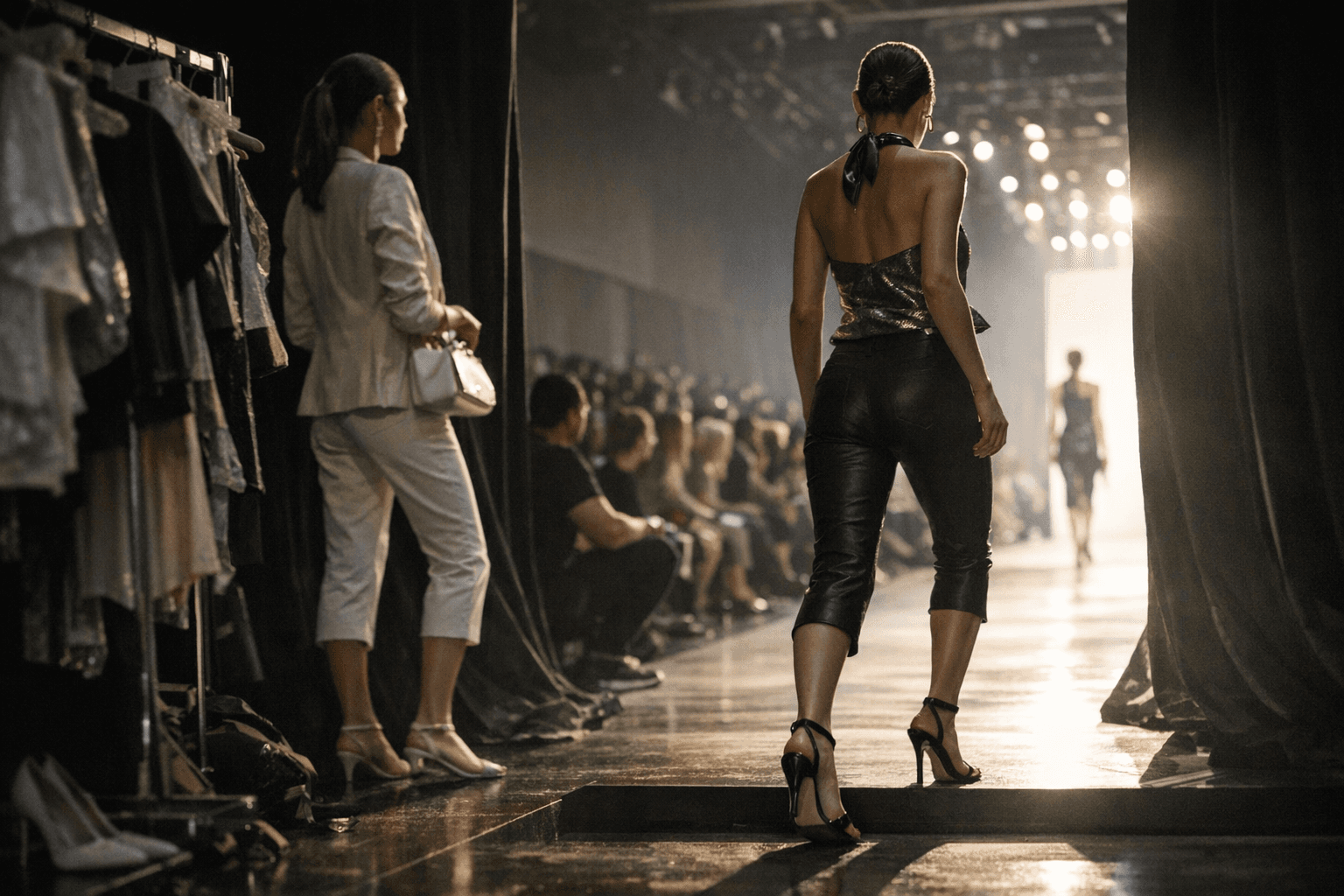
Few silhouettes have a longer rap sheet than the capri pant. For two decades, they carried the weight of every early-2000s aesthetic crime: the low-slung waist, the shiny synthetic fabric, the hemline that hit at the widest part of the calf and stayed there. The verdict from the fashion internet was swift and largely final. And then Versace, Ralph Lauren, and Isabel Marant walked them back onto the runway for Spring/Summer 2026, and suddenly the conversation shifted from "never again" to "how do I wear these now."
This is not a nostalgia play. It's a fit correction.
Why the Runway Said Yes Again
Versace's Spring/Summer 2026 runway leaned hard into '80s inspirations: color-blocked ensembles, high-waisted jeans, and fitted capris that hit directly below the knee in bold shades of green and purple. It was a deliberate proportion statement, the cropped leg balanced against strong shoulders and a defined waist. Isabel Marant approached capris through a more bohemian and nomadic lens, with neutral colorways and a looser, more relaxed energy, a counterpoint to Versace's maximalist assertion. Ralph Lauren, meanwhile, offered a more tailored, polished read on the silhouette, consistent with the brand's heritage sportswear vocabulary. The runway references extended further: Carolina Herrera, Proenza Schouler, Maison Margiela, Hermès, Akris, and Dries Van Noten all cropped their Spring 2026 trousers to knee-grazing lengths, signaling something more systemic than a single house's seasonal whim.
Isabel Marant's Pre-Fall 2026 collection, designed by Kim Bekker, made the aesthetic case most directly. "They have a subtle elegance to them, showing off the legs in a sophisticated way," said Bekker, whose collection was filled with the silhouette.
The Celebrity Proof Point
Bella Hadid stepped out to celebrate the debut of REVOLVE's new Los Angeles presence at an exclusive launch event on March 10, delivering a sleek, modern take on the capri revival. She opted for a striking mix of leather and lace: slim black capri pants paired with a relaxed black leather wrap-style jacket cinched at the waist with a belt. The cropped trousers hit mid-calf and highlighted her sharp black pointed-toe stilettos, creating a long, streamlined line. The visual argument was clear: a heel elongates what the hemline shortens. Kendall Jenner's interpretation ran more sporty-chic, pairing capris with a cropped windbreaker-style jacket and heeled thong sandals. Two approaches, same conclusion: the silhouette is adaptable when you know how to anchor it.
The Fit Problem, Solved
The original complaint against capris was never really about the silhouette itself. It was about where exactly the fabric stopped. The silhouette remains controversial largely because it can shorten the legs if the hemline isn't the right length; the fix is to opt for a pair that hits as close to the knee as possible and fits without cutting off proportions. The 2026 versions have internalized this. The 2026 capri is sleek, tailored, and elevated, cut somewhere between the knee and mid-calf for a modern, flattering silhouette.
The higher waist is equally important. Where early-2000s capris sat low on the hip and added visual weight to the midsection, the current cut rises to the natural waist, creating a longer leg line and a cleaner overall proportion. Pair that with a straight or slightly tapered leg (not a skin-tight one, not a wide-leg one) and you have something that reads as intentional rather than awkward.
Fabric Is the Real Differentiator
The reason vintage capris felt cheap is because many of them were. Nylon, polyester blends, and shiny stretch fabrics all collapsed the silhouette. The 2026 resurgence is built on a different material logic entirely. Fashion expert Yamileth Diaz outlined the approach directly: "Fabrics with body and quality are prioritized, such as heavy cottons, refined linens, and lightweight tailoring blends that elevate the garment."
Those three fabric categories each do specific work. Heavy cotton holds its shape through a full day without going limp. Refined linen has natural texture and drape that adds visual interest without effort. Lightweight tailoring blends, typically wool-synthetic mixes, give capris a sharp, office-appropriate structure that reads as formal trouser, not beachwear. Where capris were once perceived as a purely casual piece, today they are integrated into carefully curated looks with a minimalist aesthetic, polished combinations, and a clear intent.
Styling Logic: Sporty vs. Elevated
The silhouette splits cleanly into two styling approaches, and both work. For a trend-driven look, combining capris with sporty jackets or technical fabrics creates a defining contrast between structured pants and athletic layers. Think a crisp track jacket over tailored linen capris, or a neoprene zip-up with heavy cotton cropped trousers. On the elevated end, Hadid's leather-and-lace combination is a masterclass in texture contrast: structured outerwear, delicate fabric, clean-lined trousers, and a pointed heel to pull everything upward. Either direction works provided you commit to it. The mistake is trying to split the difference with a mid-length tunic and flat sneakers, a combination that erases all the proportion work the cut is doing.
Where to Shop, Responsibly
The sustainability case for capris is quieter than the trend conversation, but it's real. Shorter fabric consumption than full-length trousers, natural fibers that biodegrade, and a silhouette that genuinely crosses occasions means fewer items doing more work. Several credible responsible brands are already in this space with specific material commitments.
- Paloma Wool: Their polka-dot capris are made from 86% organic cotton, an easy choice for spring. The construction is lightweight, relaxed, and prints-forward, priced in the accessible mid-range.
- Reformation: Reformation's capri offerings are linen-based, a breathable choice built for warm-weather movement without synthetic materials. Reformation publishes full supply chain transparency and third-party environmental audits alongside each collection.
- Eileen Fisher: Working with organic linen dyed to bluesign standards, Eileen Fisher's capri-length trousers run toward a more minimal, wide-leg cut and cater to a broader size range than most runway-adjacent brands. Price points reflect the material investment.
- Organic Basics: A reliable entry point for cotton-based basics with GOTS certification, offering simpler capri silhouettes that function as wardrobe workhorses rather than statement pieces.
The pattern across all four is the same: natural fibers, transparent sourcing, and a cut designed to outlast the trend cycle. That last part matters. The fastest way to lose money on a trend piece is to buy something that only works during its single hot season. A well-cut linen or heavy-cotton capri in a neutral or a considered color will work in spring 2026 and again in spring 2028, regardless of what the runways are doing.
The capri's reputation was never destroyed, just badly managed. With the right hemline, the right waist, and fabric that actually holds its shape, the silhouette does exactly what it always promised: splits the difference between shorts and trousers, works across temperature ranges, and proves that proportion, not length, is what actually determines whether a pant reads as chic.
This article was produced by Prism’s automated news system from verified source data, official records, and press releases, then run through automated quality and moderation checks before publishing. The system is built and supervised by the people who set the standards it runs under. Read our full AI policy.
Did this article answer your question?


