Dutch retailers bet on retro runners, loafers for autumn 2026 footwear
Dutch buyers are backing what moves now: retro runners, softened loafers and boots, and prices that keep stock turning. The runway may dream bigger, but retailers are betting on comfort and restraint.
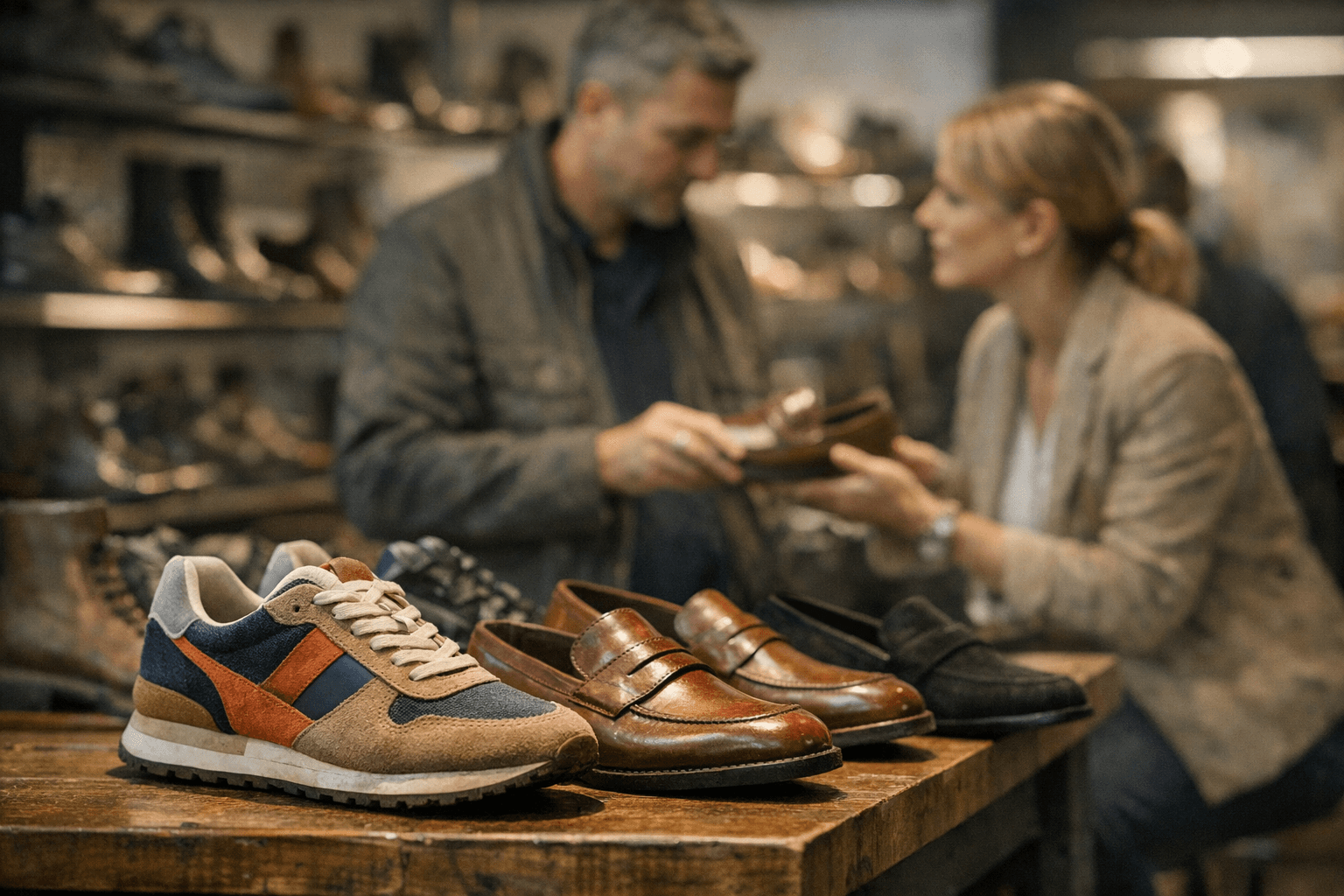
The autumn 2026 shoe story is not being written on the runway
The loudest shoe forecasts still love a statement, but Dutch retailers are buying for a different reality: what can sell, reorder and move again without sitting on the floor. Retro runners are already pulling traffic, loafers are getting a more practical makeover, and anything priced too high is losing momentum before it even lands.
That commercial reset matters because the autumn 2026 buying season is now largely done. What remains is the less glamorous work of adjustments, small runs and opportunistic rebuys, the kind of retail discipline that tells you more about the market than any glossy trend board. In this climate, sell-through is the trend.
Retro runners are the immediate win
At Coef, a Dutch fashion retailer with seven stores across the Netherlands, buyer Yahya Öztürk says the strongest draw right now is vintage running, especially the techy, retro silhouettes that sit somewhere between performance archive and everyday sneaker. The New Balance 1906 and the Asics Gel-Kayano 14 are moving especially well, and Coef expects the trend to peak in summer 2026 before it gives way to the next cycle.
That makes sense on the floor. These shoes have the easy appeal shoppers understand instantly: they look current, but not difficult; sporty, but not gym-bound. The appeal is also broad enough to work in a cautious market, where a sneaker has to do more than look fresh. It has to justify itself on comfort, repeat wear and enough familiarity to feel safe.
The smarter autumn move is formal, but softened
If retro runners are the current volume driver, the next turn is toward something more polished. Coef sees loafers, dress boots and moc-toe lace-ups gaining ground for autumn, but the key detail is in the sole. These styles are being updated with lightweight, sneaker-like construction, which gives them the clean line of a dress shoe without the rigidity that usually sends shoppers elsewhere.
Kleman’s Padror sits neatly in that lane, bridging the gap between workwear ease and sharper tailoring. It is exactly the sort of hybrid shoe retailers love in a cautious season because it has a clear silhouette, but does not feel precious. The message is simple: the market still wants formality, just not the sort that demands punishment.
Women’s boots are back in a more obvious way
Coef also says the return of the boot is especially visible in womenswear, where shoe trends move faster and fall out of favor faster too. That pace difference matters. Women are quick to adopt a new shape when it feels right, but just as quick to move on; men, by contrast, tend to remain loyal to one style longer.
For autumn, that should push boots toward practical versatility rather than fashion theatrics. Earlier FW26 footwear trend coverage already pointed to lower heel heights and platforms, with flat or low-heeled boots, Mary Janes, loafers and low-profile sneakers emerging as the important categories. Even the broader runway picture has leaned toward wearability, with slim, low-profile sneakers, high-vamp pumps and other versatile shapes staying in view at houses such as Celine, Prada, Dries Van Noten and Fendi. The retailer takeaway is clear: novelty is welcome, but only if it can survive a full season on the shop floor.
The real buying filter is price, not fantasy
The clearest commercial line in Coef’s view is price discipline. The sweet spot sits around 170 to 180 euros, while models above 200 euros sell more slowly. That is the kind of detail that tells you where consumer caution is landing in real time. Shoppers may admire a more expensive shoe, but admiration and conversion are not the same thing.
Color follows the same logic. Brown and earth tones are accounting for a large share of sales when a style is offered in multiple versions, which suggests that buyers are leaning into tones that feel grounded, autumnal and easy to wear with denim, tailoring and outerwear. In a season where stores want to minimize risk, the safest colors are also the easiest to build into an outfit without overthinking.
- 170 to 180 euros is the comfortable retail window.
- Above 200 euros, stock moves more slowly.
- Brown and earth tones are doing the hard work on volume.
- Comfort is not a bonus feature, it is the baseline.
A simple reading of the market:
Physical stores still matter, but the internet is the lookup tool
Coef says physical stores remain the cornerstone of its strategy, which feels right for shoes, where fit and feel still determine the final decision. But e-commerce remains important for scarce products and hard-to-find colorways, especially because shoppers often search by article number or exact colorway when they know what they want.
That split says a lot about how modern footwear shopping works. The store creates confidence; the web fills the gap when a specific model is hard to locate. It also explains why retailers are protecting inventory so carefully. In a market this selective, the wrong size run or the wrong shade can become dead weight quickly.
Comfort has replaced ideology
One of the sharpest shifts in Coef’s thinking is how it defines sustainability in footwear. The emphasis is not on experimental materials or vegan narratives, which the retailer says are less popular in shoes. It is on longevity and long-term relevance, which is a far more practical version of the same idea.
That framing is revealing because it captures where consumer mood sits now. Shoppers are still interested in doing the right thing, but they are less impressed by symbolic gestures than by shoes that last, wear well and stay in rotation. In other words, a well-made loafer with a smart sole can read as more sustainable than a novelty sneaker that feels obsolete by next season.
Why autumn 2026 footwear feels so restrained
The industry backdrop only sharpens the caution. McKinsey’s State of Fashion 2026 survey found executives most often described the sector as challenging, with tariffs named as the number-one hurdle and 46 percent expecting conditions to worsen in 2026. That is not the atmosphere for risky buying or overbuilt assortments.
So autumn 2026 footwear is turning into a test of judgment more than imagination. Retailers are backing proven shapes, easier entry prices and materials that feel durable rather than decorative. The fashion conversation may still be chasing the next big statement, but the commercial truth is simpler: retro runners are the quick win, loafers and boots are the smarter hedge, and the shoes that survive the season will be the ones that look good, feel good and justify their place in the basket.
This article was produced by Prism’s automated news system from verified source data, official records, and press releases, then run through automated quality and moderation checks before publishing. The system is built and supervised by the people who set the standards it runs under. Read our full AI policy.
Did this article answer your question?


