Italy’s Fashion Chamber Unveils Documentary to Train New Talent
Italy’s fashion chamber is turning the camera on its own workshops, from Fendi to Valentino, to sell artisanal careers as a future, not a relic.

Italy’s fashion chamber has chosen a rare subject for a luxury showcase: not the runway, but the people who cut, stitch, press and finish the clothes that make “Made in Italy” matter. Its new documentary, Grand Tour. Viaggio attraverso le Accademie delle Arti e dei Mestieri, pulls back the curtain on eight house academies and makes the talent pipeline the main event.
Presented by Camera Nazionale della Moda Italiana at Milan’s Teatro Lirico Giorgio Gaber on National Made in Italy Day, the film is written and directed by Alessandro Manieri and executive-produced by The Blink Fish. CNMI will make it available from April 28 on Sky Italia’s YouTube channel, Sky Arte and on demand, with a special public screening planned for April 19 at the Auditorium of MAXXI in Rome.
The title is no accident. Carlo Capasa framed it as a modern Grand Tour, a nod to the 17th and 18th centuries when young Europeans traveled through Italy as part of their education. Here, the journey runs through working ateliers instead of palaces, and the destination is a career path that still carries social cachet, technical discipline and a direct line into luxury production.
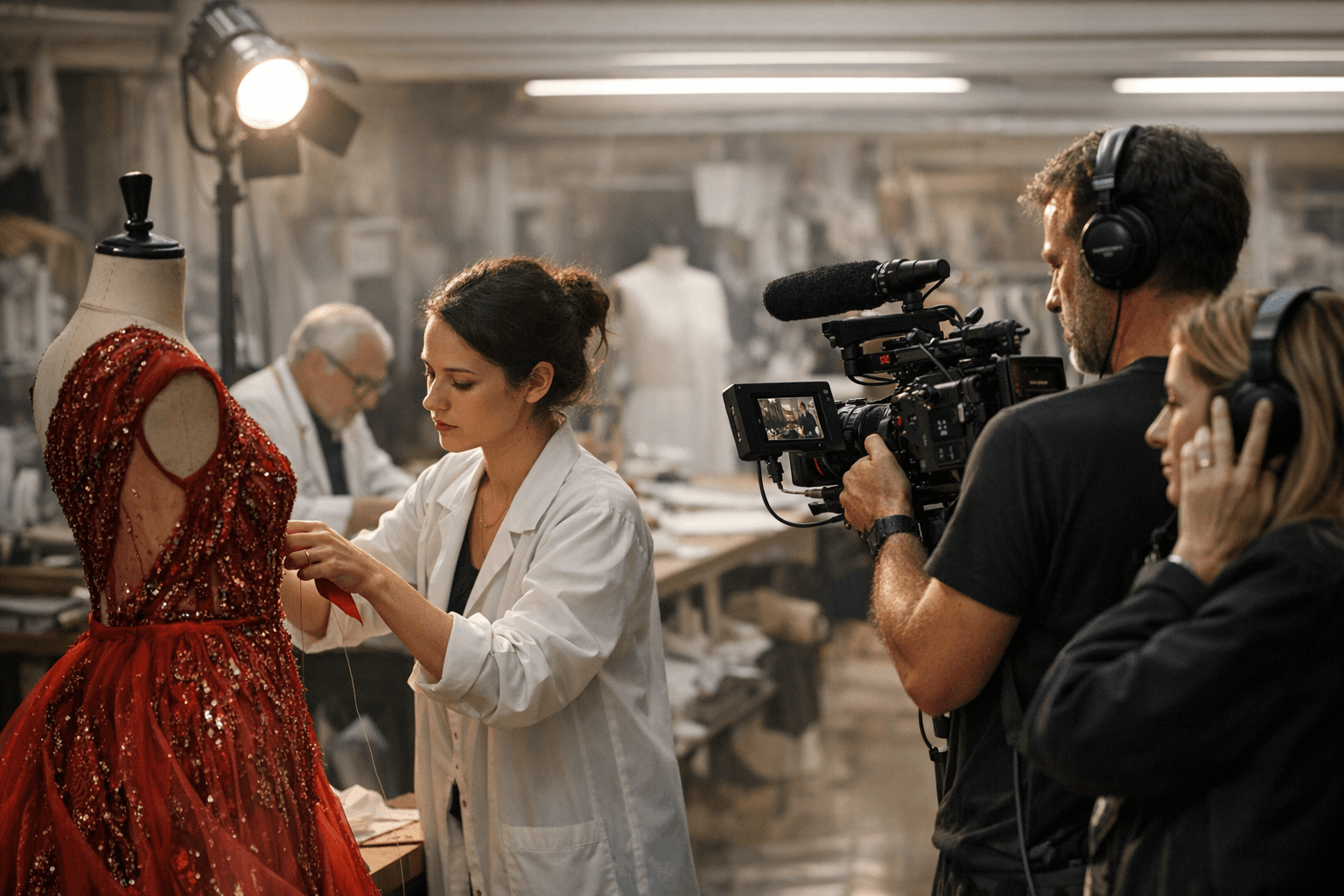
The academies featured are Brioni, Brunello Cucinelli, Dolce&Gabbana, Fendi, OTB Group, Kiton, Tod’s and Valentino. Their programs are not classroom abstractions. Brioni reopened its Scuola di Alta Sartoria Nazareno Fonticoli in Penne in 2024 and offers two-year courses. Brunello Cucinelli’s school has six tracks, from Maestra di Moda and Sartoria Maschile to Rimaglio, Rammendo, Maglieria and Stiro. Dolce&Gabbana’s Botteghe di Mestiere has run since 2012, while LVMH’s Institut des Métiers d’Excellence in Italy, launched in 2017, includes a leatherworking course with Fendi and Polimoda.
The deeper argument is urgent. In March 2024, Capasa warned that Italian fashion could face a shortage of 90,000 workers over three years, including about 40,000 retirees. That is why these academies matter: they are not just polishing heritage, they are replacing a workforce. Fendi’s leather school in Bagno a Ripoli trained more than 50 workers in 2022, and Kiton’s tailoring school, founded in 2000, has trained more than 200 young people, with about 80 percent joining its master tailors. Valentino’s Bottega dell’Arte, created in 2015, and Tod’s Bottega dei Mestieri, established in 2012, show the same logic: craft survives only if the next generation can picture a future in it.
This article was produced by Prism’s automated news system from verified source data, official records, and press releases, then run through automated quality and moderation checks before publishing. The system is built and supervised by the people who set the standards it runs under. Read our full AI policy.
Did this article answer your question?


