Ecoalf Debuts Circular Denim Made From Recycled, Regenerative Cotton
Ecoalf’s first denim line pairs 65% regenerative cotton with 35% recycled post-industrial cotton, and the brand says each pair saves 5,434 liters of water.

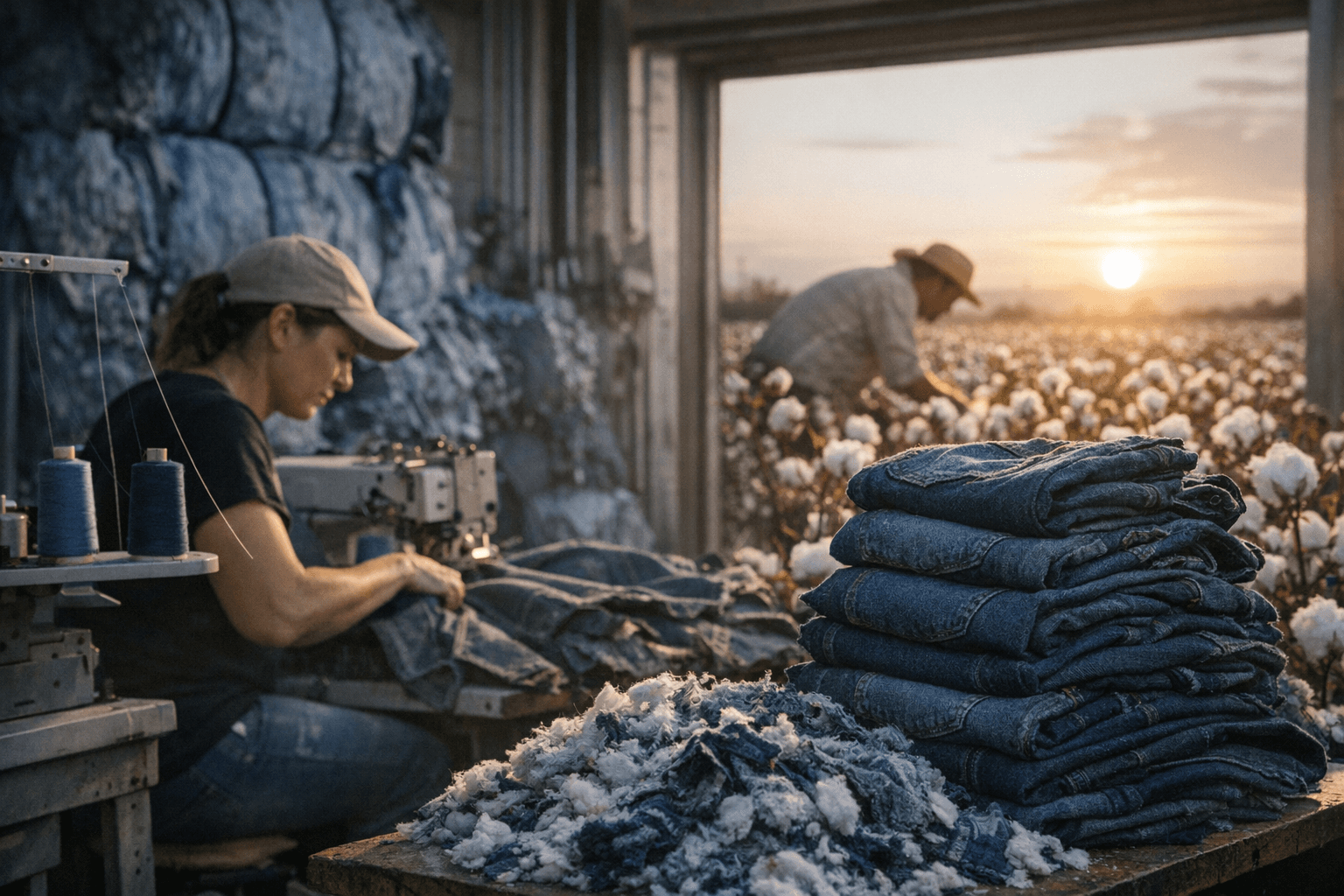
Ecoalf says its first denim range saves 5,434 liters of water while being built to come apart and go back into the loop, a stronger sustainability claim than the usual recycled-jeans gloss. The collection, called Denim for the Planet, is cut from 65% regenerative cotton and 35% recycled cotton from post-industrial waste, then finished with chemical-free laser and ozone processes that strip out some of the harshest steps in conventional denim production.
What makes the line notable is not just the fiber blend but the construction. Ecoalf says the jeans are mono-material, with no elastane or other synthetic fibers mixed into the cotton, and sewn with cotton yarn rather than synthetic thread. Even the hardware is considered: screw-off buttons replace zippers so the garment can be easier to recycle at the end of its life. That is the kind of detail that separates a serious circularity experiment from a generic “sustainable denim” label, because the design is aimed at disassembly, not just cleaner sourcing.
The brand has framed the launch as the result of more than a decade of recycled-cotton work, and that history matters. Ecoalf was founded in 2009 by Javier Goyeneche, then expanded its environmental pitch through the Ecoalf Foundation’s Upcycling the Oceans project, which began in Spain in 2015 and later moved into Thailand, Greece, Italy, France and Egypt. Ecoalf says more than 4,000 fishermen now take part, turning marine waste collection into a supply chain for recovered materials and new fibers.
That broader platform gives the denim launch more credibility than a one-off capsule. Ecoalf says it became the first fashion brand in Spain to receive B Corp certification in 2018, ranks in B Corp’s global top 5%, and is targeting net zero by 2030. It also says its products reach more than 1,200 multi-brand store placements worldwide, with standalone stores in cities including Milan, Tokyo, Biarritz, Bilbao, Madrid and Barcelona.
The real question is whether Denim for the Planet becomes a model others can scale. In a market where many brands still stop at recycled content and a lower-water wash, Ecoalf is pushing further into circular design, where fiber content, stitching, closures and finishing all have to cooperate. That is a more demanding brief, and a more interesting one.
This article was produced by Prism’s automated news system from verified source data, official records, and press releases, then run through automated quality and moderation checks before publishing. The system is built and supervised by the people who set the standards it runs under. Read our full AI policy.
Did this article answer your question?


