3D-Printed RC Submarine Nearly Sinks After Water Soaks Components
Water soaked the infill of a mostly 3D-printed 2.7-meter RC submarine, and James had to recover it before a test dive turned into a total loss.
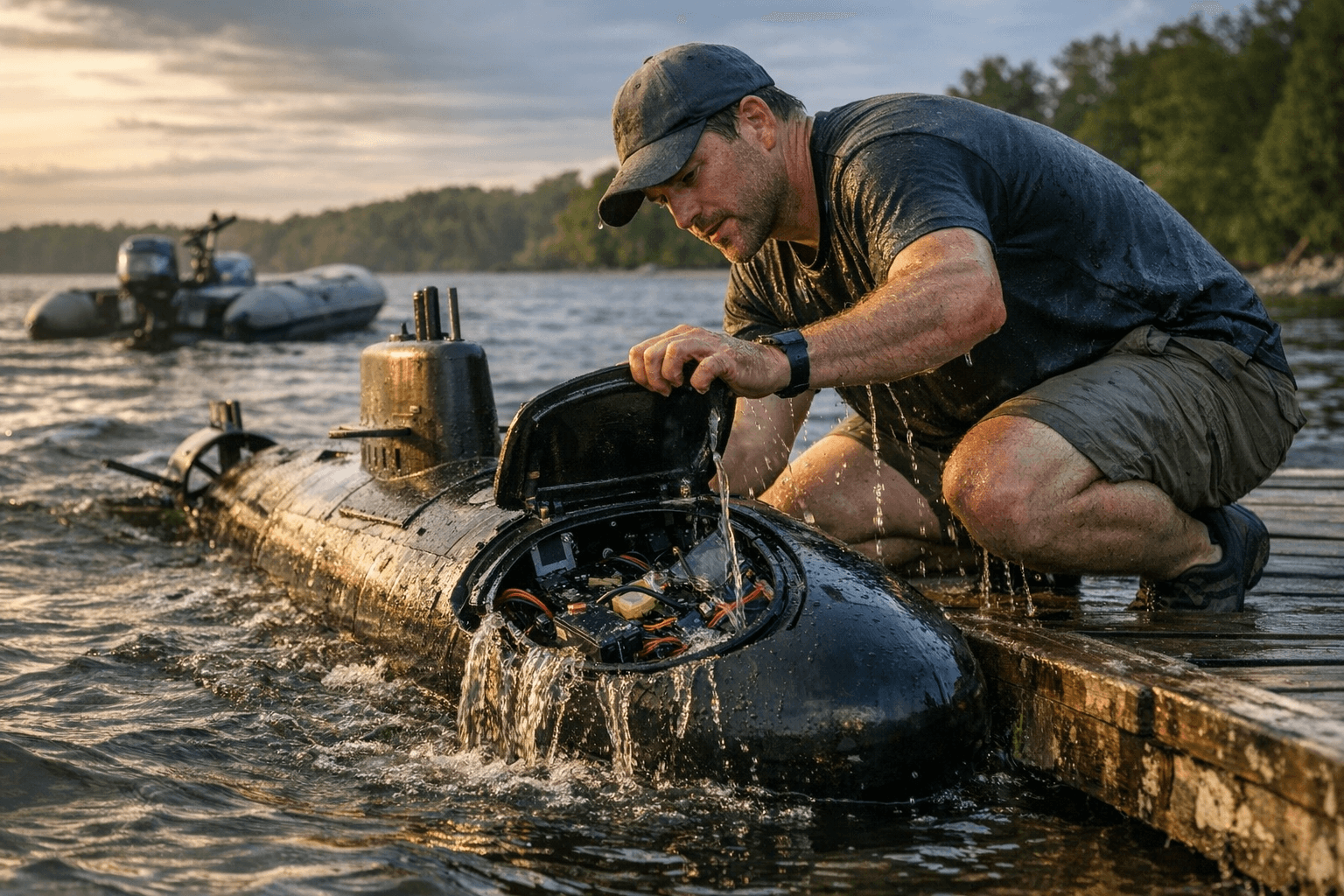
Water found the weak point fast. A mostly 3D-printed 2.7-meter RC submarine built by James of ProjectAir nearly became a total loss when, during a test dive, it went down cleanly but then refused to come back up because water had worked into the infill below a certain depth.
That failure matters because the boat was not a casual bench model. James had already worked through a prototype using large syringes as ballast tanks, with the plungers driven by a lead screw and linear potentiometer feedback. The control signal came from an antenna in a buoy tethered to the submarine, and the full-scale version used radially arranged acrylic tubes. All but the top tube were open to the water, while the rear section carried servo-actuated fins and a propeller. The servos were sealed as tightly as possible and filled with oil, and the other exposed electronics were potted in epoxy or coated with waterproofing compound. Even with that level of care, the printed outer structure still let water creep in where it should not have.
The near-sinking is the cautionary part for anyone printing parts that live around water, weather, or sustained load. FDM parts are not automatically watertight just because they look solid on the outside. Internal cavities, layer lines, and infill paths can turn a printed shell into a sponge once pressure rises or water sits long enough. That is exactly the kind of failure mode that turns a promising prototype into a recovery operation.
James managed to haul the submarine back before it was permanently lost, and it later completed a few more dives at very limited depth. That rescue is not a green light, though. It is a reminder that printed plastic can be acceptable for brackets, housings, fairings, and noncritical structure, but not for anything that must hold pressure, keep electronics dry, or maintain buoyancy after repeated immersion. When the part is underwater, the safest answer is often no printed part at all.
Use epoxy sealing, waterproof bags, or a different material stack when the part has to stay dry. Orient prints to reduce open pathways, keep perimeters thick, and do not trust infill to survive immersion without help. For pressure hulls, submerged seals, shaft passages, and buoyancy hardware, choose machined acrylic, metal, or purpose-built marine components instead. James’s submarine made it back once; the lesson is that the water only needs one good path to turn a print job into a salvage job.
This article was produced by Prism’s automated news system from verified source data, official records, and press releases, then run through automated quality and moderation checks before publishing. The system is built and supervised by the people who set the standards it runs under. Read our full AI policy.
Did this article answer your question?