All3DP guide maps filament choices from PLA to PEEK
Pick filament by the part’s job, not the spool label: PLA and PETG cover easy wins, while PEEK is for heat, stress, and serious tradeoffs.
Start with the job, not the brand
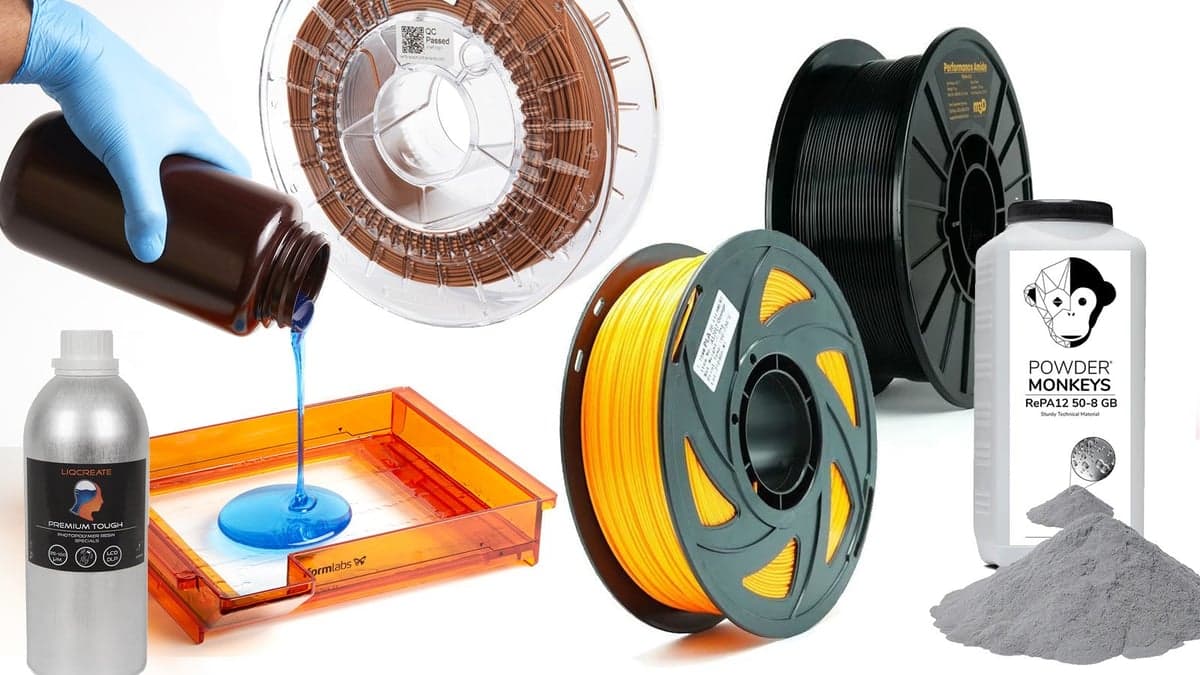
If you are choosing your next spool, the right question is not which filament sounds most advanced. It is what the part has to survive. All3DP’s updated guide works because it maps that decision from beginner-friendly PLA all the way to PEEK, and that is exactly how filament shopping should happen: by use case, not by habit.
That matters because desktop printing now spans two very different worlds. PLA, ABS, and PETG remain the most common thermoplastics in 3D printing, but more capable printers can also handle materials with higher heat resistance, impact resistance, chemical resistance, and rigidity. The result is simple: the material you pick can make a print easy, finicky, brittle, heat-safe, or production-ready.
For easy everyday prints, start with PLA or PETG
PLA is still the safest first answer when you want something that prints without drama. Prusa describes it as beginner-friendly, and that reputation is deserved. If the part is a bracket, organizer, display piece, or prototype that does not live near heat or constant mechanical load, PLA gives you the least stressful path to a clean result.
PETG is the next spool worth keeping on the shelf because it is also easy to print. For a lot of hobby work, that makes it the practical middle ground: less fussy than the more demanding engineering materials, but better suited than PLA when the part needs a little more real-world toughness. The tradeoff is that you give up the absolute simplicity of PLA, but you stay well away from the setup burden that comes with higher-end polymers.
When heat and mechanical stress enter the picture, move up carefully
ABS belongs in the conversation when the part is going to take mechanical stress. Prusa’s guide places it squarely in that category, which is why it still shows up for functional parts rather than just cosmetic prints. It is the material you reach for when convenience is no longer the top priority and the part has to do actual work.
Nylon pushes further into performance territory. Prusa calls out its excellent thermal and mechanical resistance, which is the reason it keeps showing up in functional hardware and durable parts. The catch is that nylon is not a casual upgrade from PLA. It rewards the printer that can handle it and the user who is willing to treat setup, bed adhesion, and moisture control as part of the process, not afterthoughts.
For outdoor use and messy environments, durability beats prettiness
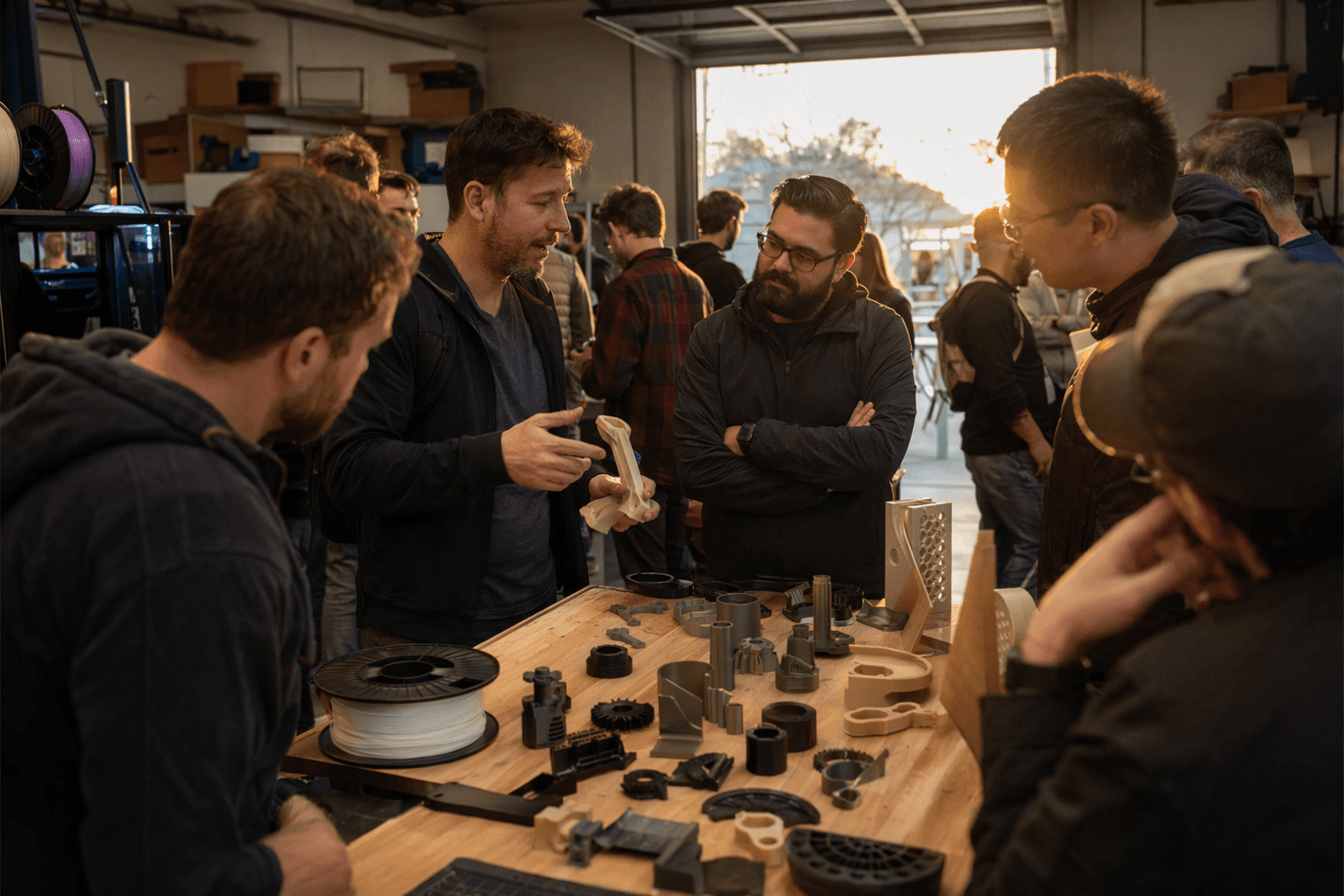
Outdoor parts are where filament choice becomes obvious very quickly. Sun, temperature swings, and constant handling expose the limits of easy-print plastics, especially when a part is only meant to look good on the bench. UltiMaker’s material guidance makes the broader point clearly: more advanced printers can handle materials with higher heat, impact, and chemical resistance, and that is what outdoor or near-industrial use tends to demand.
This is where the tradeoff really bites. The more resistant the material, the less forgiving it often becomes in the print process. You are not just buying toughness, you are buying a different level of printer control. If the part will live outdoors or in a harsher environment, the question is not whether PLA can finish the job. It is whether PLA can survive the job after the print is done.
When detail quality matters, know what you are giving up
Detailed parts are not only about layer height and nozzle size. They are also about how the filament behaves while it is being laid down. The common materials, PLA, PETG, and ABS, dominate because they offer a useful balance between printability and final part quality. That balance is why they remain the everyday workhorses across the desktop market.
Once you move into composites or more specialized blends, the material itself can change the mechanical behavior of the part. Prusa notes that composite filaments often alter how the finished print behaves, which is useful when you want a specific effect, but it also means the spool is no longer a neutral choice. You may get a stiffer or more specialized result, but you also inherit the quirks that come with the formulation.
For beginner safety, moisture management is part of the game
One of the biggest mistakes in filament buying is assuming print failures are always slicer problems. Prusa points out that many FFF materials are hygroscopic, which means they absorb moisture, and that moisture can cause poor surface quality, stringing, low layer adhesion, blobs, bubbling, and even smoke during extrusion. If the print looks rough or the extrusion sounds wrong, the spool itself may be the problem.
That is why dry storage matters. Prusa recommends a drybox or other low-humidity storage, and it notes that especially demanding materials such as PEEK, PEKK, and PSU may require controlled low-humidity conditions before and during printing. For beginners, that is an important reality check: the higher you climb on the material ladder, the more your workflow has to respect the filament’s environment.
PEEK and the high end of desktop printing
At the far end of the map sits PEEK, with PEKK and PSU close behind in the demanding-material category. These are not the filaments you buy because you want a slightly nicer finish. They are for parts that need serious performance and a printer setup that can actually support them. The appeal is obvious, because these polymers sit in a class that can handle difficult conditions, but the cost is equally obvious: higher control, tighter storage discipline, and more demanding print preparation.
That is why the broad span from PLA to PEEK matters. It is not a spectrum of “better” materials in the abstract. It is a ladder of tradeoffs, where each step asks for more from the printer and gives you more in return.
Why standards and testing matter more than marketing copy
Filament choice is not just a branding contest. ASTM International says additive manufacturing standards are meant to define terminology, measure process performance, ensure end-product quality, and specify calibration procedures. That matters because the desktop filament world is growing up alongside real testing language, not just marketing language.
ASTM’s F42 committee has also been developing WK82320, a proposed standard for measuring tensile properties of filaments. The point of that work is practical: it would help users in labs and industries such as aviation, aerospace, automotive, and defense choose materials that actually meet requirements. In other words, the same pressure hobbyists feel when picking between PLA, ABS, PETG, or nylon is being formalized for higher-stakes users too.
The real takeaway
All3DP’s guide is useful because it treats filament selection the way experienced printer owners already do: as a decision about tradeoffs. PLA buys you ease, PETG gives you another easy-print option, ABS and nylon push toward stress and durability, and PEEK lives at the demanding edge of the material map. Once you add moisture control, storage discipline, and the growing role of standards, the question changes from “what filament is best?” to “what does this print need, and what am I willing to give up to get it?”
This article was produced by Prism’s automated news system from verified source data, official records, and press releases, then run through automated quality and moderation checks before publishing. The system is built and supervised by the people who set the standards it runs under. Read our full AI policy.
Did this article answer your question?