US defense budget requests $3.3 billion for additive manufacturing
The Pentagon put $3.3 billion behind additive manufacturing, betting on faster qualification, distributed repair, and metal parts that can be made closer to the fight.
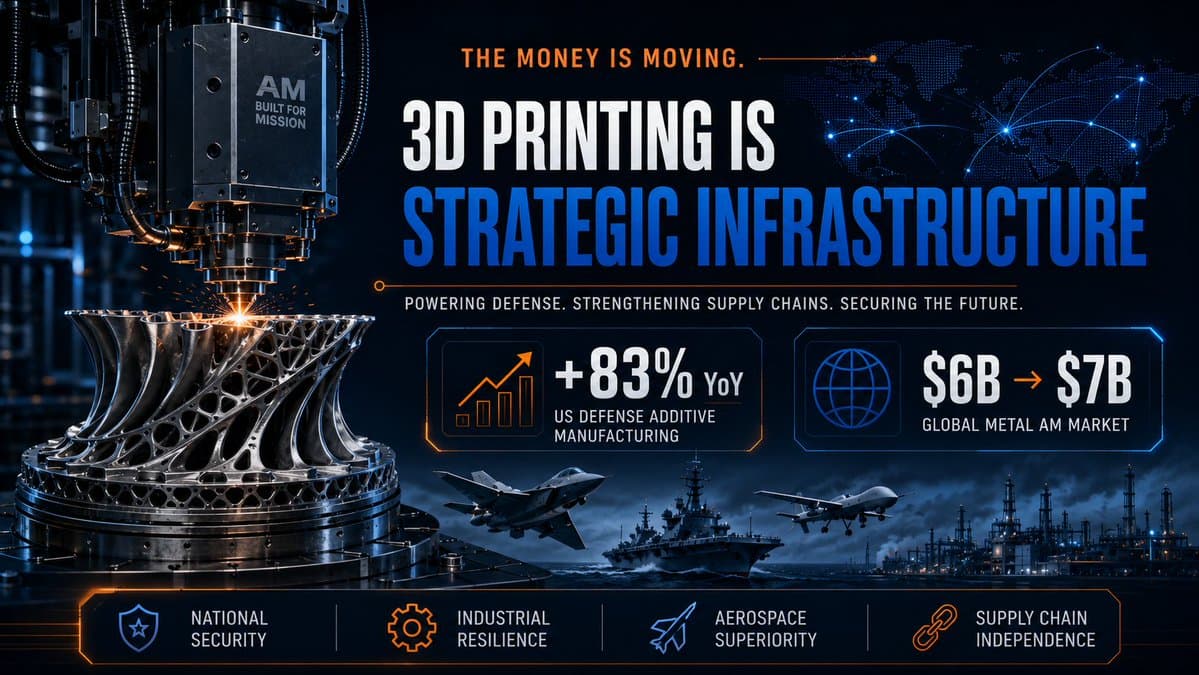
The Pentagon is no longer treating additive manufacturing as a lab-side curiosity. In the FY2026 request, it put $3.3 billion behind 3D printing and related projects, an 83% jump from FY2025, signaling that the real prize is faster qualification, repair workflows, and industrial-grade metal systems that can be pushed out to the point of need.
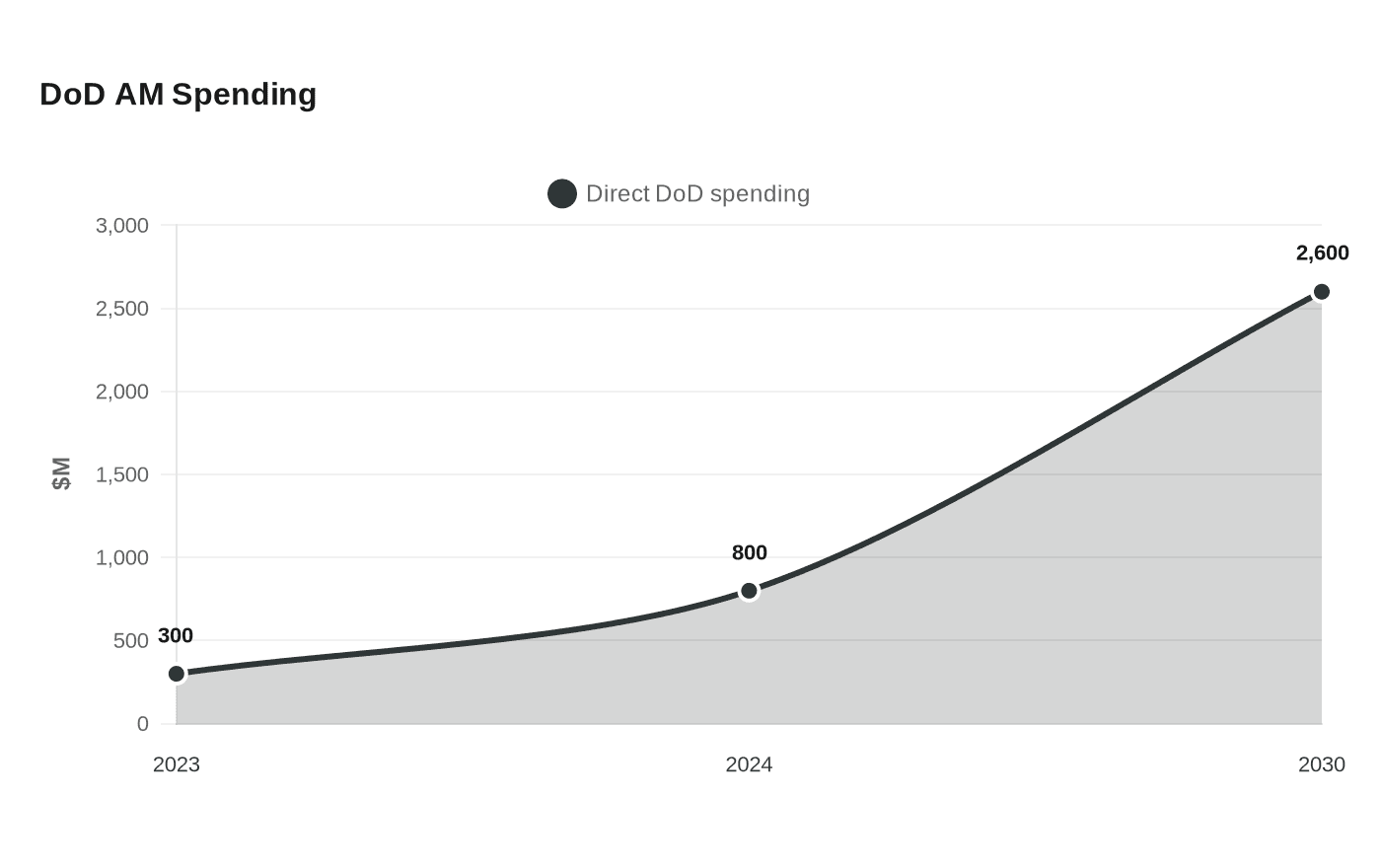
That money sat inside a broader FY2026 base budget request of $848.3 billion, and it lands after a steep ramp that already showed where the Defense Department wants this to go. Additive Manufacturing Research said direct DoD spending was about $300 million in 2023, rose to $800 million in 2024, and was projected to top $2.6 billion by 2030. The market signal matters because defense is not just buying printers, it is underwriting the tooling, process control, and qualification pipelines that make printed parts usable in the field.
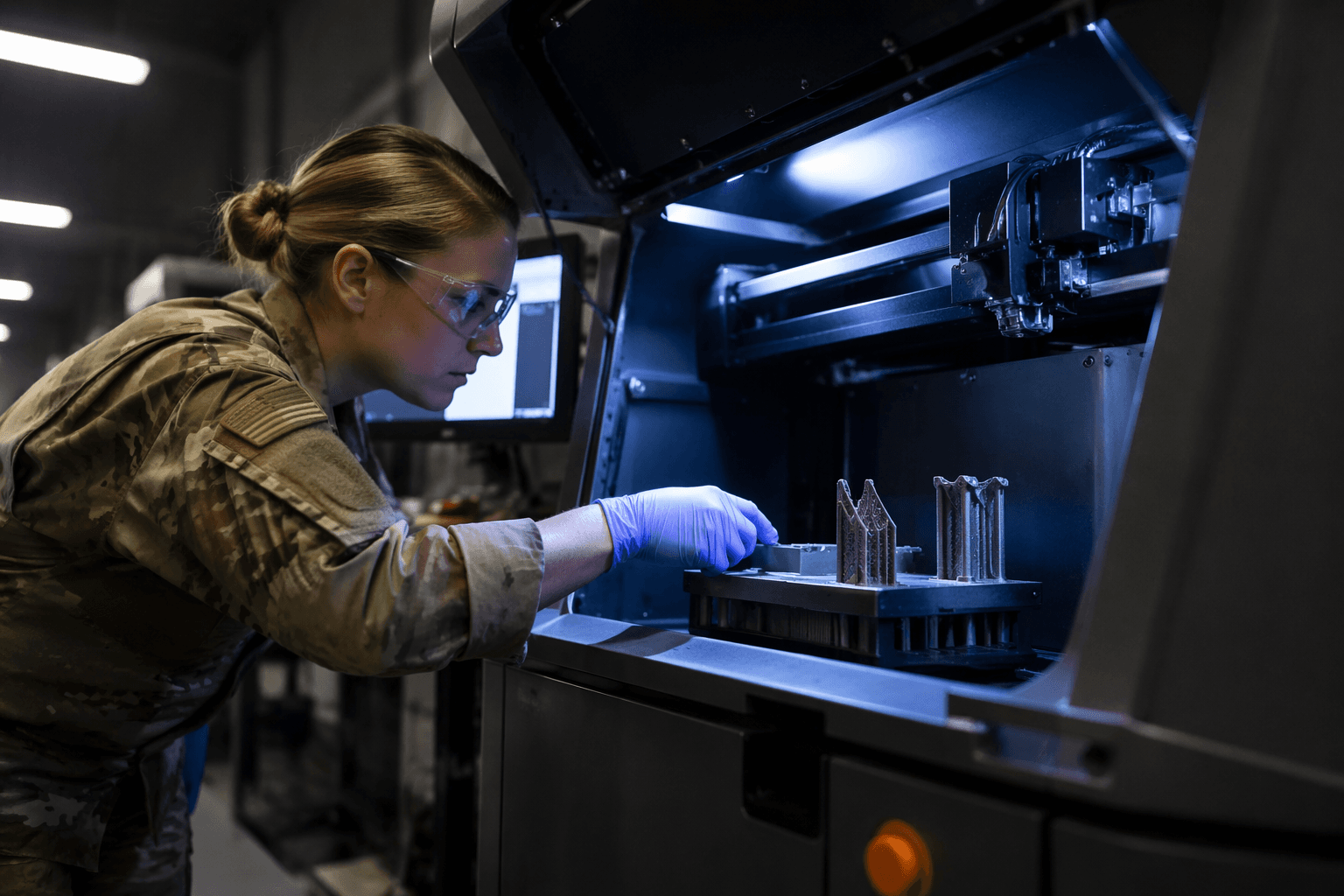
The Navy has been especially blunt about the shift. Its advanced manufacturing strategy, released in December 2024, said advanced manufacturing has significant implications for the defense industrial base and naval warfare. NAVSEA said in 2025 that the Navy had accelerated additive manufacturing from a promising capability to a warfighting capability, cutting lead times by 70% and building distributed manufacturing partnerships tied to AUKUS allies across the United States, Australia, and the United Kingdom.
The Army is pushing in the same direction, just with a different endpoint. In its May 1, 2025 transformation directive, the service said it wants to extend advanced manufacturing, including 3D printing and additive manufacturing, to operational units by 2026 and modernize its organic industrial base with full operational capability by 2028. That is the clearest hint yet that the Pentagon sees AM as a logistics and readiness tool, not merely a way to prototype a bracket.
For desktop users, the takeaway is mixed. Some of the same process improvements, better material data, tighter qualification, and stronger distributed manufacturing software, could trickle down into commercial machines and metal systems. But the most valuable work, especially high-performance metal AM and defense-linked repair workflows, is likely to stay in industrial and military channels. The budget says the Pentagon is funding the unglamorous machinery behind reliable printed parts, and that is where the real spillover will come from.
This article was produced by Prism’s automated news system from verified source data, official records, and press releases, then run through automated quality and moderation checks before publishing. The system is built and supervised by the people who set the standards it runs under. Read our full AI policy.
Know something we missed? Have a correction or additional information?
Submit a Tip