Aqua Essentials guide says hardscape is the foundation of aquascapes
Hardscape decides the scape before plants ever enter the tank. Aqua Essentials pushes that point hard, and the best layouts prove it with rock choice, scale, and empty space.

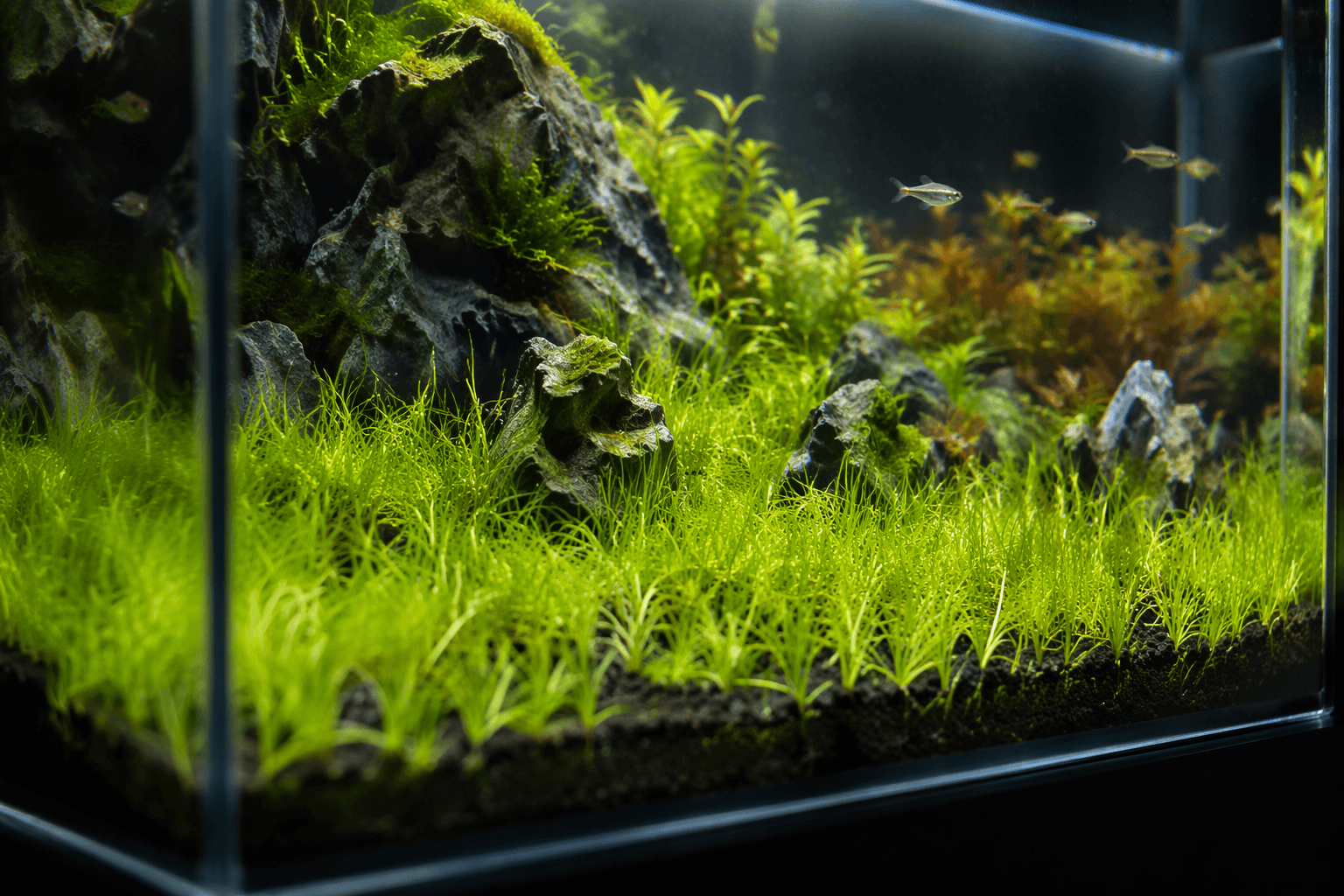
Dragon Stone, Seiryu Stone, and wood decide an aquascape before a single stem is rooted. If the hardscape already tells a believable story, the plants have somewhere to belong. It is the skeleton of the layout, setting height, depth, geological realism, planting pockets, and hiding spaces for fish.
Why hardscape comes first
Hardscape is more than decoration. Buce Plant calls it the natural and organic decorative material that forms the foundation of a planted aquarium, and Tropica’s rule is simple: start with hardscape before planting. That order matters because stone and wood are the permanent framework, while plants change, grow, melt back, and eventually cover mistakes if you let them. If the underlying structure is weak, the tank never really recovers from it.
Heavy stones may need a polystyrene layer under them to protect the glass. You are building a load-bearing composition that has to look good, hold its shape, and stay safe once water and substrate are in the mix.
Pick one material language and stick to it
One of the cleanest beginner rules is to choose one type of rock and commit to it. Do not mix Dragon Stone, Seiryu Stone, pebbles, and a grab bag of other textures in the same layout, because the result usually looks busy instead of natural. Hardscape-dominated aquascapes are a current trend, with the overall shape coming mostly from rockwork and sometimes wood.
That restraint is not about being minimalist for its own sake. It is about making the tank feel like a real place with one geological logic, not a rock shop display. At Aqua Essentials, Dragon Stone and Seiryu Stone are sold as distinct aquascaping materials with very different personalities, and Tropica’s layout examples show many contemporary tanks using hardscape first and planting later.
Dragon Stone and Seiryu Stone do different jobs
Dragon Stone and Seiryu Stone are not interchangeable, and that is why they keep showing up in strong layouts. Aqua Essentials sells Dragon Stone as a soft rock with grooves and crevasses, minimal effect on pH, and a surface that grips mosses and epiphytes well. It is popular in iwagumi aquariums, but it also suits nature-style and jungle-style layouts because its texture reads as earthy and weathered rather than sharp or formal.
Seiryu Stone, sold by Aqua Essentials as Mini Landscape Rock, goes in the opposite direction. It has striking white veins and crevices that can resemble mountain formations, which makes it a natural fit for Iwagumi and other precise, rock-led builds. It is the stone to reach for when you want the hardscape to look like a ridge line, a cliff face, or a little alpine scene instead of a forest floor.
At Aqua Essentials, Dragon Stone is listed as a stone used by Oliver Knott. Dragon Stone’s softer grooves invite moss and epiphytes to settle in, while Seiryu’s sharper gray character gives you cleaner edges and stronger silhouettes.

Composition is what turns stones into a scape
Once the material is chosen, composition does the rest of the work. Scale matters because a small stone looks like gravel if it sits alone in a large tank, while a properly sized rock mass can give the whole aquascape a sense of terrain. Negative space matters just as much, because a layout packed wall to wall with stone and wood has nowhere for the eye to rest and nowhere for the plants to breathe.
Hardscape-first thinking keeps coming back to focal points. The tank needs a place where the eye lands immediately, whether that is a dominant Seiryu formation, a Dragon Stone cluster with deep grooves, or a wood-and-rock junction that anchors the whole scene. In Dennerle’s Iwagumi-inspired layout, the rock landscape carries the structure, while greenery is added later to soften the scene and conceal technology.
The best hardscape also respects the shapes the material already wants to make. Dragon Stone’s holes, ridges, and porous surface feel natural in a looser, more organic composition. Seiryu’s white veining and mountain-like crevices reward tighter placement and more deliberate sightlines.
Iwagumi still sets the standard for rock-led aquascaping
Iwagumi is the clearest expression of hardscape discipline in the hobby. Dennerle calls it a minimalist rock landscape, and hardscape-dominated layouts are a current trend where rockwork, and sometimes wood, provides almost all of the shape. That aesthetic sits behind many polished planted tanks today, even when the final result is more mixed than a classic Iwagumi.
The style has deep roots in Japan, and Tropica ties some of that modern reputation to Takashi Amano, whose aquarium works from the 1990s helped bring plants such as Blyxa japonica into the spotlight.
Build the bones before you buy the stems
Start with hardscape, protect the glass when the stones are heavy, choose one rock language, and let the shapes of Dragon Stone or Seiryu Stone define the tank before you think about plant density.
This article was produced by Prism’s automated news system from verified source data, official records, and press releases, then run through automated quality and moderation checks before publishing. The system is built and supervised by the people who set the standards it runs under. Read our full AI policy.
Did this article answer your question?