Aquascaping pruning guide shows how to trim plants
Trim the right plant the right way, and an aquascape stays denser, cleaner, and sharper instead of shading itself into a mess.

One overgrown stem and one shaded patch at a time, a planted tank starts looking soft and tired. Trimming stops that slide when you treat it as growth control, not a cleanup chore.
Pruning is part of the design, not the afterthought
The biggest mistake in planted tanks is waiting too long. Small, frequent trimming keeps growth compact and balanced, while big pruning sessions can throw off the tank’s rhythm and disturb the aquarium’s overall balance. Dead or dying tissue does more than look ugly: it breaks down, uses oxygen, and releases nutrients that can feed algae.
Pruning pushes plants toward bushier growth, keeps one species from shading itself and its neighbors, and preserves the clean lines that make an aquascape look intentional.
Use the right tool or the plant pays for it
Kitchen scissors and fingers are blunt compromises, and they crush stems instead of making a clean cut. A crushed stem is more likely to decay at the cut site, which is exactly the kind of small failure that turns into bacterial trouble and ugly melt.
Curved aquascaping scissors are the workhorse here because they let you cut at different angles without hammering the surrounding stems or nudging hardscape out of place. Straight trimming scissors earn their keep in carpet work, where the goal is a level, even finish across the top.
Stem plants respond best to hard decisions made lightly
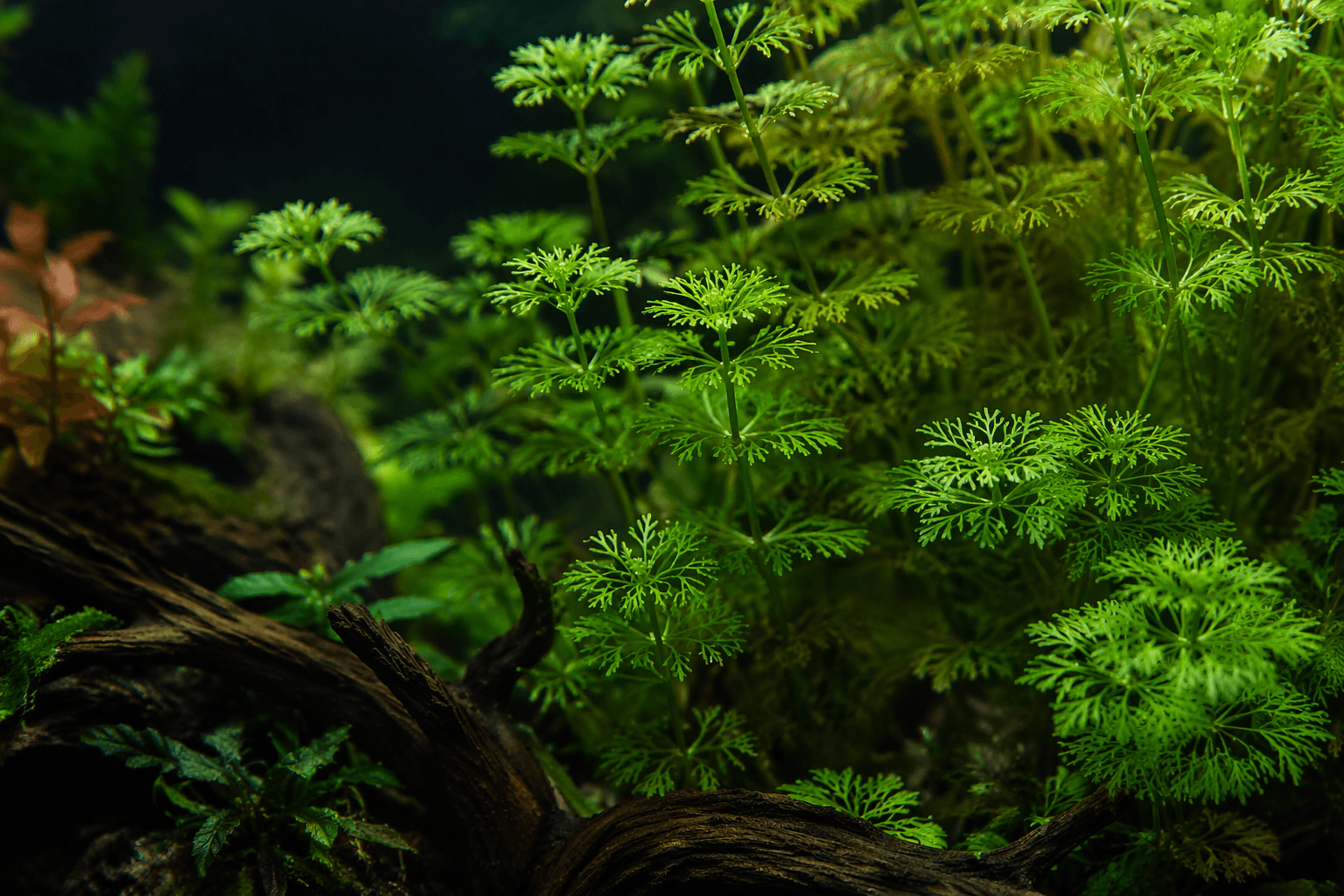
Stem plants are the easiest to shape and the easiest to ruin if you get lazy. For stem plants, Tropica recommends cutting just above one of the bottom leaves, then replanting the top if you want to thicken the group. The remaining stem usually pushes new shoots, so one trim can turn a thin clump into a denser bush.
If a stem stand is getting leggy, trim it high enough to leave healthy lower nodes, then reinsert the tops in open spots so the group fills out instead of becoming a flat hedge.
Carpets need a haircut, not a chop job
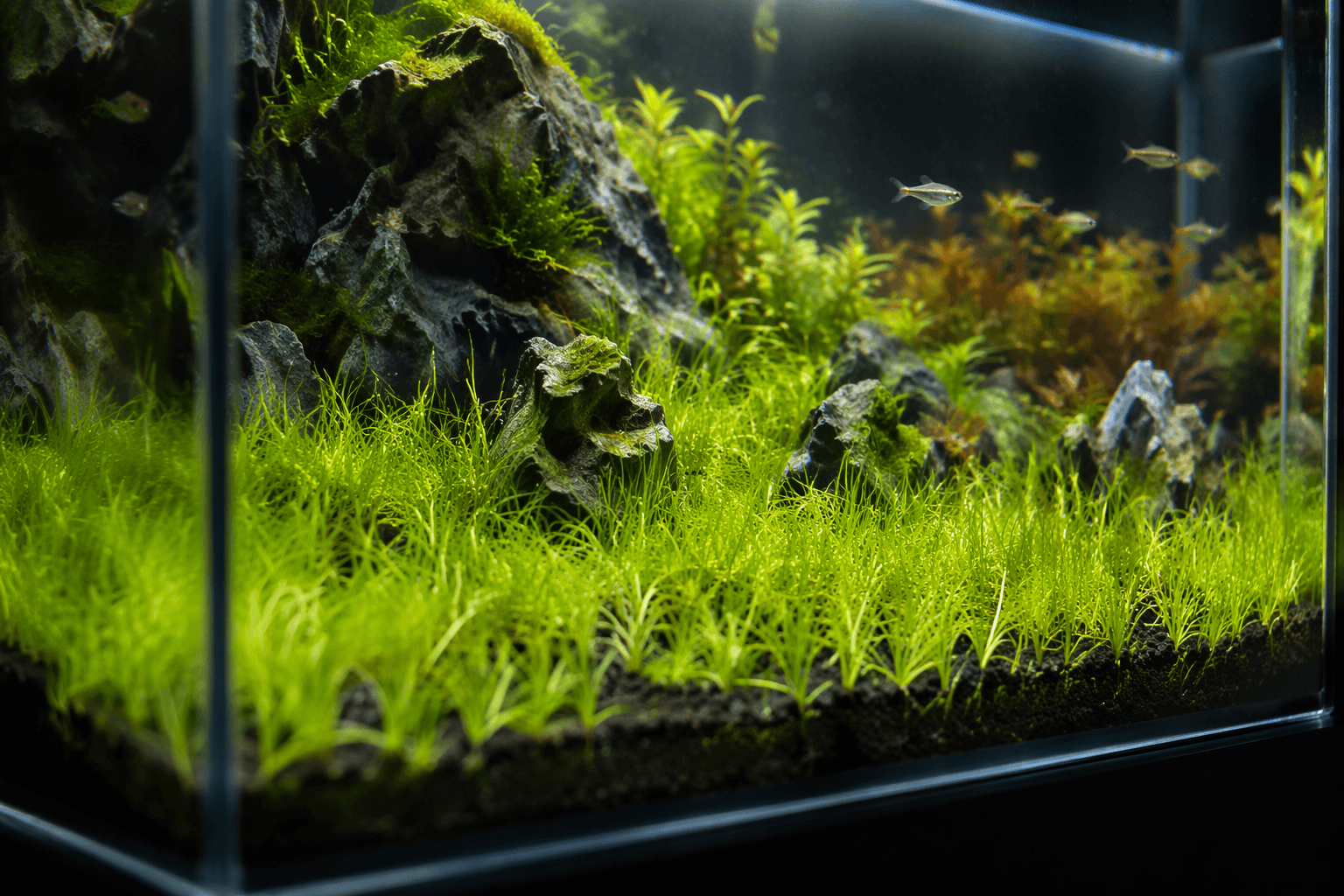
Foreground plants live or die on the quality of the cut. Straight scissors are especially useful here because they let you work at a right angle and keep the surface uniform, which is what makes a carpet read as a lawn instead of a clump of random tufts. The goal is a smooth plane that defines the front of the scape and lets light reach the lower growth.

Carpets can trap debris and shade themselves fast. Trim them regularly, and you keep runners and new growth close to the substrate. Leave them alone too long, and the top turns shaggy while the bottom struggles for light.
Rosettes and rhizomes need a different hand
Rosette plants do not behave like stems, so do not treat them like stems. With rosettes, the safe move is to remove the oldest outer leaves at the base and leave the center growth point alone. That keeps the plant healthy without slicing through the crown, which is where you can do real damage.
Rhizome plants need even more restraint. Their growth runs horizontally, so the trim is about removing damaged or crowded leaves and keeping the rhizome itself exposed and healthy. If you hack at the rhizome, you are cutting into the plant’s structure, not shaping it. Bulbs and mosses sit in the same broad aquascaping toolbox, but they are handled more by selective cleanup than by a full shearing pass.
Aquascaping culture is built around this kind of precision
Buce Plant groups aquascaping plants into broad categories that include rhizome plants, stem plants, rosette plants, carpeting plants, bulbs, and mosses. Each growth habit asks for a different cut.
That design-first mindset traces back to Takashi Amano, whose Nature Aquarium approach pushed aquascaping toward naturalistic underwater landscapes instead of rigid, flower-garden planting. The International Aquatic Plants Layout Contest calls itself the world’s largest planted-aquarium contest, and Aqua Design Amano records 557 entries from 19 countries in the first event at the start of the 21st century. The Aquatic Gardeners Association has promoted aquatic plants, education, aquascaping, and community since 1997.
A simple trimming rhythm keeps the tank steady
Trim small sections often, remove dead leaves as soon as you see them, and keep up with regular water changes, with Tropica recommending roughly 25% each week. That combination keeps debris down, limits decay, and gives new growth room to take over.
Stem groups thicken instead of sprawling, carpets stay level, rosettes stay open in the center, and rhizome plants keep their shape without swallowing nearby space.
This article was produced by Prism’s automated news system from verified source data, official records, and press releases, then run through automated quality and moderation checks before publishing. The system is built and supervised by the people who set the standards it runs under. Read our full AI policy.
Did this article answer your question?