Bucephalandra goes mainstream in India’s aquascaping scene
Bucephalandra has moved from collector bait to retail staple in India, and the price spread now shows how deep the demand has gotten.
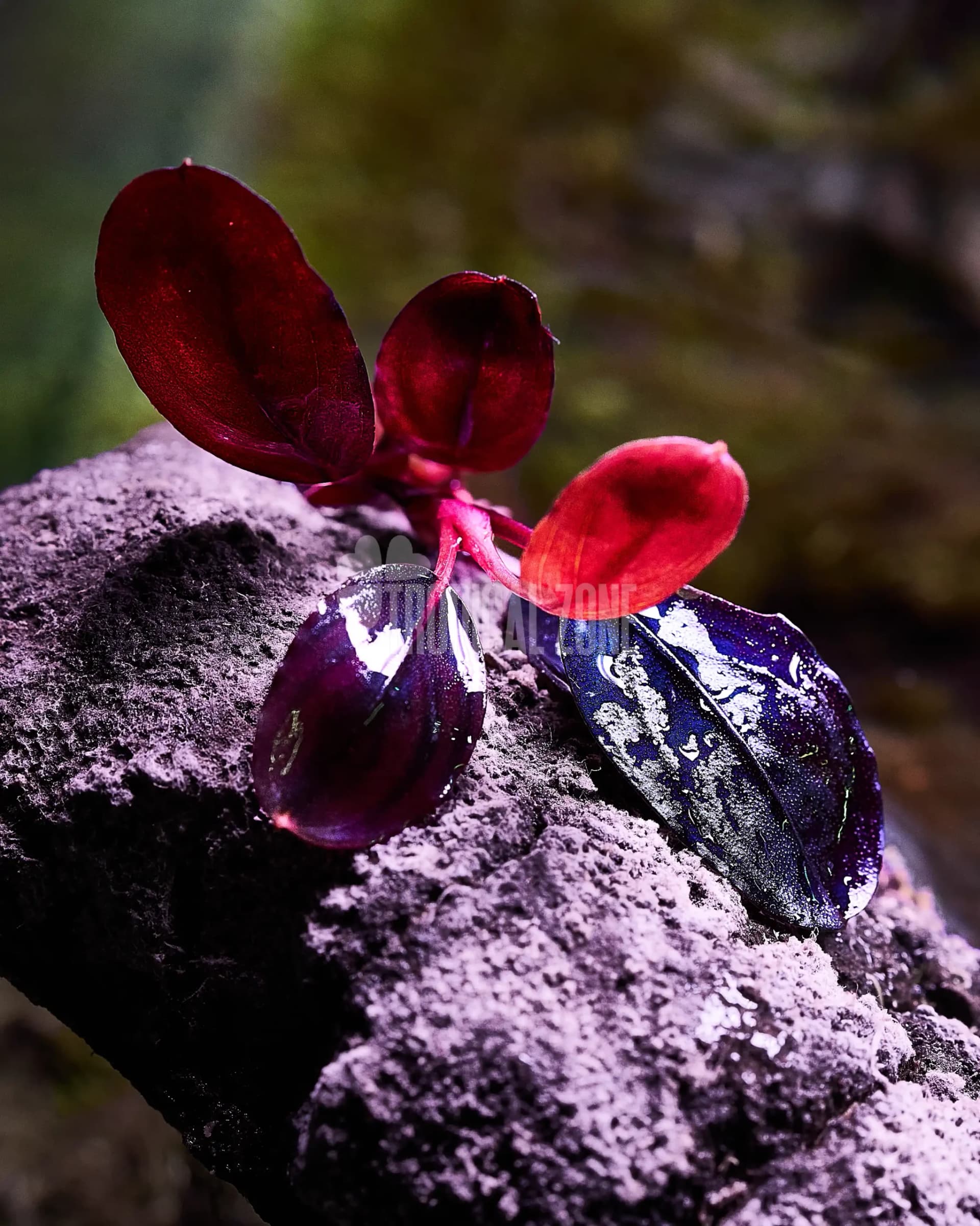
Bucephalandra is no longer the plant you only saw tucked into a forum thread or sitting in one of those elite display tanks with perfect hardscape. In India, it now shows up in social feeds, shop grids, and shrimp tank builds often enough to feel like a category shift, not a passing fad. The reason is simple: it looks expensive, grows slowly, and fits the way a lot of modern aquascapes are actually built.
What changed in India
The biggest shift is visibility. Bucephalandra has been pushed hard by Instagram, Reddit, and YouTube over the last couple of years, where its compact, jewel-toned leaves are usually shown clinging to driftwood or stone under strong aquarium lighting. That image has done real work for the plant, because Buce does not need a full carpet or a manicured stem layout to make a tank feel finished.
Retail has caught up fast. One Indian specialty seller now promotes a Bucephalandra collection with 100+ rare and exotic varieties, while listing 15 product entries right on the collection page. That matters because you do not build out that kind of catalog for a plant nobody is buying. Prices on that page run from roughly 199 to 1,699, which is a wide enough spread to pull in both first-time buyers and collectors chasing named forms.
The market around it has also become more distributed. Another Indian retailer describes Bucephalandra as hardy, low-light tolerant, and suitable for rocks or driftwood, which is exactly the kind of language that gets a plant into beginner tanks as well as showcase scapes. A separate app listing from a large aquarium and pet shop says it ships anywhere in India with live guarantee, a sign that the logistics for live plants are now broad enough to support national demand instead of just local hobby circles.
Why Buce fits the way aquascapes are built now
Botanically, Bucephalandra has the right profile for the job. It is a genus of about 30 rheophytic herbs in the Araceae family, endemic to Borneo, and it forms dense mats on rocks in shaded tropical streams. In other words, it evolved to live attached to hard surfaces in moving water, which is why it translates so cleanly into aquariums where aquascapers want texture on stone and wood rather than another rooted plant demanding substrate.

That Borneo connection is part of the appeal too. Borneo is a globally significant aroid habitat with extraordinary diversity, and Bucephalandra sits inside that broader collector culture around rare Bornean plants. In aquascaping terms, that gives Buce a backstory that plain green fillers cannot match. You are not just buying a plant that looks good, you are buying into a lineage that already carries prestige.
The practical advantage is just as important. Aquatic care guides consistently describe Bucephalandra as a slow-growing rhizome plant, often treated like an epiphyte, that can thrive in low to medium light and does not require substrate. AquariumCoop lists a comfortable range of roughly 70 to 82 degrees Fahrenheit, or 21 to 28 degrees Celsius, with pH from 6 to 8. That makes it forgiving in a huge range of planted tanks, from simple low-tech setups to CO2-driven layouts.
Why shrimp keepers and low-tech tanks love it
Bucephalandra is one of those plants that makes sense as soon as you keep it for a while. Slow growth is usually a selling point only if you have actually spent months trimming stem plants and replanting runners. Buce avoids that grind. Once it is attached, it tends to stay put, and the rhizome habit means you can wire or glue it to hardscape and leave the substrate alone.
That slow pace also helps in shrimp tanks. The plant creates small, sheltered surfaces where invertebrates can graze, rest, and move through the tank without the visual bulk of faster growers. It is easy to see why the plant keeps getting paired with shrimp in India’s aquascaping chatter, because it solves two problems at once: it gives the tank a premium look and it does not turn into maintenance homework.
The catch is the same one that always comes with slow growers: neglect shows up as algae and dull leaves before it shows up as rapid decline. Buce likes light, but not abuse. If the leaves are shaded badly, buried, or left dirty for too long, the plant can look tired fast. That is the pitfall people miss when they assume “easy” means “set and forget.”
What to buy, and what the listings tell you
The current Indian market is not just selling Bucephalandra, it is segmenting it. Tropical Zone’s collection includes names such as Kedagang, Deep Purple, Green Wavy, Catherine Mini, Velvet, Dark Emerald, Pygmy, Dark Catherine, Marble Variegated, Catherine, Melawi, Godzilla, Pearl Grey, Silver Grey, and Green Melon. That mix shows how collectors are being asked to buy not just a genus, but a palette of forms and textures.
A broader overseas listing from AquariumPlants shows how normalized the category has become outside India too, with multiple Bucephalandra varieties such as Mini Phantom, Godzilla, Silver Eagle, Mini Boyan, Theia, Green Wavy, and Artemis. When the same plant family is showing up in multi-variety storefronts on more than one market, the trend is bigger than one country’s social-media wave. It is becoming a standard aquarium plant category, the same way Anubias and Cryptocoryne did before it.
That said, the pricing spread in India tells you to stay sharp. A plant that costs 199 on one listing and 1,699 on another is not just priced by size. You are also paying for rarity, presentation, and whether the seller is positioning a form as collector-grade or simply inventory-ready. Healthy emersed-grown stock and fast shipping are worth paying for, but the premium should make sense against the specific variety, not just the word Bucephalandra on the label.
Collector plant or lasting shift?
This does not look like a one-season hype spike. The plant has the biology, the hardscape fit, the shrimp appeal, and now the retail depth to stay visible. The social-media attention helped, but the real reason Bucephalandra is sticking is that it solves a design problem in a way hobbyists notice every day: it gives a tank texture without turning into a trimming project.
That is why its mainstreaming in India feels real. It started as a collector plant, crossed into aspirational content, and then proved practical enough that stores could stock more than a dozen forms and ship them across the country. When a plant gets that combination of aesthetic status and low-maintenance utility, it stops being a phase and starts becoming part of the standard aquascaping vocabulary.
This article was produced by Prism’s automated news system from verified source data, official records, and press releases, then run through automated quality and moderation checks before publishing. The system is built and supervised by the people who set the standards it runs under. Read our full AI policy.
Did this article answer your question?