DIY aquarium castle guide turns playful decor into safe aquascaping
A fantasy castle can work in a real tank if you build it like hardscape, not décor: smooth edges, inert stone, and fish-first proportions.

Built the right way, an aquarium castle becomes a hardscape centerpiece that gives fish cover, breaks sight lines, and still leaves the tank looking open and balanced. The difference between novelty and a hazard comes down to material safety, edge finishing, and a layout that fits the species living inside it.
Build the castle around the fish, not the fantasy
The smartest castle starts with the livestock list, not the sketch. Cichlids often defend territory around caves, rocks, feeding areas, or breeding sites, so a castle with usable chambers and clear boundaries can support natural behavior instead of crowding it out. Corydoras and kuhli loaches are the opposite kind of user, preferring hiding spaces and low-stress routes under cover, which means the best castle is one that offers shelter without sealing off the whole floor.
A castle that looks impressive in a dry mockup can become useless once it is packed into a tank, because fish need entrances they can actually turn through, windows that do not trap them, and a footprint that leaves swim space around the base. If the structure dominates the scape, it stops being hardscape and turns into a block.
Treat the castle as habitat, not ornament
Rocks, caves, and driftwood add structure, hiding places, and surface area for beneficial bacteria to colonize. The broader ecology backs that up: coral reef research has tied higher structural complexity and shelter availability to higher fish density and species richness, and shelter studies in rainbow trout and juvenile squid have shown practical welfare benefits, including preference for sheltered areas when undisturbed and gains in survival, growth, and behavior.
The little arches and alcoves provide cover, territory edges, and a low-stress retreat for species that want them.
Choose materials that stay neutral in the water
Material choice is where a fun project can go sideways fast. Inert aquarium stones are used specifically to avoid changing pH, KH, or GH, which makes them the safest starting point for a castle shell or support structure. Slate, lava rock, and Dragon Stone all fit that category well in most setups, while limestone, dolomite, and aragonite are calcium-carbonate rocks that can raise pH and hardness.
In soft-water aquariums, a carbonate-rich stone can quietly push the chemistry in the wrong direction over time for fish that prefer stable, softer conditions. The safest habit is simple: keep decorative materials untreated, non-reactive, and chosen for the water you already plan to maintain.
Finish every edge like a fish will rub against it
Sharp internal edges are a deal-breaker. A castle may look stout on the shelf, but fish will investigate it with fins, bellies, and whiskers, and every cut corner inside a tunnel becomes a point of stress or injury. This is especially important in narrow passages and at the mouth of openings, where a fish can brush the same spot every day.
Before the castle goes into the tank, every internal seam and edge should be checked by hand. If your fingers catch, a fish can catch there too. Smooth the surfaces, round the openings, and make sure the exit of every tunnel is just as clean as the entrance.
Keep the chemistry check as part of the build
A simple water-parameter test after adding rockwork is not optional. Chemistry shifts can be gradual, which means a castle can seem safe on day one and still nudge the tank later if one component is more reactive than expected. A post-install test for pH, KH, and GH belongs in the same routine as a leak check or filter inspection.
If the numbers move after the castle goes in, the problem usually starts with the stone, not the shape. The structure should stay structurally interesting without changing the water chemistry.
Design for passage, territory, and maintenance
Once the material is right, the geometry has to work. The tunnels should be large enough for the species you actually keep, the windows should offer line-of-sight breaks without creating dead ends, and the base should leave enough open space for substrate cleaning and feeding. For cichlids, that means caves and boundaries they can claim; for bottom dwellers, it means routes they can enter and leave without stress.
A beautiful castle that traps mulm under a sealed base will become a detritus pocket, and a piece that is impossible to lift or rinse later is going to cause trouble the moment you need to rescape. A good build has access, clearance, and enough openness around the underside to keep cleaning realistic.
- Inert stone or other non-reactive material
- No metallic parts or coated surfaces
- Smooth internal edges and rounded openings
- Cave sizes matched to your fish
- Enough open base and side clearance for flow and maintenance
- Water test after installation for pH, KH, and GH
A useful castle checklist looks like this:
Make the themed centerpiece fit the aquascape, not replace it
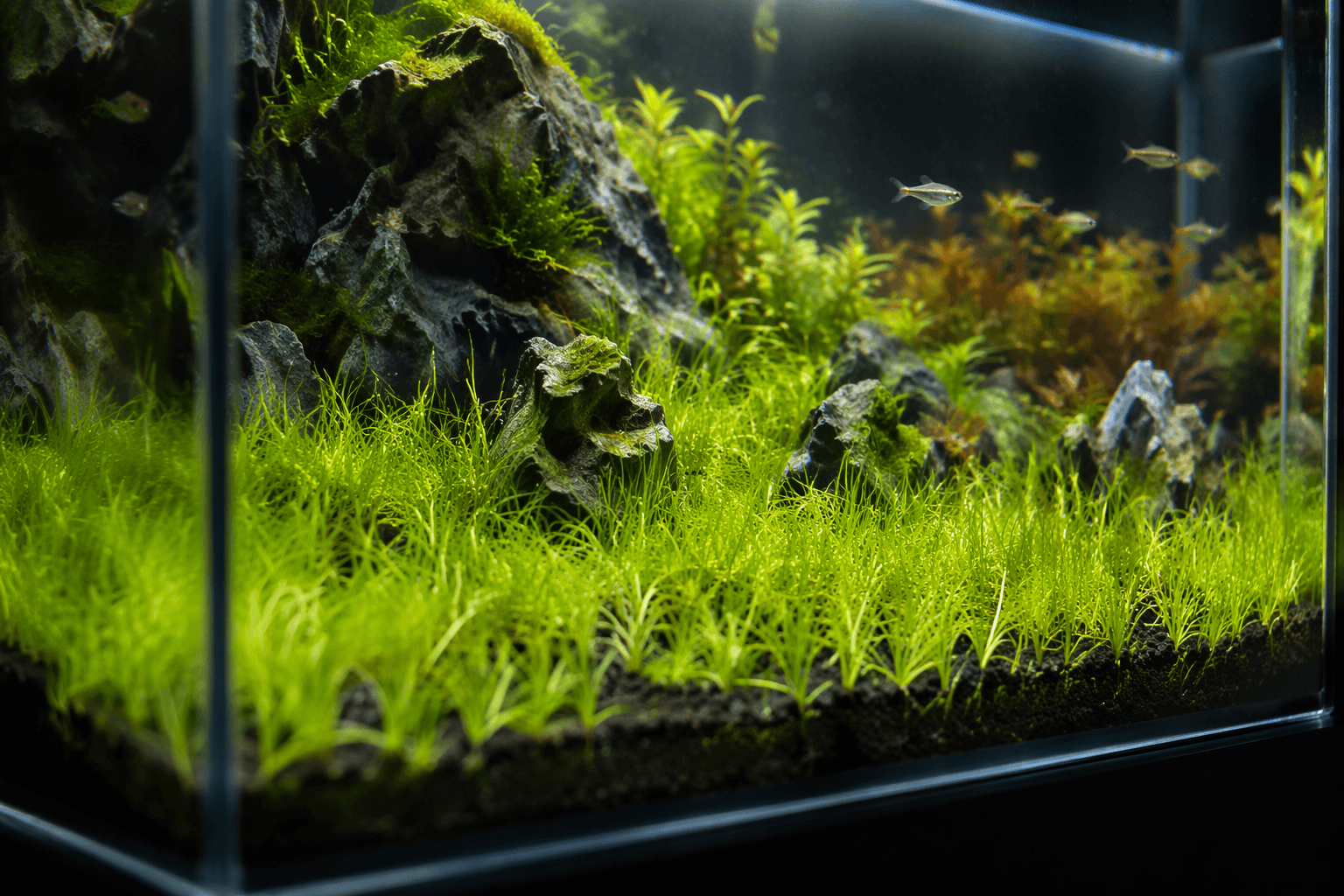
A castle can be the focal point and still leave room for driftwood, plants, sand, and negative space, which keeps the whole tank from reading like a toy display. Hardscape still has to serve both composition and biology: the tank needs flow, territory lines, and a layout that feels intentional from the front glass all the way to the back pane.
This article was produced by Prism’s automated news system from verified source data, official records, and press releases, then run through automated quality and moderation checks before publishing. The system is built and supervised by the people who set the standards it runs under. Read our full AI policy.
Did this article answer your question?