Java moss remains a staple for easy, versatile aquascaping
Java moss earns its reputation as the aquascaper’s problem-solver, but the same forgiving growth that softens hardscape can turn shaggy without a trim plan.
Java moss attaches to wood and rock through rhizoids, can float, and keeps showing up in freshwater tanks because it handles a wide range of water conditions. It is the plant you reach for when a hardscape looks too bare, a shrimp tank needs cover, or a new aquarist needs something that will survive the learning curve.
What Java moss actually is
The first trap with Java moss is the name itself. In the aquarium trade, it can mean either Taxiphyllum barbieri or Vesicularia dubyana, and even experienced keepers can have trouble telling the two apart. Taxiphyllum barbieri is the one most commonly treated as the modern aquarium-trade Java moss, native to Southeast Asia and widely used in freshwater aquariums, while Vesicularia dubyana is the original plant first called Java moss in the hobby.
That identity confusion has been baked into the plant’s history for a long time. Vesicularia dubyana was first introduced to aquarists in 1933, and Taxiphyllum barbieri reached European aquarists in 1968. Older and modern aquarium references have blurred them together ever since, which is part of the reason sellers still use the same common name so casually.
Why it keeps earning tank space
Java moss is popular because it solves practical problems without asking for much in return. It is not a rooted plant in the usual sense, so it does not need to be planted like stem plants or rosettes. Instead, it uses those rhizoids to grab onto surfaces, which makes it unusually useful in aquascapes where wood, rock, and open negative space matter.
The plant adds bright green texture, but it also fills awkward gaps, softens hard lines, and gives you a living material that can be placed where other plants struggle.
Where it works best in an aquascape
Java moss is at its strongest when you use it as a structural tool rather than a decoration you tack on at the end. It is widely used on rocks, roots, and driftwood. If a piece of wood looks too stark or a stone cluster feels too hard-edged, a layer of moss can make the whole layout feel more natural without hiding the shape you built.
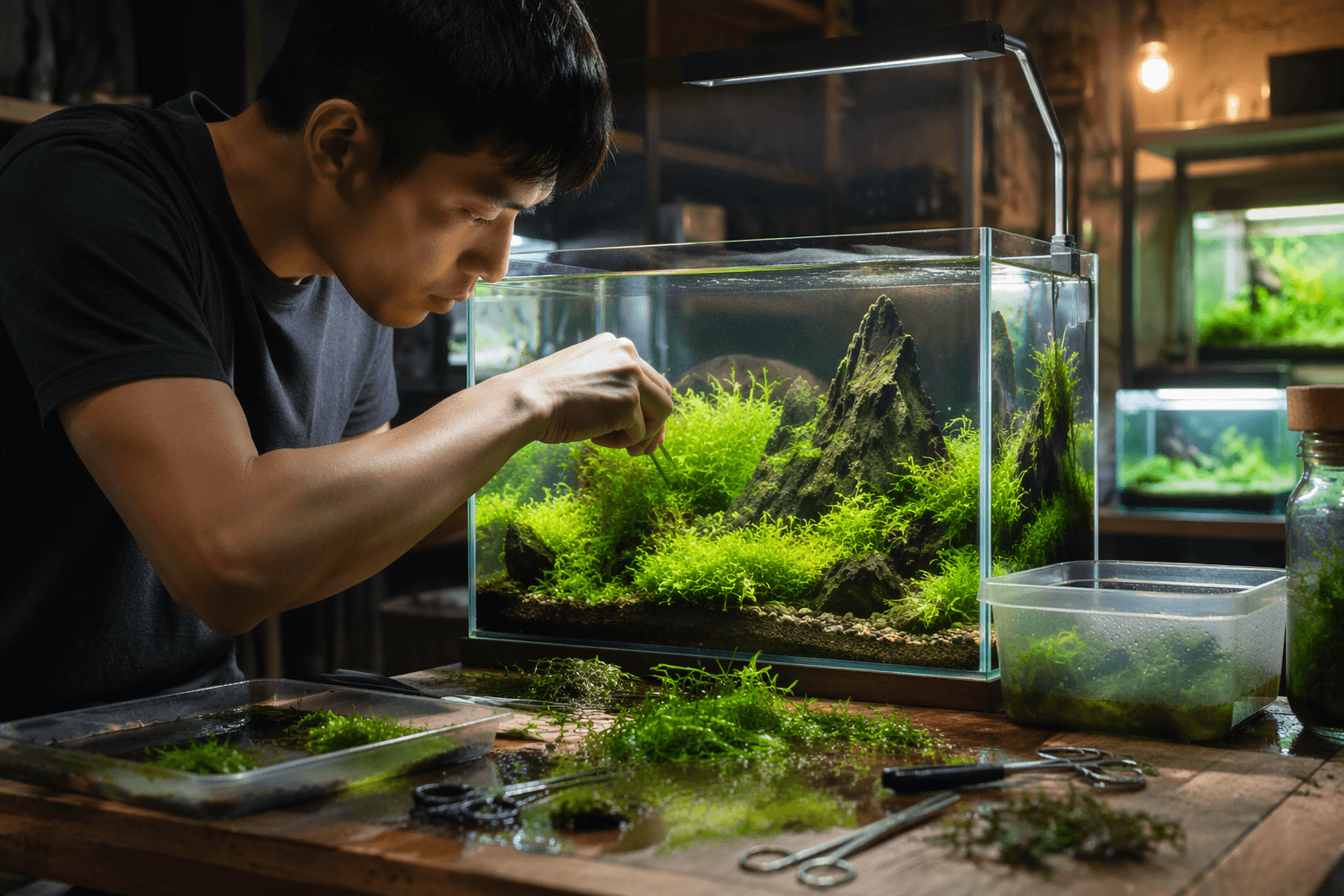
It also earns a place in fish rooms for the way it supports life, not just looks. Dense aquatic plants create hiding places for fry and can improve fry survival by shielding young fish from adults. In shrimp tanks, Java moss does even more work: it provides cover, grazing habitat, and a dense surface where tiny shrimp can disappear and feed.
A few uses keep coming up because they genuinely fit the plant’s growth habit:
- Tied to driftwood or roots, it turns bare hardscape into a living branch line.
- Wrapped over rock, it softens sharp edges and helps the stone read as part of the scene.
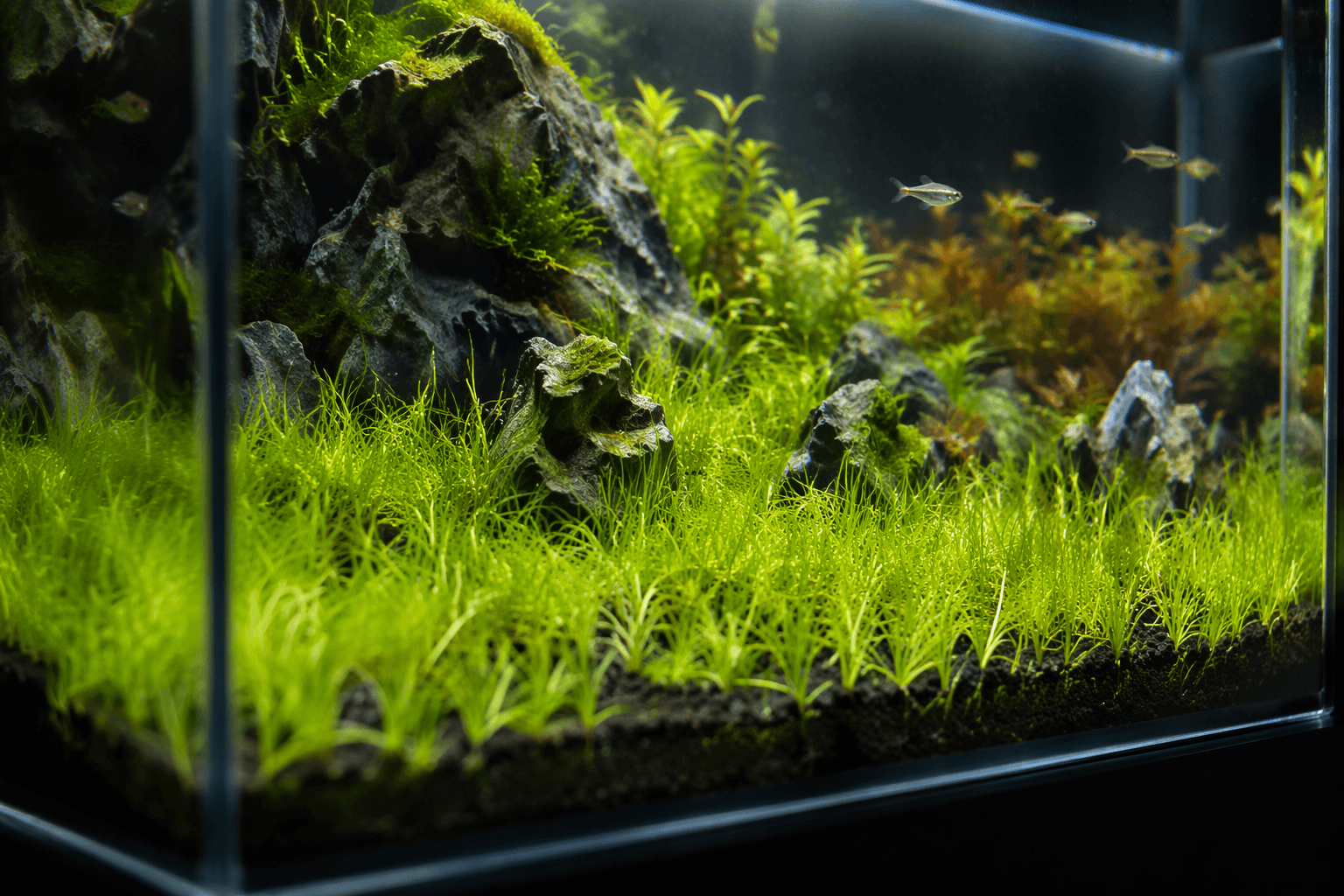
- Used as a carpet, it gives the tank floor a low, textured green layer.
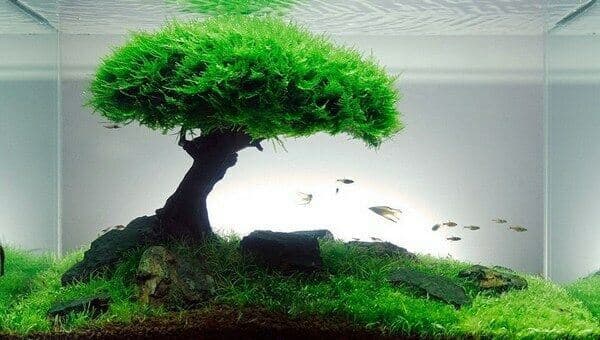
- Shaped into moss trees, it becomes a design feature rather than background fill.
- Left to float, it can still serve as a loose shelter in low-tech or breeding setups.
Why shrimp keepers lean on it
Shrimp tanks and Java moss go together for good reason. The moss gives shrimp somewhere to hide, somewhere to graze, and somewhere to behave like shrimp instead of sitting exposed in the open. For small colonies, that cover matters just as much as food does, especially in bare tanks where every surface looks exposed.
There is also a maintenance angle that makes sense in practice. Hair algae can grow on the moss, and Aquarium Co-Op says adding a few shrimp can help take care of that problem.
Where Java moss starts to work against you
The same qualities that make Java moss so forgiving can make it messy if you do not control it. In a layout with no trimming plan, it stops reading as a clean accent and starts reading as a shaggy mat. That can be useful in a jungle-style tank or breeding setup, but in a tight aquascape it can bury the hardscape you wanted to show off.
It is also easy to overuse because it solves so many problems at once. If you put it on every rock, every branch, and every open patch, the tank can lose definition fast. Java moss is strongest when it softens a feature or fills a deliberate gap, not when it is allowed to swallow the structure underneath.
The maintenance issue is not that it is difficult, but that it is persistent. Once it settles in, it keeps growing into every surface it can catch. That is great when you want a full, established look; it is less great when you need clean lines, open swimming space, or a carpet that stays low instead of turning into a fuzzy hillside.
How to use it without letting it run the tank
The easiest way to keep Java moss useful is to decide what job it has before you place it. If it is there to soften wood, let it stay on the branches and trim back anything that starts to hide the hardscape. If it is there for shrimp cover, give it a dedicated zone where the density works in your favor instead of spreading it across the whole tank.
This article was produced by Prism’s automated news system from verified source data, official records, and press releases, then run through automated quality and moderation checks before publishing. The system is built and supervised by the people who set the standards it runs under. Read our full AI policy.
Did this article answer your question?