Water sprite adds instant color, shelter, and versatility to aquariums
Water sprite can flip a tank fast, whether you float it for instant shade or root it for structure. It brings cover, color, and easy propagation without fussy CO2.
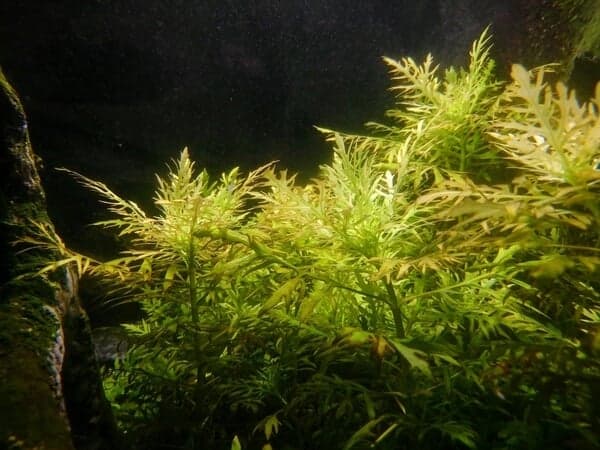
Water sprite’s bright green, lace-like leaves can soften hardscape lines almost overnight. Its quick growth gives you an immediate hit of color and cover without demanding a complicated setup.
A plant that earns its keep fast
In the hobby, water sprite is usually sold as Ceratopteris thalictroides, and many aquarists know it as Indian fern or water fern. It works as a background plant or a floating plant, which tells you a lot about its range: this is not a one-note stem that only works in one style of tank.
That flexibility is the reason it shows up in so many community tanks and planted layouts. Water sprite is easy to grow, it adapts well, and it brings a practical benefit along with the visual one. Its foliage gives small fish and fry real shelter when you want a tank that looks finished but still feels safe and active.
Floating or rooted: two different design choices
Floating water sprite is the fastest way to get the plant working for you. Let it sit at the surface and it starts building shade right away, which can calm down bright tanks and give shy fish a place to retreat. That overhead canopy also changes the whole mood of the scape, turning a bare or harsh-looking aquarium into something softer and more layered.
Rooted in substrate, water sprite behaves differently. Planted growth gives you more control over placement, so you can use it as a background accent or a loose screen that breaks up the hard lines of rock and wood. Rooted plants also fit better when you want a more deliberate layout, because the fronds can be trimmed and shaped instead of drifting wherever the current takes them.
The trade-off is maintenance. Floating water sprite grows with less restraint and can need regular thinning if you want light to reach the lower half of the tank. Rooted water sprite is easier to position visually, but it still grows fast enough that pruning becomes part of the routine rather than an occasional cleanup.
Light, CO2, and the kind of tank it likes
Water sprite does well in low to medium light and has a low to none CO2 requirement. That makes it a practical plant for tanks that are built around simplicity rather than heavy equipment. You do not need to push it with high tech conditions for it to look good and fill in.
The plant also responds well when nutrients are available. Its roots and foliage help absorb nutrients from the water, which is part of why it is so useful in a working aquarium and not just in a display tank. If you are trying to balance a new scape, or clean up a tank that tends to run a little loose on nutrients, water sprite gives you a plant that actually participates in the system.
Why the fronds matter in the scape
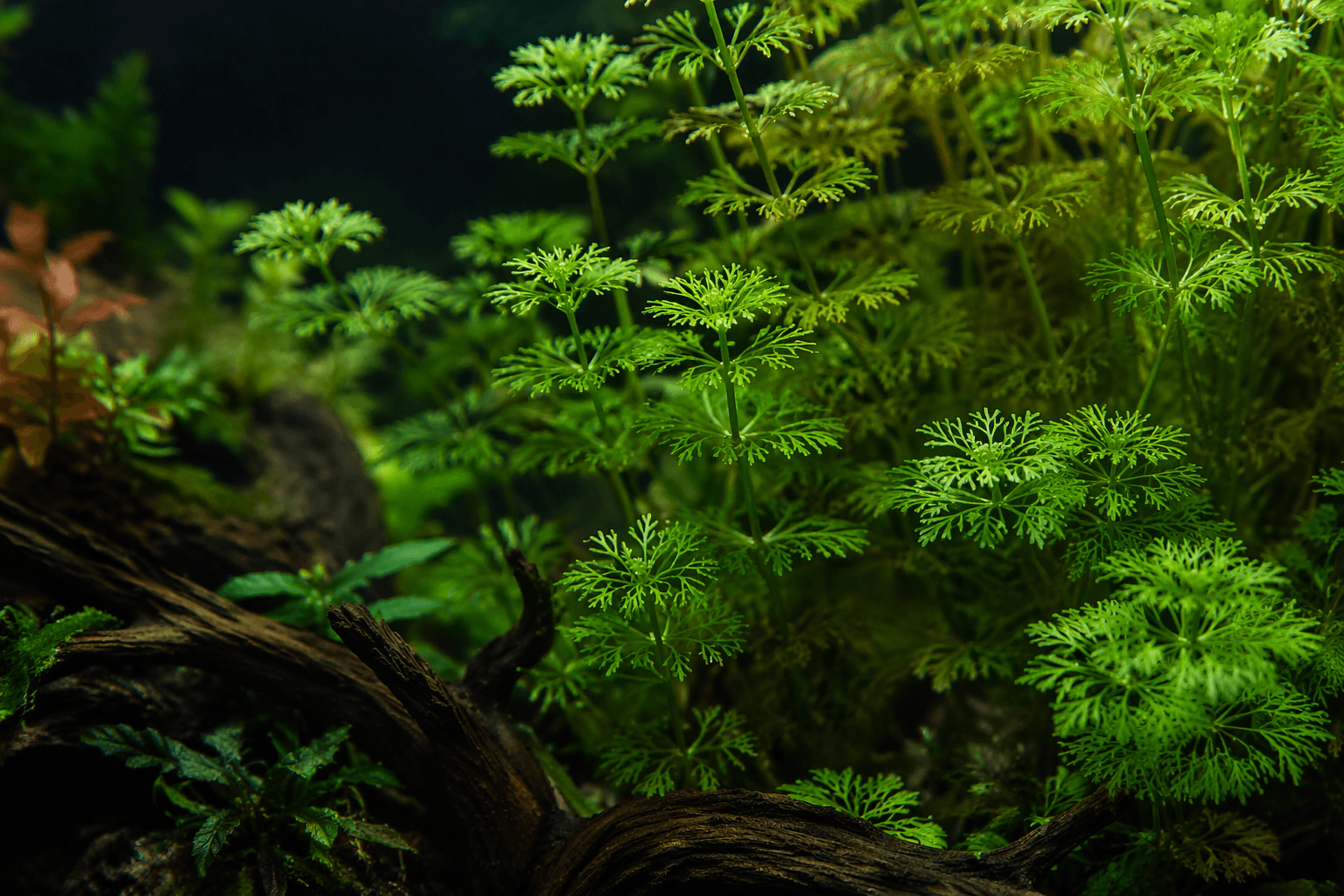
Water sprite is a fern with both submerged and floating growth forms, and that dual habit is what makes it so useful in aquascaping. It grows in still or slow-flowing fresh water in the tropics and can grow underwater or free-floating. In a tank, that translates to a plant that can adapt to different visual jobs without losing its character.
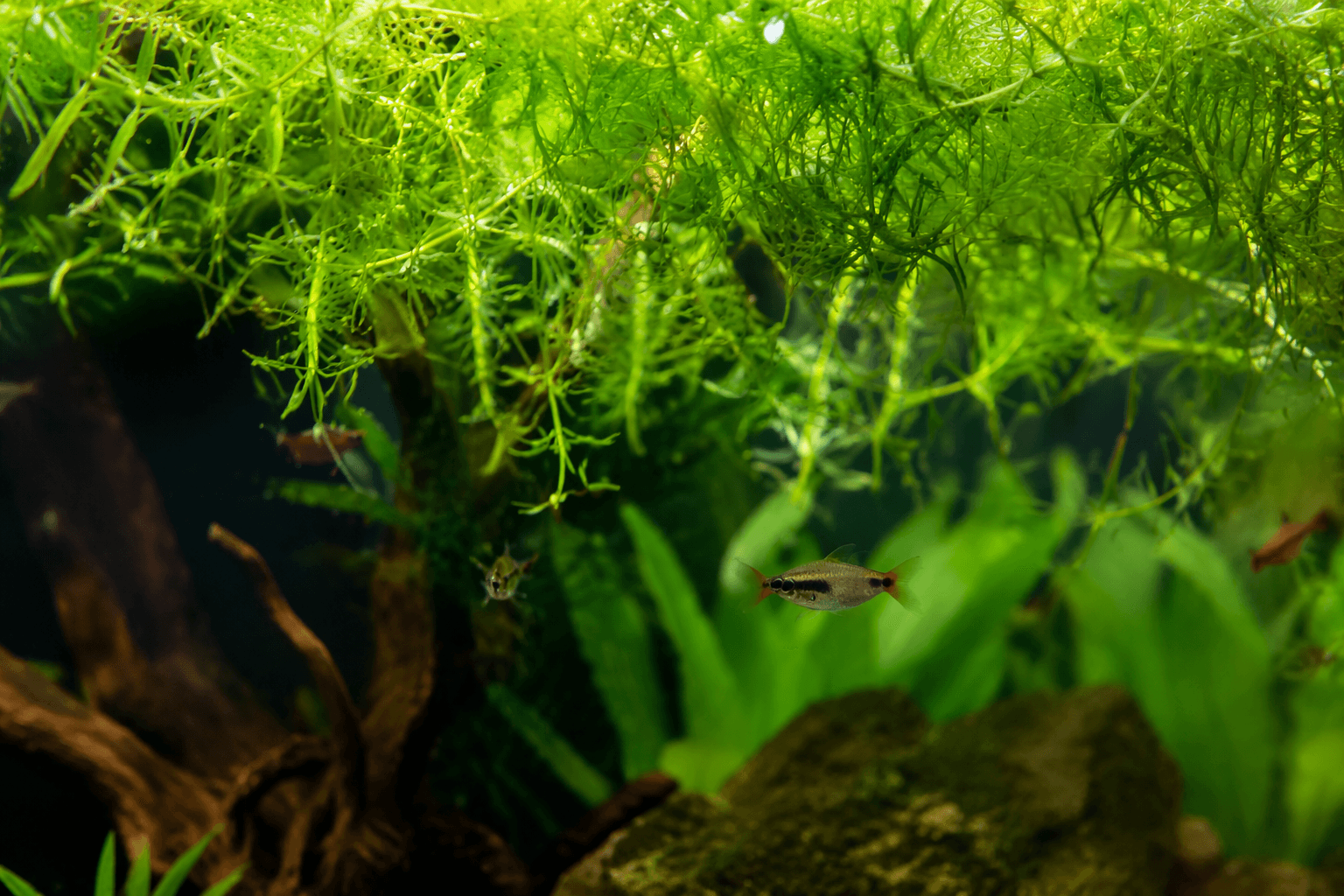
The fertile fronds are longer and more finely divided than the sterile fronds, so the plant does not read as a flat green mass. It has that airy, feathery quality people want when they are trying to interrupt a rigid aquascape with something that feels alive and a little unruly.
That texture is also why water sprite works so well as a contrast plant. Put it behind stone or driftwood and it softens the scene. Float it overhead and it creates a more sheltered, almost wild look, with the surface broken up by fine leaves instead of broad shade.
Trimming, plantlets, and easy propagation
Water sprite is generous once it settles in. If you let a plantlet develop four or five leaves, you can detach it and replant it. That makes propagation part of regular maintenance rather than a special project.
The plant also produces small plants on its fronds, which is one reason it spreads so readily. In practical terms, that means a single healthy specimen can turn into a whole bank of background material if you keep up with trimming and replanting. For aquascaping, that is a huge advantage because you can use the same plant to fill gaps, thicken a background, or replace older growth without buying more stock every time.
Tank mates, fry cover, and the feel of the aquarium
Water sprite is especially useful in tanks where you want cover without closing everything in. It provides excellent shelter for small fish and fry. In a community aquarium, that shelter can change how fish use the space, with juveniles and timid species spending more time out in the open because they have a place to duck into.
Floating growth gives you the most immediate cover. Rooted growth gives you a more structured refuge, especially if you want the plant to form a tall background mass rather than a surface canopy. Either way, the plant provides cover throughout the tank, not just in a single corner.
A plant with a real-world footprint
The USDA-NRCS plant profile lists Ceratopteris thalictroides as watersprite, with native status in Hawaii and introduced status in parts of the United States. Aquarium plants do not exist only inside glass boxes. They are living species with a wider footprint, and that calls for care when you discard trimmings or move plants between systems.
The National Park Service defines invasive species as non-native species that cause harm to the environment, economy, or human, animal, or plant health, and warns that aquatic invasive species are a growing risk to park resources and values. Water sprite is useful in the tank, but it still deserves responsible containment and disposal outside it.
This article was produced by Prism’s automated news system from verified source data, official records, and press releases, then run through automated quality and moderation checks before publishing. The system is built and supervised by the people who set the standards it runs under. Read our full AI policy.
Did this article answer your question?