APOD spotlights rare red sprites above the Tatacoa Desert
APOD framed a Tatacoa Desert frame around red sprites, a lightning form that flashes for milliseconds and rewards storm timing over expensive gear.
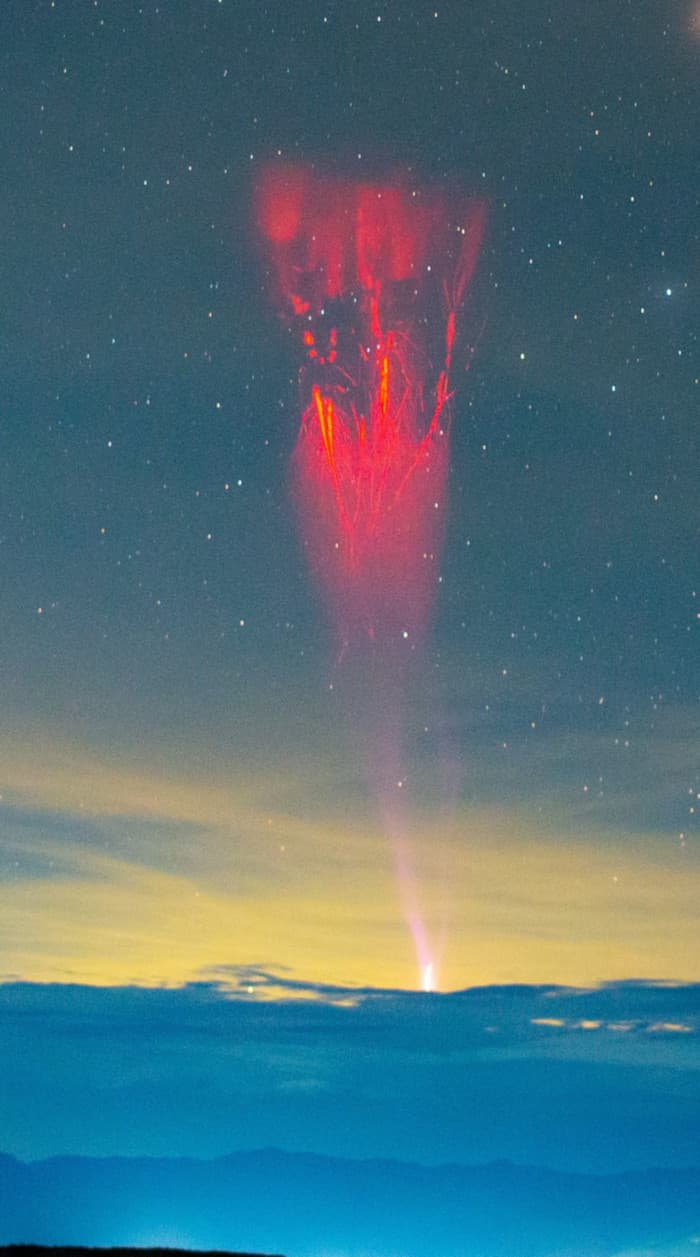
APOD’s July 15 feature turned to red sprites above the Tatacoa Desert, a rare catch that sits halfway between meteorology and night-sky imaging. The scene matters because sprites are not ordinary cloud-to-ground lightning; they fire high above thunderstorm clouds in the mesosphere, and they can vanish in a fraction of a second.
That is why sprite work feels closer to transient chasing than to a standard nightscape session. NASA has described sprites as one of the least-understood electrical phenomena in Earth’s upper atmosphere, and its Spritacular project actively invites photographers to submit observations. The practical edge is simple: stay far enough from active storms to work safely, keep the camera locked on the storm horizon for long stretches, and use a setup that can fire fast enough to catch a flash that may last only milliseconds.
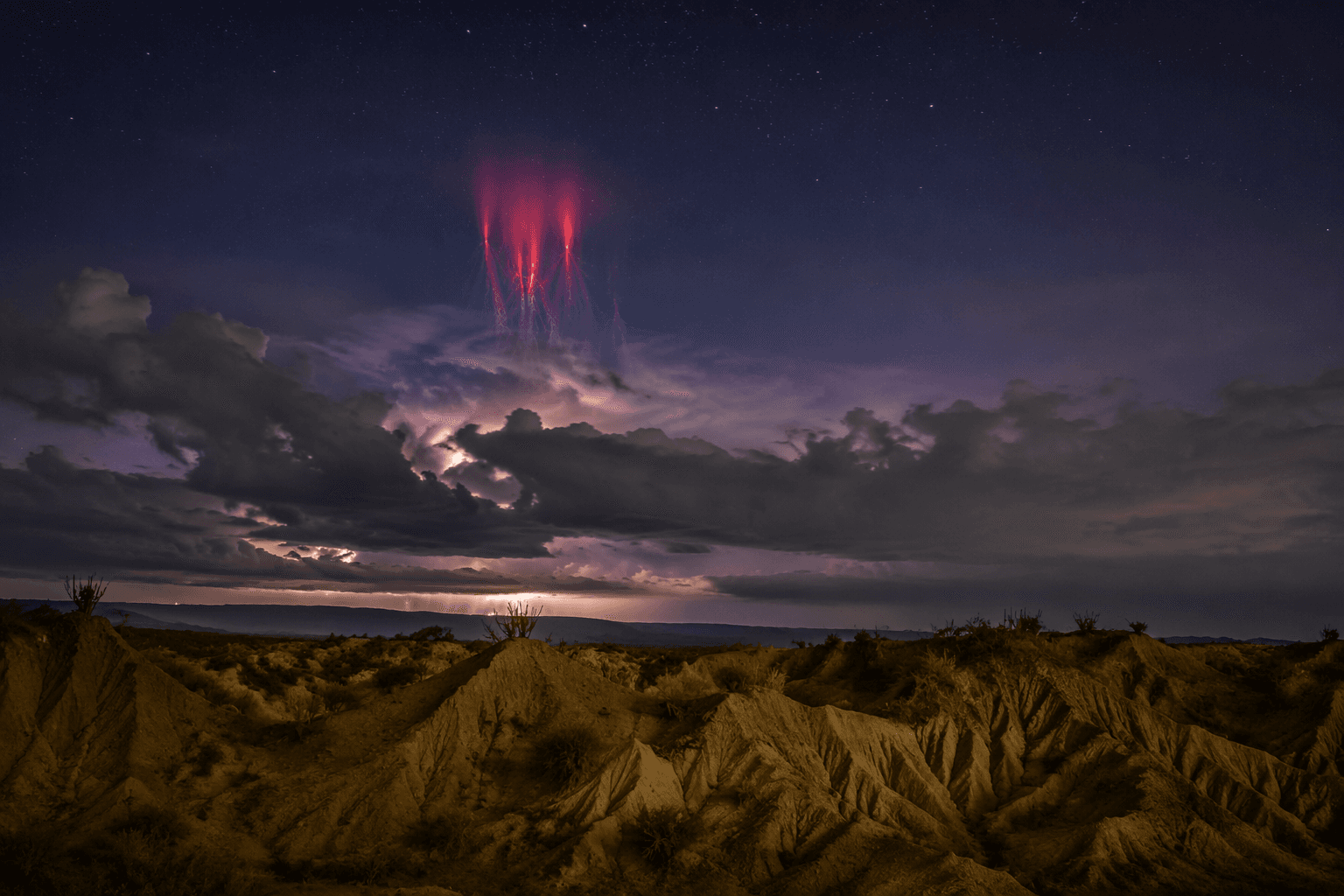
NASA’s APOD archive first featured red sprite lightning on November 11, 1995, when the phenomenon was still new enough to be called a recently verified type of lightning. A later APOD entry in 2023 noted that sprite lightning has only been photographed and studied on Earth for about 25 years, which is a short run for a sky event that can look like jellyfish tendrils reaching upward from a thunderhead. That rarity is exactly what gives the Tatacoa image its force: the frame freezes a transient most observers never notice, let alone capture.
The landscape helps just as much as the lightning. Colombia Travel describes the Tatacoa Desert as split into two visual zones, the ochre Cuzco area and the gray Los Hoyos area, and both give sprite hunting a clean, dark foreground that keeps the eye on the sky. The desert sits in Huila Department near Villavieja, Colombia, and the Ministry of Commerce, Industry and Tourism of Colombia has recognized it with Starlight astronomical-destination certification, along with sustainable-destination status.
For astrophotographers, that combination is the lesson baked into the image. The money shot is not won by a bigger rig or a brighter lens alone, but by patience, storm awareness, and the discipline to keep shooting when the sky is doing something brief, red, and almost impossible. In a field full of stacked galaxies and polished Milky Way frames, red sprites still stand out because they ask for timing first and gear second.
This article was produced by Prism’s automated news system from verified source data, official records, and press releases, then run through automated quality and moderation checks before publishing. The system is built and supervised by the people who set the standards it runs under. Read our full AI policy.
Did this article answer your question?