Astrophotographer asks how to blend narrowband and broadband nebula data
Narrowband and broadband data can make a busy nebula field breathe, but only if you keep emission signal, dust, and star color from trampling each other.
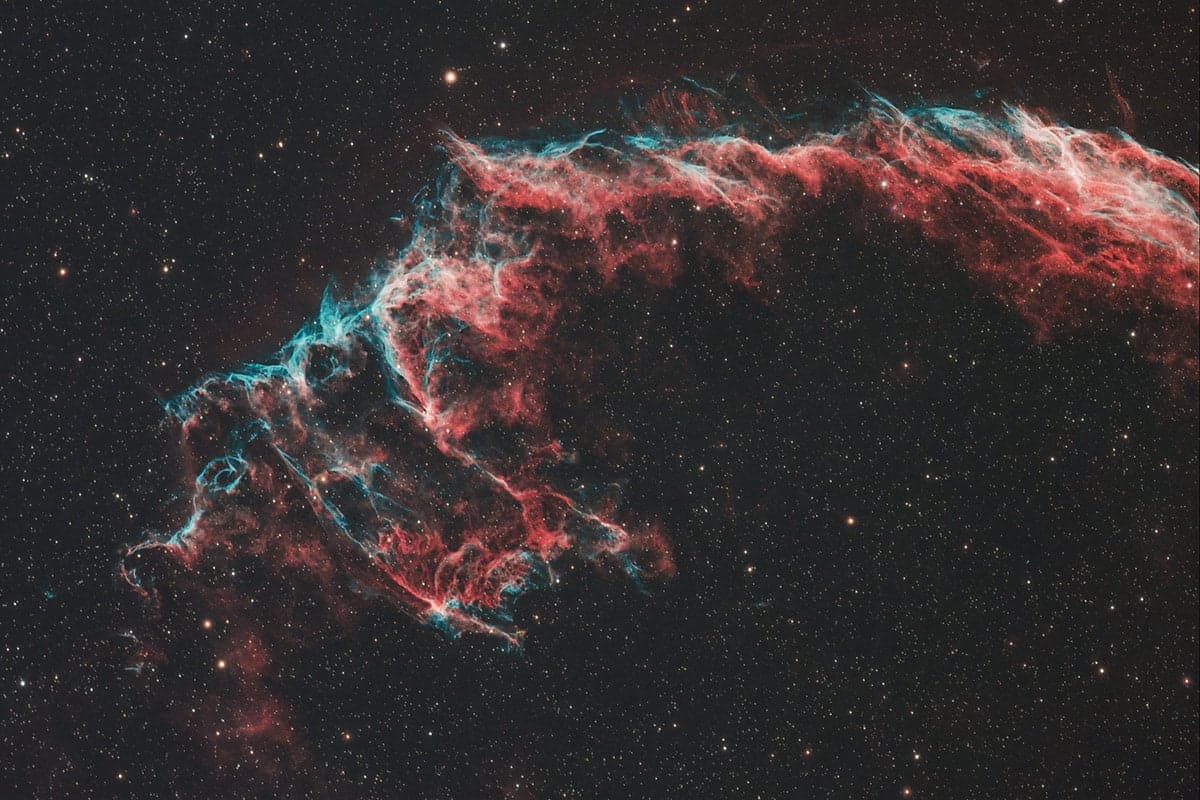
In the Flying Bat, Squid, and Seahorse field, an Optolong L-eXtreme can build the emission structures while UV/IR cut frames keep the dusty background and dark nebula shape alive. An OSC rig can pull off that two-stream nebula workflow only if you decide up front what each filter is supposed to contribute.
Why mix L-eXtreme and UV/IR at all
This is not about stacking every frame into one soup and hoping for the best. The L-eXtreme frames, with their Ha and OIII passbands, are ideal for making the emission portions of a complex target jump out, especially when you are working under limited dark-sky time and want the nebulae to show their structure fast. The UV/IR cut frames serve a different job entirely: they preserve the broader starfield context, the dark lanes, and the dusty background that narrowband filters tend to flatten or suppress.
On a field like this one, multiple nebulae sit close together and the image only works if the negative space is as convincing as the glowing parts. If the narrowband data dominates too hard, the scene starts to look cut out. If the broadband data dominates, the emission structures lose the punch that justified reaching for the L-eXtreme in the first place.
Capture with the blend in mind
Using a ZWO ASI2600MC Pro on an Askar FRA400 with reducer gives you a one-shot-color setup that can handle both passes without changing the core imaging train. Spending several nights on Ha/OIII with the L-eXtreme builds the signal you need in the bright nebulae, while a later switch to the UV/IR cut filter gives you the broadband context from the same camera and telescope.
That consistency is a real advantage, because the two data sets will line up cleanly in framing and scale. It also means the blend is about spectral content, not about rescuing mismatched optics. When the field includes the Flying Bat, Squid, and Seahorse nebulae, you need different kinds of data that answer different visual problems in the same composition.
The simplest blend is often the cleanest
One practical path is almost aggressively unsophisticated: normalize the two stacks and add them together. That approach treats the narrowband and broadband frames as complementary sources instead of forcing one to imitate the other. In a field with both strong emission and faint dust, that can be exactly the right instinct, because it keeps the broadband layer from disappearing and keeps the narrowband layer from turning the frame into a flat pseudo-Hubble look.
You are not pretending the UV/IR cut data contains the same kind of information as the L-eXtreme frames, and you are not pretending the narrowband frames should carry the whole composition. You are giving each set enough influence to do its job, then making sure the final stretch does not overcook the color balance.
Where the simple add can fail
The weakness is obvious the moment stars enter the equation. Narrowband data and broadband data do not render stars the same way, so a straight blend can produce stars that feel disconnected from the surrounding nebula, especially if the L-eXtreme signal is pushed too hard. The emission regions may look great while the star colors drift, dull out, or pick up an odd cast that breaks the realism of the field.
Color balance is the other trap. If the L-eXtreme contribution is too heavy, Ha can swamp everything toward red and OIII can get forced into a narrow cyan range that feels synthetic. If the UV/IR cut data is too heavy, the background can look natural but the nebula loses the crisp separation that made you switch filters in the first place.
A more technical route uses continuum subtraction and channel mapping
The more controlled strategy is to separate the narrowband signal more deliberately. In this workflow, the Ha component is extracted from the L-eXtreme data and assigned into the red channel, with a similar treatment for OIII. That is a much more intentional way of blending, because it treats the narrowband frames as line-emission sources rather than just another stack to average in.
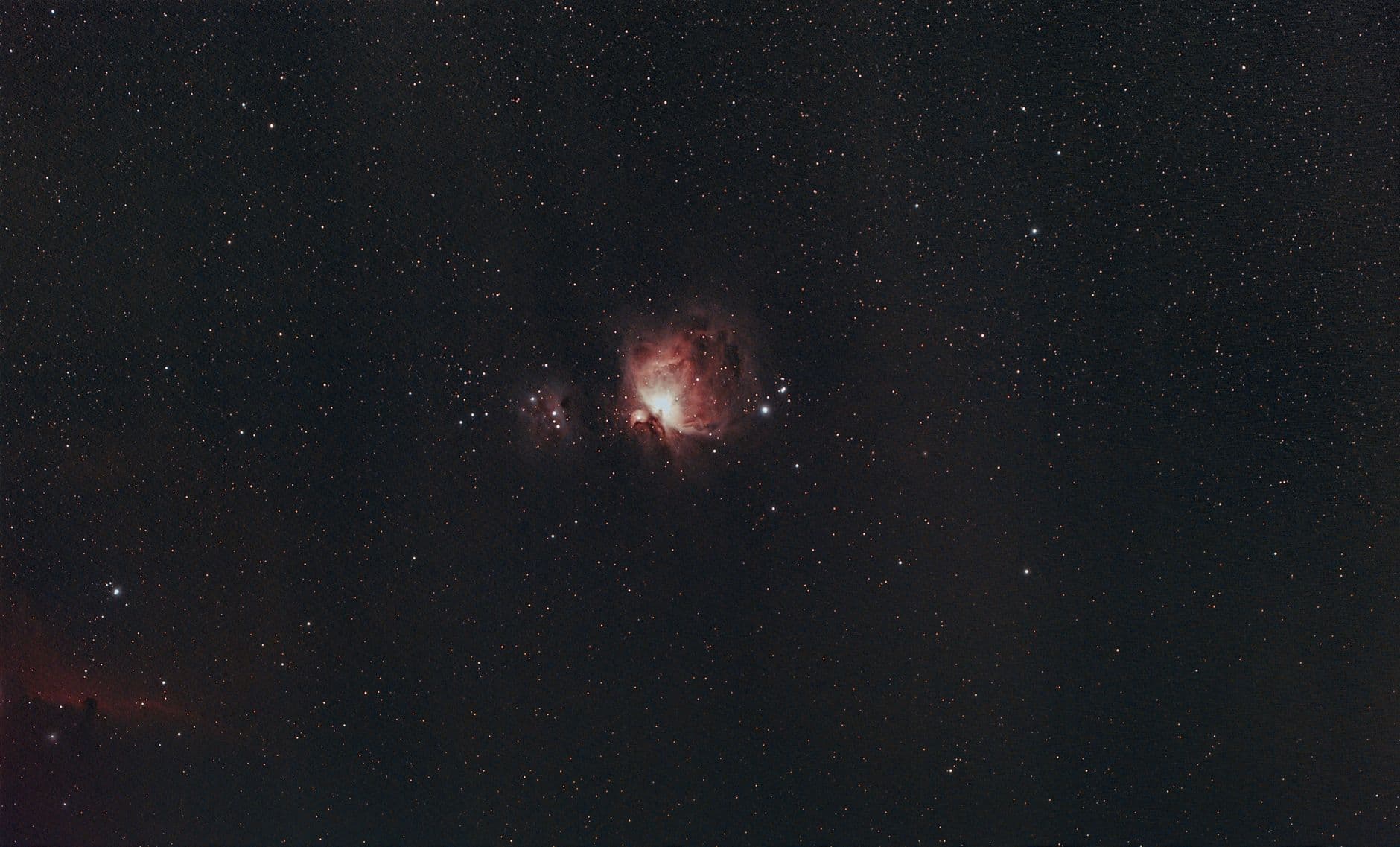
This workflow also uses continuum subtraction. The broadband frame carries starlight and continuum background. The narrowband frame carries the line emission. If you reduce the continuum overlap first, you are less likely to double-count the same signal or muddy the color response when the two sets are recombined. In PixInsight, that kind of workflow is a natural fit, and Photoshop can still be useful later for finishing moves and visual balancing.
What this preserves, and what it risks
Done well, the technical blend lets the broadband frame keep the dusty background and dark nebula structure while the narrowband data injects the emission-line detail where it belongs.
The risk is that the more surgical the workflow becomes, the easier it is to over-manage the image. Channel mapping can make the Ha and OIII signal look beautifully separated, but it can also make the colors feel rigid if you stop paying attention to the whole frame. Star rendering is the first casualty when that happens, because stars respond to the blend differently than nebula do, and their natural color can get flattened by an overly aggressive narrowband contribution.
How to decide whether the blend is worth the effort
Use both data sets when the target contains both strong emission and meaningful dust or dark structure, and when you care about the scene as a whole, not just the brightest nebula. This mixed workflow makes sense for a one-shot-color camera like the ASI2600MC Pro. You are not locked into a single aesthetic just because the camera is OSC. You can still build a multi-layer composite that separates signal by function.
If the field is mostly emission and you do not care much about the surrounding background, the extra broadband pass may not buy you much. But in a crowded, ambitious composition like this one, the broadband frames are not optional decoration. They are what keep the image from becoming a bright core floating in empty space.
This article was produced by Prism’s automated news system from verified source data, official records, and press releases, then run through automated quality and moderation checks before publishing. The system is built and supervised by the people who set the standards it runs under. Read our full AI policy.
Did this article answer your question?