Astrophotographers debate focal length, speed and mount load for deep-sky imaging
The best upgrade is not always the faster scope. In deep-sky imaging, target size, image scale, and mount steadiness decide whether 500 mm or 900 mm makes sense.
The familiar fight between a faster optic and a longer focal length looks simple until you put a camera on it and a mount under it. Eric Miller’s RedCat 71 and ZWO ASI6200MM already land at about 2.2 arcseconds per pixel, a workable starting point for wide-field deep-sky work. His real question is the one most imagers eventually face: do you chase more reach for planetary nebulae, globular clusters, galaxies, and showcase targets like the Pillars of Creation, M33, M51, the Crescent Nebula, and the Dumbbell Nebula, or do you stay on the safer side of the mount and lean into speed?
Start with the target, not the spec sheet
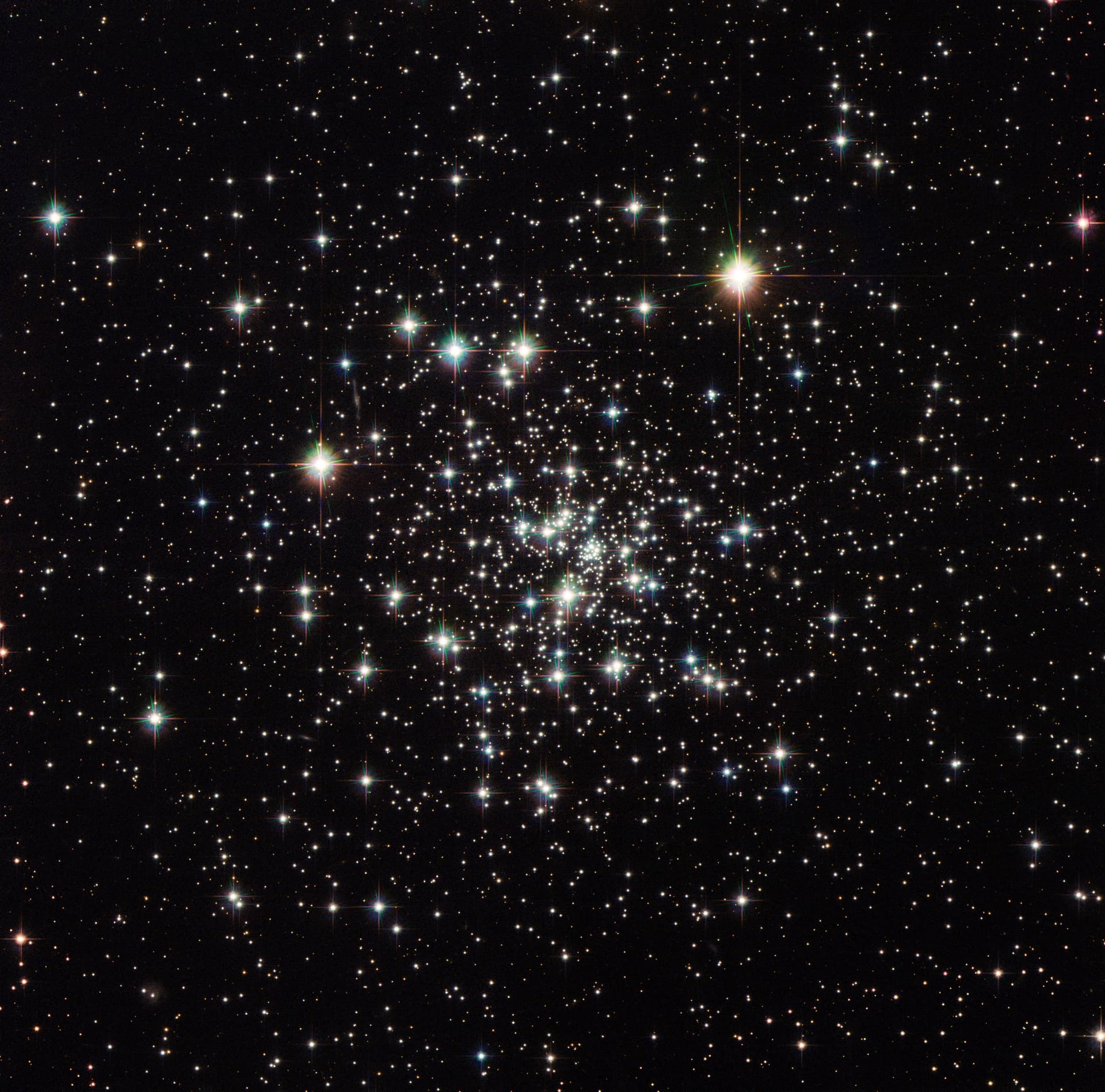
The target list tells you a lot more than a brochure does. M33 and M51 want more scale than a 350 mm Petzval gives you, while compact planetary nebulae and globular clusters usually benefit from the tighter framing and finer sampling that come with longer focal length. The real mistake is buying for the number on the tube instead of the object you actually want to photograph.
Miller’s current camera makes that calculation more concrete. The ZWO ASI6200 Pro uses Sony’s IMX455 full-frame sensor, with 9576 x 6388 pixels on a 36 mm x 24 mm chip, a 43.3 mm diagonal, and 3.76 m pixels. That combination is built for big-image-circle optics, and it explains why the RedCat 71, with its flat field and a 43 mm to 45 mm image circle depending on the product page, has been a comfortable fit.
What the RedCat 71 buys you, and what it does not
The RedCat 71 is a 71 mm Petzval astrograph with a 348 to 350 mm focal length and an f/4.9 focal ratio. That makes it a genuinely compact imaging scope, not just a small refractor with an accessory stack bolted on later. The OTA comes in around 2.8 kg, or 6.17 lb, and about 3.7 kg, or 8.16 lb with rings, dovetail, and saddle, which is why it works so well as a portable deep-sky rig.
The catch is portability. The RedCat 71 is still a short instrument, and short instruments are always a compromise when the target list starts drifting toward smaller galaxies and tighter nebulae. William Optics’ Cat 71 WIFD pairs a 71 mm f/4.9 optical tube with a 48 mm image circle and internal focusing aimed at imaging portability.
Fast, long, and the part people keep mixing up
The forum debate around speed versus aperture gets messy because people use those words as if they mean the same thing. They do not. Focal ratio governs how the image is projected onto the sensor, so faster optics change image scale and sampling. A bigger aperture gathers more photons, and two systems with the same aperture still collect the same amount of light per unit time even if their focal ratios differ.
That is why the better rule of thumb is not “faster is better,” but “better matched is better.” For extended objects shot with the same camera, systems at the same focal ratio can require similar exposure times to reach the same surface brightness, while aperture still helps with point sources like stars and with resolution.
Why 500 to 650 mm and 700 to 900 mm are not interchangeable
Miller’s short list shows the real fork in the road. On one side sit the compact 107PHQ and Askar SQA106 class scopes, which keep the setup friendly and the field relatively broad. On the other sit the Askar 130PHQ, UltraCat 108 and 131, and even the Takahashi 160 ED or SQA130, all of which pull the image tighter and give more reach, but ask more of the mount and the wallet.
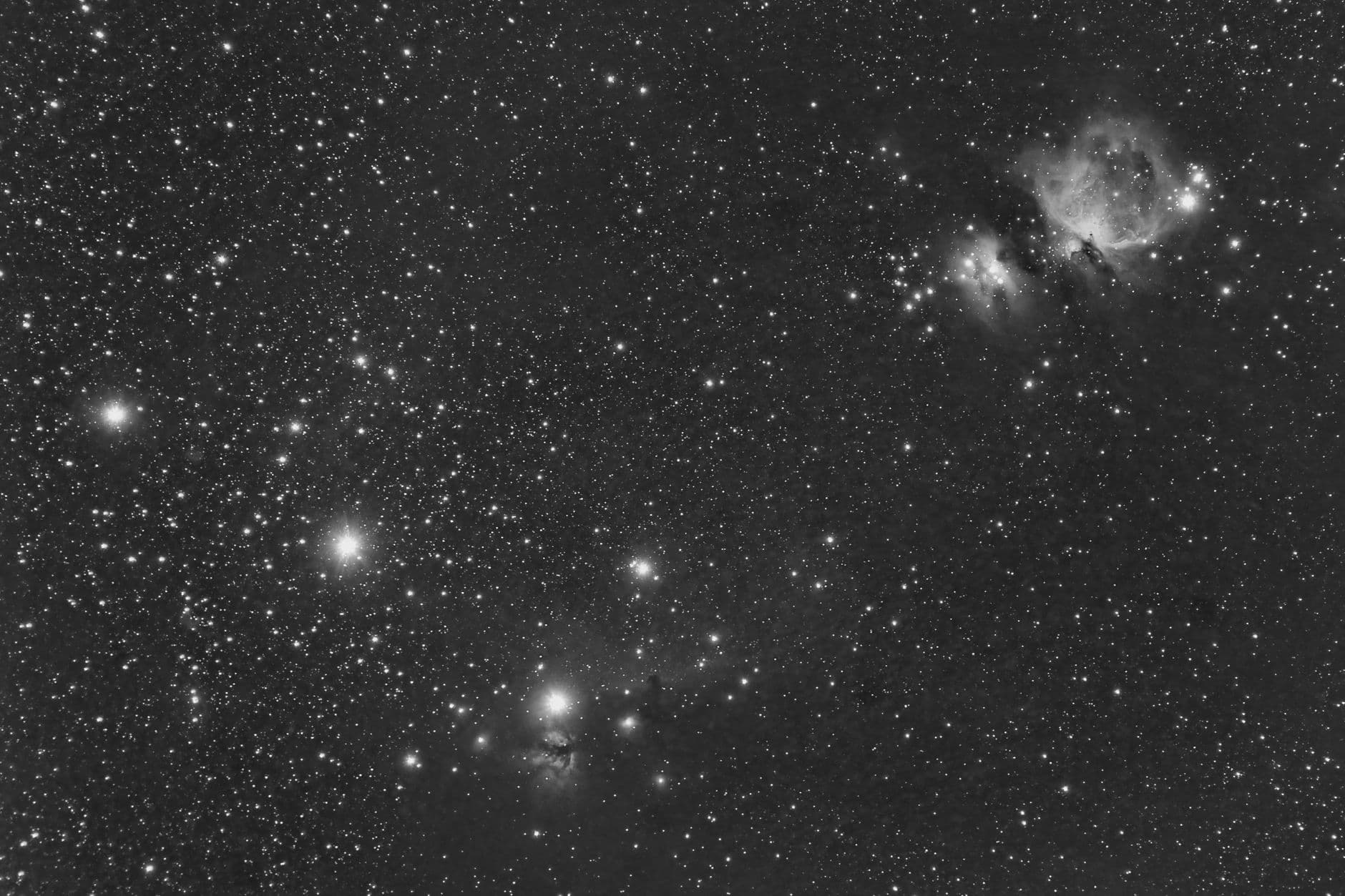
Focal length is not just a framing choice; it is a stability choice. Image scale, resolution, sampling rate, seeing, and atmospheric conditions belong at the center of the decision. If the sky is soft, if the target is broad, or if your mount gets twitchy under load, a little under-sampling can be the sensible trade, not a flaw.
Mount capacity and wind are the hidden deciders
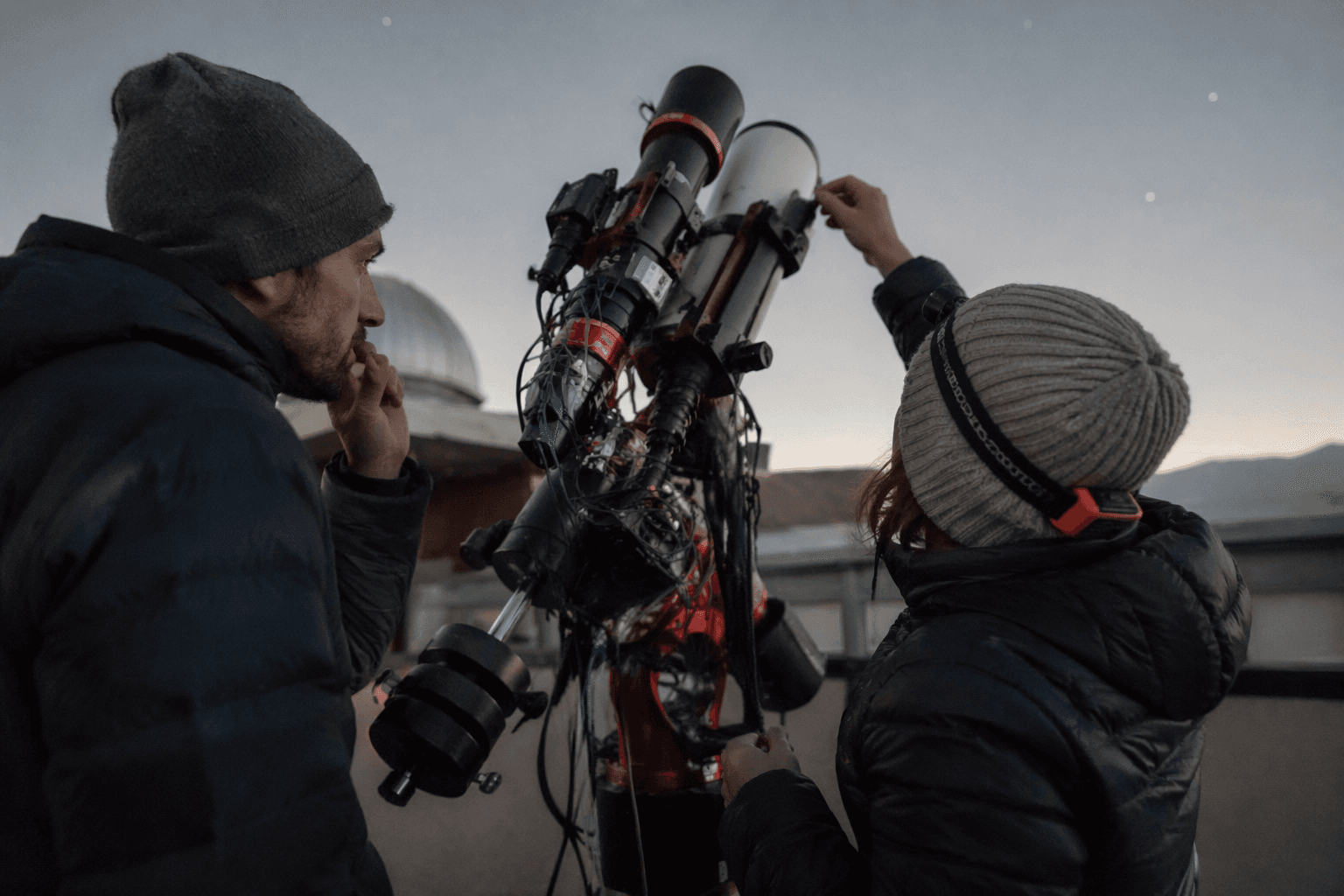
Miller’s note about shooting in the mountains is the kind of detail that changes everything. Wind does not care that a scope has better glass or a longer focal length; wind only cares about moment arm, balance, and how much the mount has to correct. Once you add guide scope, camera, filter wheel, and dew gear, the pretty optical package becomes a real mechanical system.
You need enough aperture and field of view to find guide stars, but you do not want so much weight that the guide scope itself taxes the mount.
The decision that usually holds up
The cleanest way to choose is to work backward from the image you want and the mount you trust. If your targets are large, your skies are mediocre, and your mount is happiest with a lighter tube, a 500 to 650 mm class optic is usually the more forgiving move. If you are chasing smaller structures, have the mount capacity to spare, and can keep guiding stable, the 700 to 900 mm range starts making a lot more sense.
This article was produced by Prism’s automated news system from verified source data, official records, and press releases, then run through automated quality and moderation checks before publishing. The system is built and supervised by the people who set the standards it runs under. Read our full AI policy.
Did this article answer your question?