Extremely Large Telescope nears completion in striking Space.com image
The ELT’s 3,500-tonne structure rotated on its vertical axis for the first time, signaling that the 39-metre giant is edging toward first light.
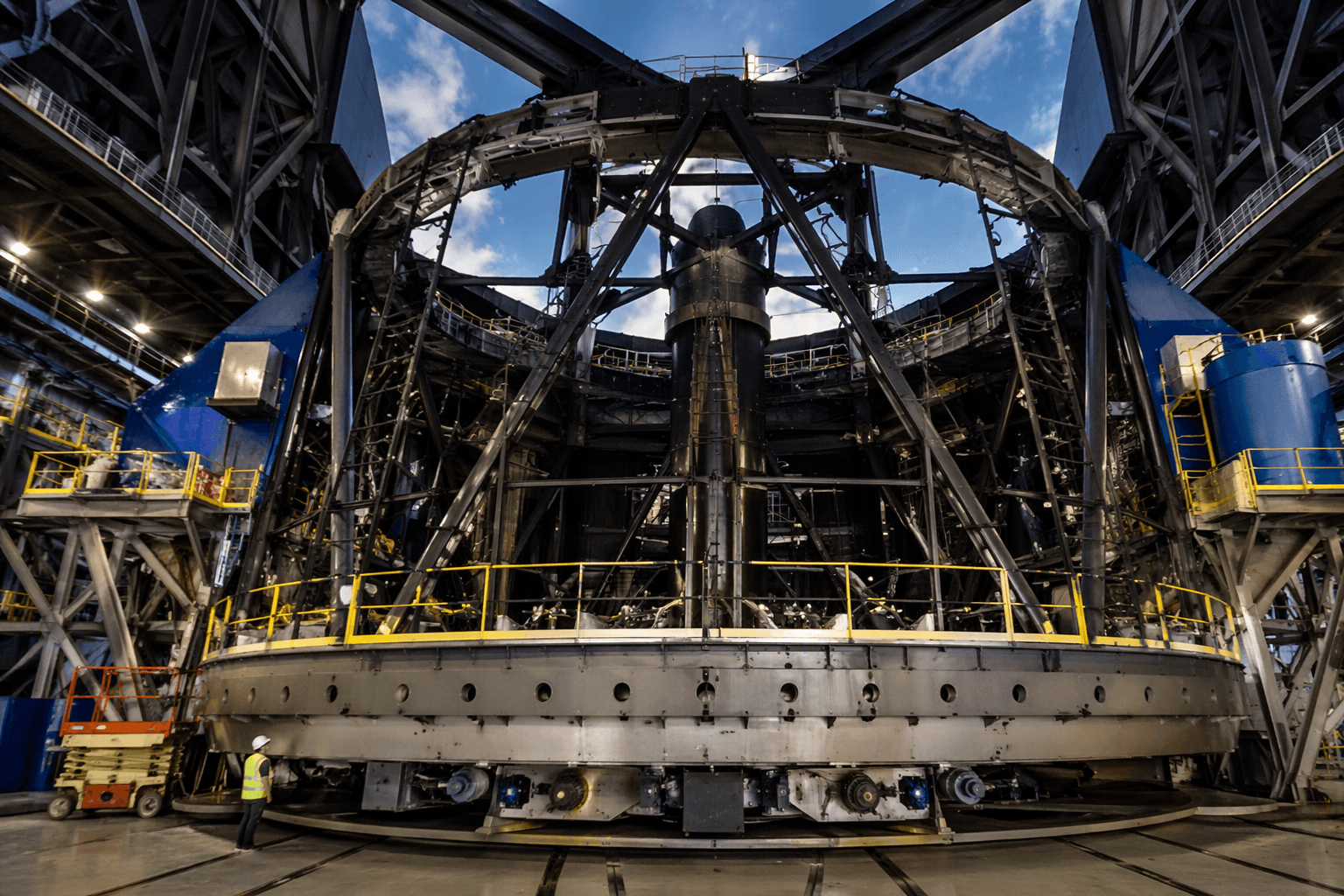
The Extremely Large Telescope turned its massive structure around its vertical axis for the first time, and that movement matters because it showed the instrument can now behave like a telescope, not just a construction project. The structure weighs about 3,500 tonnes for now, and the test was designed to prove it can point anywhere in the night sky once the rest of the machine is in place.
For backyard imagers, this is the kind of milestone that quietly reshapes the whole hobby. The ELT is being built on Cerro Armazones in Chile’s Atacama Desert as part of Paranal Observatory, and when it is finished its primary mirror will span 39 metres across and use 798 segments. ESO says that will make it the biggest optical telescope on Earth. The scale alone tells you why people who chase faint galaxies, narrowband emission, and deep-sky targets care: giant observatories do not just collect more photons, they change what the rest of us expect to see, what gets studied, and what gets turned into the benchmark images we compare our own work against.
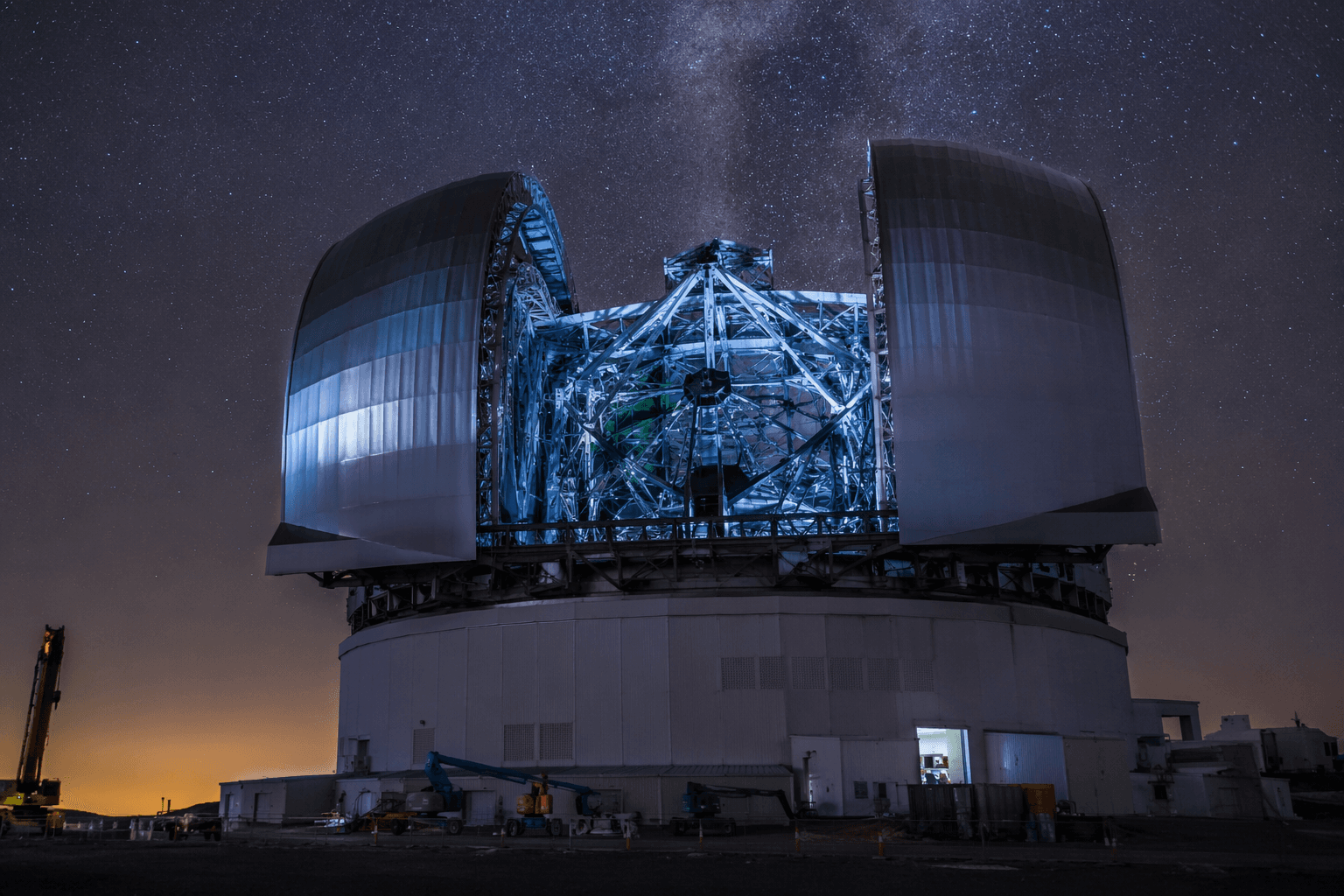
The timeline is already set in hard numbers. ESO plans dome completion and telescope structure completion for 2027, installation of the 798 main-mirror segments for 2028, first light in 2029, and scientific first light in December 2030. The project got its green light in December 2014, the dome and main-structure contract was awarded in May 2016, the first foundations went in at Cerro Armazones in May 2018, and the project passed 50 percent completion in July 2023. Once mirrors and science instruments are installed, ESO says the structure will rise to about 4,600 tonnes.
That 2026 rotation test also underlined the precision problem hidden inside the bigness. The team moved the structure first by hand by a few centimeters and then with auxiliary motors, a reminder that the gap between a beautiful engineering shell and a fully usable observatory is measured in millimeters of control. Roberto Tamai, ESO’s ELT Program Manager, called it “a beautiful reminder” of what can be achieved when people push in the same direction.
The public fascination is easy to understand if you compare it with ESO’s own older workhorse. La Silla Observatory, also highlighted in the same photo cycle, has been operating the MPG/ESO 2.2-metre telescope since 1983. That is the whole story in one frame: a 2.2-metre veteran on one end, a 39-metre giant on the other, and a hobby built around trying to keep up with the pace of the machines that are now defining the sky.
This article was produced by Prism’s automated news system from verified source data, official records, and press releases, then run through automated quality and moderation checks before publishing. The system is built and supervised by the people who set the standards it runs under. Read our full AI policy.
Did this article answer your question?