Match chicken feed to each hen’s life stage
Most feeding mistakes start with the wrong bag at the wrong age. Match starter, grower, and layer feed to the bird’s stage, then add oyster shell, grit, and water at the right time.

Starter feed is for chicks from hatch to about 6 weeks, grower or developer feed runs from roughly 7 to 17 weeks, and layer or breeder feed starts around 18 to 20 weeks, when hens begin laying. A chick, a pullet, and a laying hen need different rations at different times, and the wrong feed at the wrong stage can leave you with poor growth, wasted money, or egg production that never really gets on track. That is the trap most new keepers fall into, especially when egg prices push them into chickens hoping the flock will pay for itself.
Start with the bird’s age, not the label
Oregon State University Extension uses those age bands because the feed is built around what the bird is doing right then, not what you wish it were doing next month.
Starter diets usually run about 18 to 20 percent protein. That higher protein helps chicks get through fast early growth, but it is not a license to keep feeding starter forever. Once birds move into the adolescent stage, a grower or developer ration fits better because it keeps growth steady without pushing them like tiny athletes.
The same age logic applies when you finally reach laying age. Penn State Extension's rule is simple: feed a complete ration specific to the bird’s age, body type, and production stage. That is the practical test you should use every time you stare at a feed bin.
Do not use broiler starter on future layers
One of the most common mistakes is grabbing meat-bird starter because it looks close enough to chick feed. Oregon State warns against that for young layer-type chickens. Broiler starter is typically around 22 percent protein, which is meant to maximize growth in meat birds, not build a sensible foundation for future egg layers. It is more protein than you need, and for pullets headed toward the laying house, it is neither necessary nor desirable.
If you are raising replacement hens, the goal is not to turn them into faster-growing broilers by accident. The feed bag should match the job you actually want the bird to do. In a small flock, that difference shows up later in body condition, egg performance, and feed waste.
Keep oyster shell and grit separate from the feed
University of Minnesota Extension includes crushed oyster shell for egg production and grit for digestion in a laying hen diet. Penn State Extension says hens over 18 weeks should get a 16 to 18 percent protein layer ration with grit and a calcium source like oyster shells offered free choice in a separate feeder.
Oyster shell is a supplement, not a mandatory meal. Some hens lay harder than others, and free choice lets birds regulate their own intake instead of forcing every hen to eat the same amount of calcium. Grit serves a different job entirely. It helps the bird grind feed in the gizzard, which matters if you give anything beyond a perfectly uniform crumble.
If you keep the shell and grit on the side, you also make it easier to see what the birds are actually consuming. If the feeder stays full but the hens still look thin or egg output slips, you can rule out a lot of avoidable confusion fast.
Water is not optional, and neither is enough feeder space
Penn State says laying hens should never go without water for more than 12 hours, or egg production can drop or stop. That is a backyard reality on hot afternoons, during frozen mornings, or whenever a waterer tips over and nobody notices right away. Penn State also recommends about 1 inch of water space per bird, or at least 5 gallons of water daily for every 100 birds.
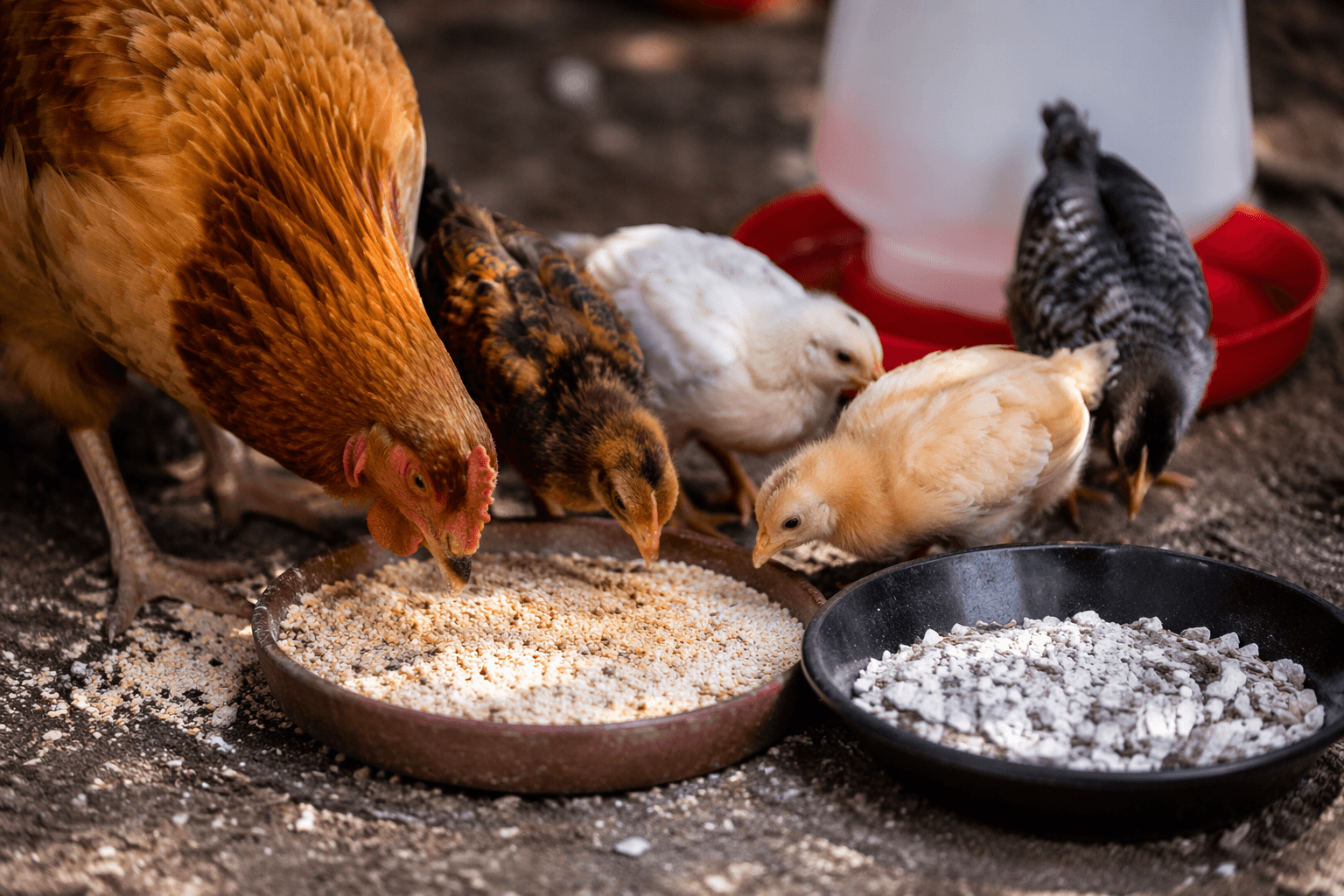
Penn State recommends about 3 inches of feeder space per bird, and a trough feeder should be kept only one-third to one-half full to reduce waste. That small detail saves a lot of spilled ration, especially with curious hens that scratch as much feed onto the floor as they eat. A full trough looks generous; in practice, it usually just becomes a buffet for the bedding.
Treats are fine. Living on them is not
Scratch grain, cracked corn, oats, and kitchen scraps are all allowed in moderation, but they are not complete diets. University of Minnesota says those extras do not supply all nutritional needs, and Penn State warns that scratch grain and table scraps can reduce production and make birds fat.
Scratch feed is not necessary when birds are already on a complete ration, Oregon State says. Scratch grains are mostly low-protein, high-energy ingredients such as cracked, rolled, or whole corn, barley, oats, or wheat. That makes them handy as a treat or a little winter enrichment, but not as the foundation of daily feeding.
Penn State also says crack corn and scratch grain should not be fed to chickens. Too much of the wrong extra can leave birds overweight and, in some cases, raise the risk of prolapse.
Use medicated feed only where it fits
Another place keepers get mixed up is medicated starter. Penn State says only chicks under 4 weeks of age should be fed medicated feeds to help prevent coccidiosis. That is a narrow window, not a general rule for all young birds. If your chicks are older than that, medicated feed is not the default answer.
Starter feed, grower feed, layer feed, medicated feed, and scratch grain all sound like they belong in the same conversation, but they do not perform the same role.
Watch the weather, the breed, and the budget
A 6-pound hen will eat roughly 3 pounds of feed each week, University of Minnesota says, with intake rising in winter and falling in summer. Heat stress can cut feed intake, so cool fresh water, ventilation, and adjusted feeding times help birds cope when temperatures climb.
Small-bodied commercial White Leghorns are efficient layers, and some brown-egg breeds perform nearly as well, UMN says. That does not change the feed rules, but it does change how efficiently you turn feed into eggs.
Higher egg prices pushed more people toward backyard chickens, but keeping hens is not likely to save money over buying eggs at the store, Oregon State says.
This article was produced by Prism’s automated news system from verified source data, official records, and press releases, then run through automated quality and moderation checks before publishing. The system is built and supervised by the people who set the standards it runs under. Read our full AI policy.
Did this article answer your question?