Why hens flop flat in the garden, and it is healthy
A flat-out hen is often just sunbathing, not in trouble. The trick is spotting the difference between a healthy heat soak and a bird that needs help now.
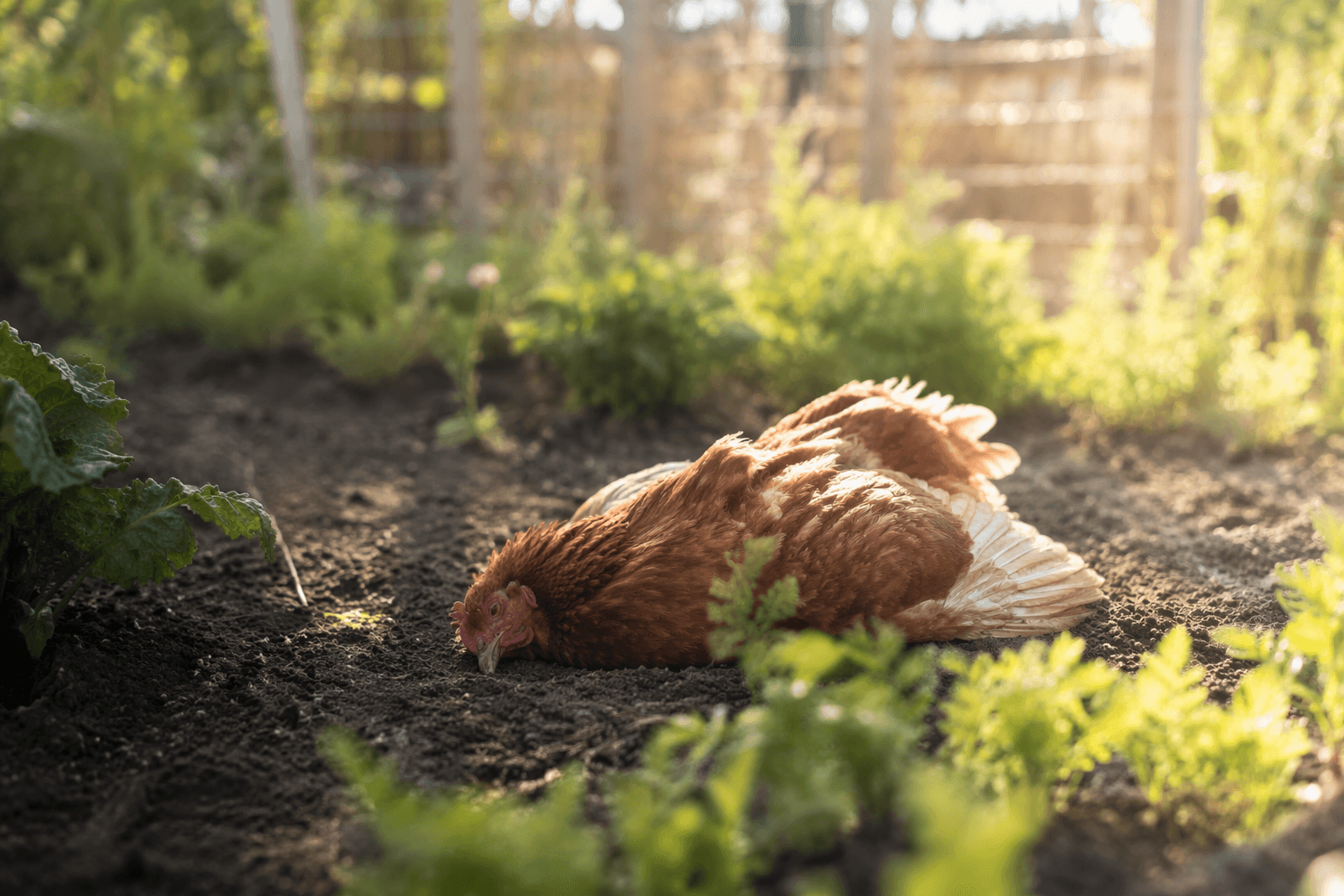
A hen spread flat in the grass can look like trouble, especially if you catch her from across the run and only see the sudden sprawl. In backyard flocks, though, that dramatic posture is often nothing more than sunbathing, a normal habit that can support both health and comfort. The real skill is learning when a bird is relaxing on purpose and when she is tipping into heat stress.
What the flopped-flat pose is actually for
Sunbathing in hens is not random lounging. The bird stretches out one wing, flattens her body, and exposes more skin so the sun can warm her directly. That posture gives the light a better chance to reach the feathers and the skin underneath, which is part of why the scene can look so oddly deliberate.
Sunlight interacting with the oils on feathers can help create vitamin D3, and hens then ingest that vitamin when they preen. Vitamin D3 is tied to calcium absorption, and calcium supports strong eggshells.
Sunbathing can also help with pest control. Heat and ultraviolet light can drive mites and lice out of the dense feather base where they like to hide, which is one reason a bird may choose a sunny patch even when the rest of the flock is busier elsewhere. The same routine may also line up with reproduction, since brighter months can signal the laying system and help explain why production improves when the days are longer and brighter.
How a relaxed hen looks different from a distressed hen
The key is not the flat shape alone, it is the whole picture around it. A content bird usually looks settled, not frantic. She stretches, settles in, and stays loose in the body. Her behavior reads like a planned break, not a bird that is fighting for comfort.
The contrast is between sunbathing and overheating. Comb and wattles act like built-in cooling devices because they are packed with blood vessels. When a hen is merely enjoying the sun, those features are part of the normal temperature-control system working as designed. When she is too hot, the body language changes and the bird stops looking restful.
Watch for the signs that the posture is no longer leisure. A hen in heat distress may be panting, holding her wings away from her body for too long, standing listless, or looking unable to settle. If the comb and wattles look unusually dull or the bird seems weak, that is not the same thing as a relaxed sunbath. The moment the bird stops acting like she chose the spot and starts acting like she cannot cope with it, you are no longer looking at healthy behavior.
The hot-weather checklist that keeps a sunny habit safe
Once summer heat climbs, the same pose that looks harmless can also remind you to check the setup around the flock. Shade is the first line of defense. If hens are lying out in direct sun for long stretches and have nowhere to retreat, the run is asking too much of them.
Airflow matters too. A coop that traps heat turns a normal afternoon into a welfare problem fast, especially if the birds are already relying on combs and wattles to shed warmth. Keep water where every bird can reach it, and make sure the containers stay clean and full through the hottest part of the day. If one bird is stretched out and another is circling the drinker repeatedly, that is a warning you should not ignore.
- Give them a shaded patch large enough for the whole flock, not just one corner.
- Keep fresh water available in more than one place when the weather is hot.
- Make sure the coop does not hold stale heat after midday.
- Observe whether the bird is choosing a sunspot briefly or staying flattened and sluggish.
A few practical habits make the difference:
A hen may flop flat, stretch a wing, and then get up again after a while. A bird that stays sprawled, fails to move off the hot ground, or seems unable to react normally needs attention.
When to intervene immediately
The line from healthy sunbathing to heat distress is crossed when the bird starts looking compromised. If she is panting hard, reluctant to move, or acting dull and unresponsive, get her into shade at once and give her access to cool water. If she cannot stand properly, seems disoriented, or does not recover quickly after being moved out of the heat, treat it as an emergency.
This article was produced by Prism’s automated news system from verified source data, official records, and press releases, then run through automated quality and moderation checks before publishing. The system is built and supervised by the people who set the standards it runs under. Read our full AI policy.
Did this article answer your question?