Jonas Dupuich Visits Omiya Bonsai Art Museum During Early Spring Budding Season
A 380-year-old shimpaku anchors Jonas Dupuich's visit to Omiya Bonsai Art Museum, where early April budding season revealed specimens that redefine what long-term training looks like.
Jonas Dupuich walked the Omiya Bonsai Art Museum's courtyard on April 3 during one of the most instructive windows the museum's calendar offers: early spring, when trees are just breaking from cold-weather dormancy and every detail of structure is still readable before new foliage fills in.
The museum, located inside Omiya Bonsai Village in Saitama, Japan, holds the distinction of being the world's first publicly run museum dedicated entirely to bonsai. Its presentation ethos sets it apart from most exhibition contexts. Dupuich noted the ample spacing given to each specimen, which allows visitors to read trunk taper, branch placement, and ramification from multiple angles rather than the compressed viewing common at shows. That spatial generosity, paired with the caliber of the collection, made the visit a genuine study session.
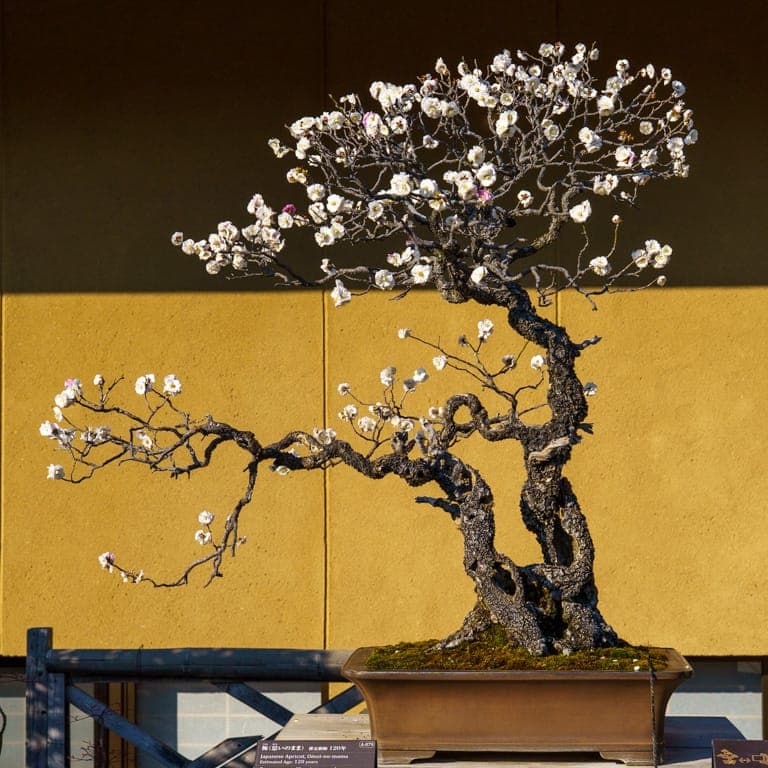
The specimens themselves are the argument. A 380-year-old shimpaku juniper anchored the collection at the extreme end of the age range. Two black pines on display were estimated at 100 and 250 years respectively. An ume and a shishigashira Japanese maple each carried an estimated 120 years of training, and a Korean hornbeam came in at 150. Dupuich's summary of what these trees communicate landed precisely: "most of these trees have been in training for a long time and show a maturity that's harder to find outside of Japan." The trunk movement, nebari development, and branch architecture possible over that kind of timeline simply cannot be replicated on a shorter schedule, and seeing it in person calibrates your eye in ways that photographs rarely do.
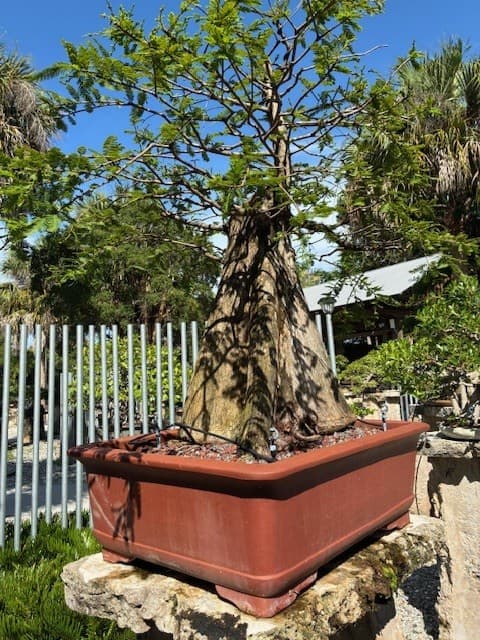
Seasonal condition factored into the visit as well. Dupuich flagged browning foliage on some conifers, a normal response to winter cold that greens up as April temperatures climb. For anyone planning a visit, that's worth keeping in mind: early April trees are emerging, not finished, which arguably makes the structural reading easier but requires patience with presentation.
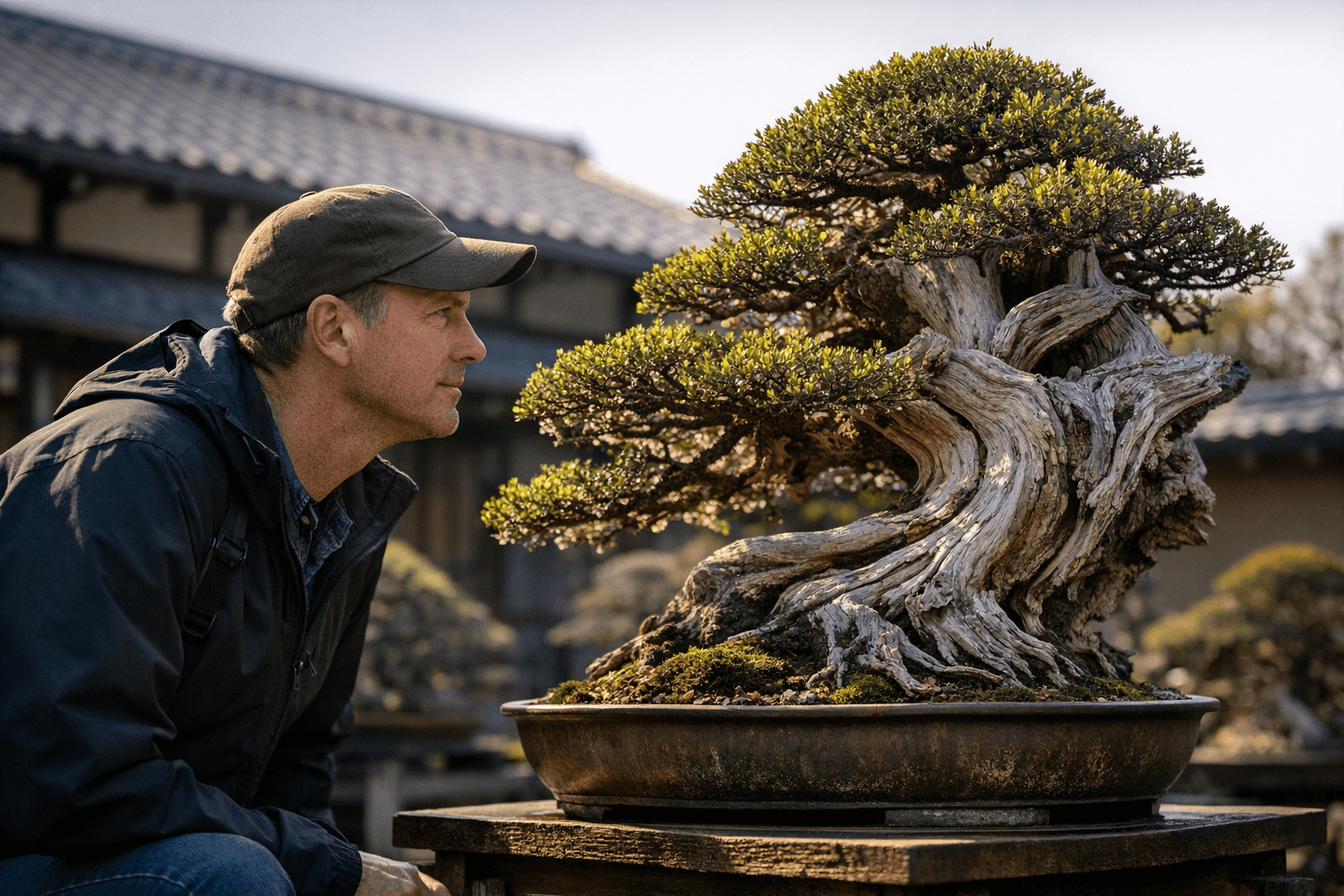
The museum's current programming deepens the case for visiting now. "Shiki: April, Time of Budding Sun" runs through April 29, timed to the moment of emergence that Dupuich observed firsthand. A second exhibition, "Bonsai Chronicle; History and Culture of Bonsai," extends through July 1, providing historical context that frames the living collection.
Omiya Bonsai Village itself carries significant weight in modern bonsai history. The cluster of historic nurseries and gardens surrounding the museum represents continuity of practice across generations, and the museum functions as both a preservation institution and a working reference for serious practitioners at any level. The ability to study high-quality aged material in an unhurried setting is increasingly rare, and Dupuich's visit reinforces that Omiya remains one of the few places where that kind of education is genuinely available. The museum's site has current exhibition and visit planning information for those considering the trip.
This article was produced by Prism’s automated news system from verified source data, official records, and press releases, then run through automated quality and moderation checks before publishing. The system is built and supervised by the people who set the standards it runs under. Read our full AI policy.
Did this article answer your question?