Why Your Bonsai Hasnt Leafed Out Yet, and What to Check
Your bonsai may still be fine if it has not leafed out. Check buds, cambium, light, and soil before you assume it is dying.
Why the tree can look alive and still stay quiet
The panic usually starts the same way: the bark still looks decent, the twigs still bend, but the bonsai has not pushed a single leaf. That does not automatically mean failure. In spring, longer days and warmer temperatures tell plants to wake up, but the first signs of that change often happen below the surface long before you see visible growth.
That is the key mistake to avoid this week: confusing silence with decline. Roots, buds, water movement, nutrients, and stored carbohydrates all start shifting as dormancy breaks, and that process can take weeks. Wisconsin Horticulture explains that plants respond to changing conditions through hormone shifts that set off events like bud break, new growth, flowering, and dormancy at the right time, not all at once on your schedule.
Follow the species, not the calendar
If one tree has leafed out and another still looks frozen, do not force them into the same timeline. Dormancy break varies by species and weather, and Illinois Extension notes that chilling hours and spring warmth help determine when bud swell begins. A cold spell can slow the whole show even when the forecast finally looks decent.
The Arnold Arboretum’s bonsai care guidance is especially useful here because it breaks pruning and growth timing into species groups. Deciduous trees are expected to move first, in early spring. Pines and spruces usually follow in mid-spring, while junipers and hinokis often wait until early to mid-summer. That means a maple or elm that is still slow may be asking for patience, while a juniper that has not stirred yet may still be on a perfectly normal schedule.
Iowa State Extension adds another detail that helps explain the lag: pines grow from terminal buds, while spruce and fir can respond from lateral buds. In plain English, different species wake up from different parts of the tree, so one bonsai may look active at the tips while another is still holding back everywhere else.
Run the safest checks first
Before you change feeding, repotting, or pruning plans, do three low-risk checks. These are the quick tests that separate normal dormancy from a tree in real trouble.
- Bend a small branch gently. If it still flexes instead of snapping like a dry twig, there is often life left in the wood.
- Use the scratch test on a tiny spot of bark. Green cambium under the surface is a good sign; brown and dry is not.
- Press the buds lightly. Firm buds usually suggest the tree is still holding on and waiting for the right cue. Soft, shriveled buds are a warning sign.
These checks matter because they let you read the tree without tearing it up. A bonsai can sit quietly for a long stretch and still be perfectly viable, especially if the buds are swelling even before leaves appear. You are looking for movement, not a dramatic burst.
Check the setup before you reach for the fertilizer
If the tree is alive but stalled, the cause is usually environmental. Start with light. Long days matter in spring, and a bonsai tucked too far back from bright light may stay sluggish even after temperatures rise. Then look at water. A tree that is kept too wet can stall as surely as one that dries out too far, especially when roots are still cold and inactive.
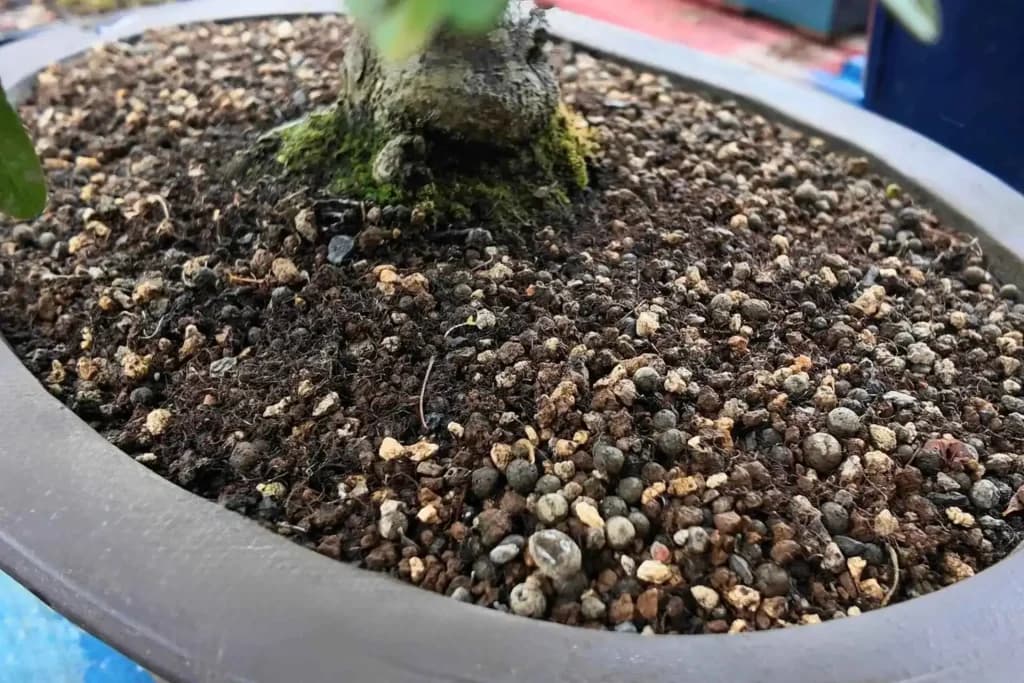
Soil and pot restriction are the next places to look. University of Arkansas System Division of Agriculture explains that bonsai growers periodically remove trees from containers and severely prune the roots, and that this container culture is part of what keeps leaf size and stem growth smaller. That is the whole point of the art, but it also means a bonsai can respond more slowly than a garden tree in open ground. If the mix has compacted, drained badly, or been exhausted over time, the roots may not be able to push top growth on schedule.
Feeding timing matters too. A tree that has not truly restarted its roots will not make good use of fertilizer, and a heavy feeding push can be wasted at best. The smarter move is to verify light, moisture, and soil first, then wait for clear signs of active growth before you commit to stronger intervention.

Know when to leave it alone
The best move for a quiet bonsai is often restraint. If the buds are firm, the cambium is green, and the twigs still have some give, do not start carving, repotting, or stripping the tree apart just because it has not leafed out yet. Spring growth in bonsai is often staggered, and a species like juniper or hinoki may be moving on a much later clock than your deciduous trees.
That slower pace is also part of what makes bonsai look deceptive. University of Arkansas notes that repeated root pruning and container culture keep the plant small and reduce both leaf size and stem growth. So when you see slow top growth, you are not always seeing weakness. Sometimes you are just seeing the natural consequence of how bonsai is made.
Virginia Tech traces bonsai back to ancient Chinese traditions and its refinement in Japan, and that history matters here for one simple reason: the practice has always depended on reading the tree closely instead of reacting fast. The same patience that shaped the art still solves most spring scares.
The clean decision tree
If you want the simplest way to handle a bonsai that has not leafed out yet, think in this order: confirm the species’ normal timing, test for living tissue, check light and moisture, inspect the soil and container, and only then think about feeding or stronger changes. That sequence keeps you from treating a normal delay like an emergency.
A quiet bonsai in spring is not always a dying bonsai. More often, it is a tree waiting for warmer soil, steadier temperatures, and the right internal signal to begin.
This article was produced by Prism’s automated news system from verified source data, official records, and press releases, then run through automated quality and moderation checks before publishing. The system is built and supervised by the people who set the standards it runs under. Read our full AI policy.
Did this article answer your question?