CrossFit Quarterfinals 2026 Workouts: Time Caps, Loads, and Full Breakdown
Four workouts, 12- to 20-minute caps, and escalating deadlifts up to 315 lb define the 2026 Quarterfinals — the first time this stage has returned since 2024.

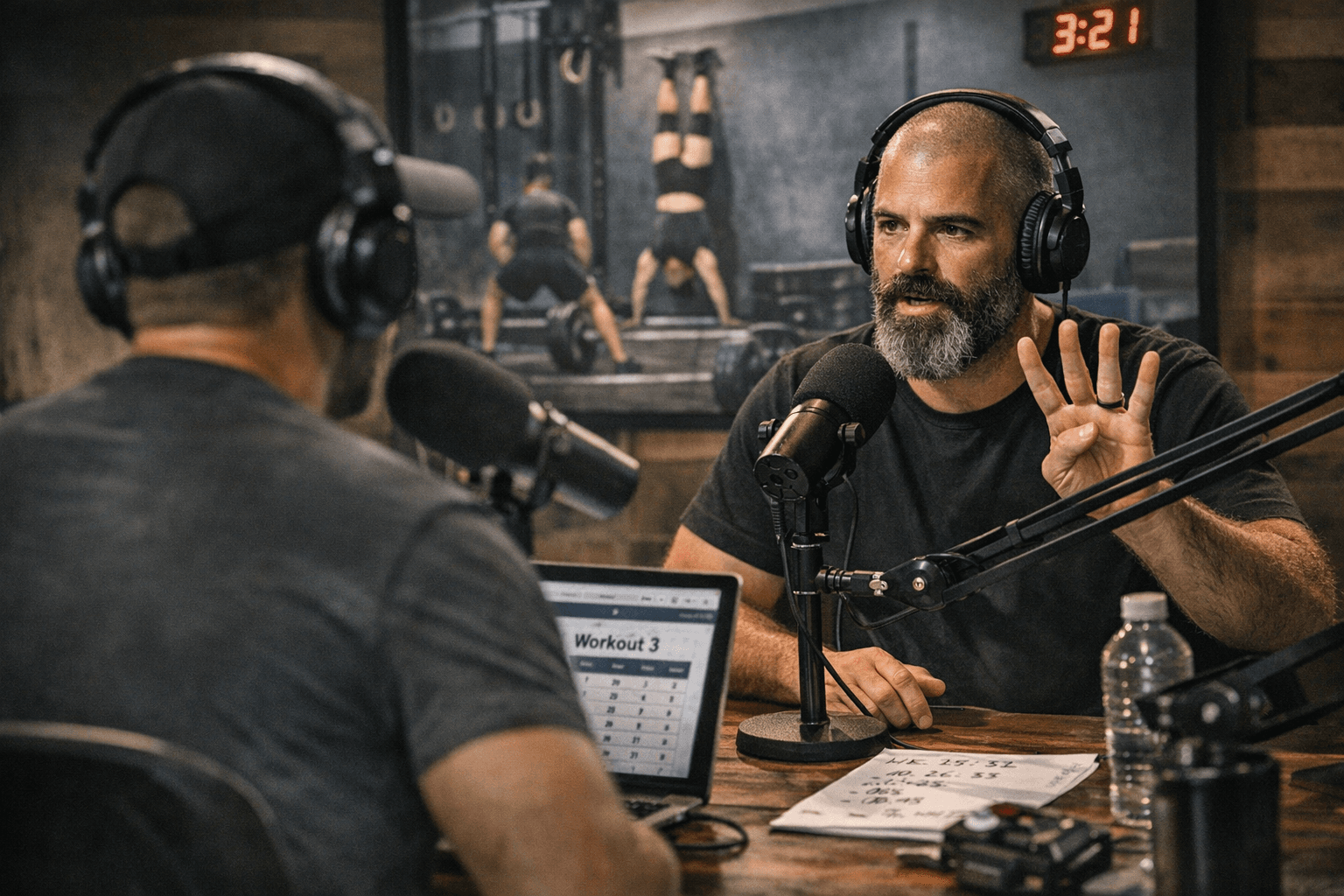
The Quarterfinals were absent from the 2025 CrossFit Games season entirely, making their return in 2026 a significant structural shift. Many in the community have welcomed the comeback, seeing it as an additional stage for athletes to prove themselves and ensuring that only the best qualify for Semifinals. CrossFit released the Quarterfinals workouts on March 23, 2026, when registration opened, and the reveal came when Adrian Bozman joined Chase Ingraham on the Sport of Fitness Podcast to unveil all four workouts.
The Quarterfinals mark the second phase of the 2026 CrossFit Games season. At this stage, the field narrows as top performers from the Open earn the opportunity to continue competing, and in 2026, the top 25% of individual competitors and age-group athletes worldwide advance. The competition window runs from Thursday, March 26 at 12 p.m. PT through Monday, March 30 at 12 p.m. PT, with scores submitted within that period and affiliate managers required to validate them by CrossFit's deadline. Unlike the Open, all scores remain hidden on the public leaderboard until the submission window closes on March 30.
For individuals, the top 2,000 men and top 2,000 women from Quarterfinals advance to Semifinals. For age groups, the cutlines vary by division: the 35-54 divisions advance the top 400 men and women, while the 14-17 and 55+ divisions advance the top 300 men and women. From there, the top athletes earn their spot at the 2026 CrossFit Games in San Jose, California: July 24-26 at the SAP Center.
Coming in off the Open, Colten Mertens topped the men's leaderboard for the second year in a row, while Lucy Campbell had her best ever start to a season and ranked first among the women. Both now enter Quarterfinals as the athletes to chase.
Workout 1: Palindrome for Time
Workout 1 is for time: 10 50-foot shuttle runs, 20 overhead squats, and 30 burpees over the bar, followed by a 1-minute rest, then 30 burpees over the bar, 20 overhead squats, and 10 50-foot shuttle runs. The time cap is 12 minutes, with a barbell load of 80 lb for women and 115 lb for men.
At "go," athletes begin the shuttle runs, with each shuttle run rep equal to 50 feet: 25 feet out and 25 feet back. The score is the total time to complete the entire workout, including the rest period, and time stops only when both feet cross the line on the final shuttle run.
The Quarterfinals are asking for more than engine here — they are asking for control. The obvious challenge is the combination of shuttle runs, overhead squats, and burpees. The less obvious challenge is transition management. Athletes who lose time usually do it in places that do not look dramatic on paper, which is why Quarterfinal workouts often separate athletes with similar raw fitness but different levels of competition experience.
Workout 2: Choose Your Order
Workout 2 is for time: 80 dumbbell hang squat cleans paired with 40 bar muscle-ups, completed in any order. The time cap is 15 minutes, with dumbbells at 50 lb for men and 35 lb for women.
At "go," athletes pick up the dumbbells or jump to the pull-up bar and begin accumulating reps, completing the movements in any order, using any rep scheme, and alternating between them as needed. Time stops at the lockout of the final rep once an athlete has completed 80 dumbbell hang squat cleans and 40 bar muscle-ups, with no minimum or maximum number of reps required before switching movements.
A tiebreak time is taken after completing a total of 60 reps combined from each movement. This is the workout's scoring lever for athletes who hit the cap: every second on that tiebreak matters. For the dumbbell reps, athletes must bring the dumbbells to the shoulders, get the elbows in front of the hands, squat until the crease of the hips passes below the knees, then stand to full hip and knee extension with the feet in line.
Workout 3: Escalating Deadlifts
Workout 3 is for time: 3 rounds of 50 double-unders and 10 deadlifts at the lightest weight, 2 rounds of 50 double-unders and 10 deadlifts at the middle weight, then 1 round of 50 double-unders and 10 deadlifts at the heaviest weight. The time cap is 12 minutes. The prescribed loads for women are 155, 185, and 225 lb across the three tiers; for men, 225, 275, and 315 lb.
The first three rounds are the setup. This workout is really about rounds four, five, and six when the deadlift gets heavier and the margin for error gets smaller. The barbell starts on the ground with both plates touching the floor, and hands must be outside the knees — no sumo deadlifts.
The ideal setup is three pre-loaded barbells. If that is not possible, athletes need a fast crew who can change the weight quickly, because anyone who moves well on double-unders will have roughly 30 seconds between rounds to get the next weight ready. The escalating load structure is the signature trap here: going hard on a 225 lb bar and arriving at 315 lb with nothing left is a very real way to crater a score.
Workout 4: The Long One
Workout 4 is for time: 1,000-meter row, 30 clean and jerks, 1,000-meter row, and 30 strict handstand push-ups. The time cap is 20 minutes, with a barbell load of 95 lb for women and 135 lb for men.
Each clean and jerk rep starts with the bar on the ground. The bar must be lifted to the shoulders and then locked out overhead, with no snatches. Any style of clean except a hang clean is permitted, and full extension of the hips and legs is not required after receiving the clean before starting the overhead lift. Any style of overhead lift is acceptable: press, push press, or jerk.
In the event of a no-rep for any reason, the entire clean and jerk must be repeated. A missed overhead lift may not be reattempted from the front-rack position. That rule makes execution especially costly. Gymnastics grips are not allowed during this workout.
The row sets the table, but it does not decide the workout. The clean and jerks and the strict handstand push-ups are what really matter — that is where this workout is won or lost. The goal is to let the row intensity drive the barbell and gymnastics intensity, because going hard on the row versus going controlled usually only changes total time by around 15 to 20 seconds, but going out too hot can wreck the clean and jerks and handstand push-ups and cost minutes.
For the Masters 55+ divisions, the strict handstand push-up becomes a strict handstand push-up to a 2-inch riser, with the same start and end positions but requiring the head to touch the riser before returning to the finish position.
Format, judging, and what is at stake
All workouts must be completed inside a CrossFit affiliate in good standing, with a registered judge who has passed the 2026 Judges Course. Athletes may perform workouts in any order they choose, which gives some flexibility in sequencing efforts across the five-day window. Each score must be validated by the Affiliate Manager before Wednesday, April 1 at 5 p.m. PT.
At this stage, the margin for error is smaller and standards matter more. One no-rep, one bad pace call, or one rushed transition can cost real positions. And once the leaderboard gets tight near the cutline, those positions are expensive. Four workouts, a maximum of 59 combined minutes under time caps, and a direct line to Semifinals: that is exactly what makes this weekend worth watching.
Know something we missed? Have a correction or additional information?
Submit a Tip