Cuba aid convoy sparks debate over solidarity and impact
A Cuba aid convoy delivered 35 tonnes of supplies, but its real cargo was political symbolism. Inside Cuba, the gap between solidarity theater and daily hardship quickly came into focus.
What the convoy actually brought
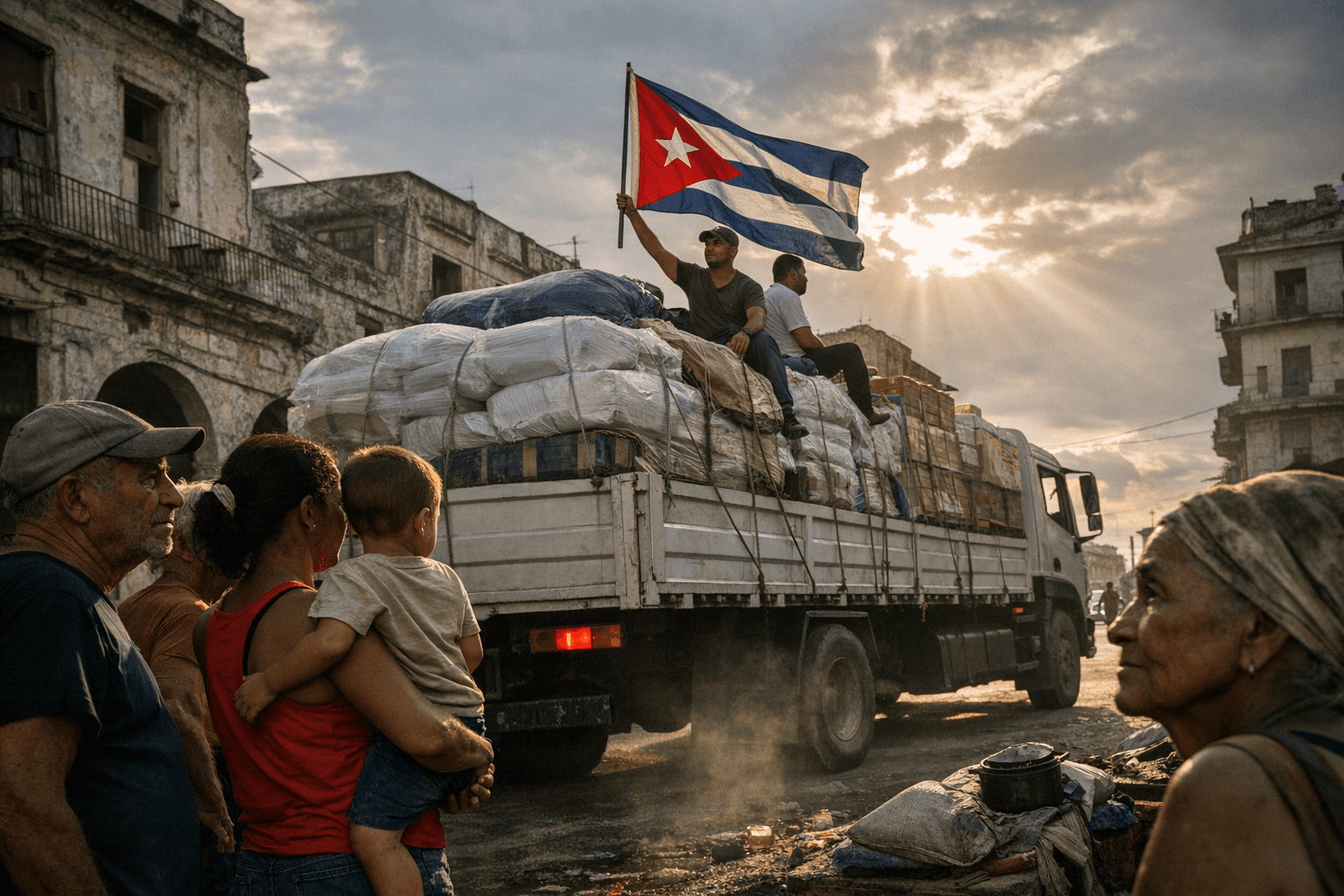
The Nuestra América convoy landed in Havana with about 35 tonnes of aid, split across several chartered flights and three boats from Mexico. The load was practical on paper: medical supplies, solar panels, food, sanitary pads and bicycles, the kind of mix that speaks directly to shortages people live with every day.
That is what makes the convoy worth watching. It was not just a shipment of relief goods; it was a test of whether outside help can still arrive in Cuba without becoming part of the island’s political fight. The answer, at least from the way this convoy was received, is complicated.
Why it happened now
The convoy came together at a moment when Cuba’s economic stress had become impossible to ignore. Supporters organized it in response to deteriorating conditions on the island, conditions made worse by the U.S. oil blockade and Cuba’s dependence on imported fuel. That matters because fuel scarcity is never just about gasoline in Cuba. It spills into blackouts, transport breakdowns, hospital strain, food spoilage and the daily grind of getting anything done.
This is why the convoy drew left-wing activists, aid groups and artists from more than one country. They were not only trying to move supplies. They were trying to make a statement about solidarity, anti-imperialism and who gets to define humanitarian help in the first place.
A relief effort with a political script
The convoy was modeled partly on the Gaza aid flotilla, and that comparison says a lot about the mood around it. The idea was to fuse direct aid with visible defiance, to turn logistics into a public argument about sanctions, sovereignty and moral responsibility. In that sense, the convoy was designed to do two things at once: bring material help and stage a political challenge.
That dual purpose is exactly where the tension starts. Humanitarian missions are usually judged by whether they reduce suffering. This one also wanted to tell a story about Cuban resistance and international solidarity. Those goals can overlap, but they can also pull in different directions when the people receiving the aid do not experience it as cleanly as the activists imagine.
Why the reception inside Cuba was mixed
Inside Cuba, the convoy did not get a universally warm welcome. A pediatric surgeon in Havana said she feared much of the aid would not reach the people most in need, and she questioned whether participants understood how severe conditions had become on the island. That skepticism cuts to the heart of the debate: if aid arrives with a political frame attached, who is it really serving first?
The optics did not help. Some convoy participants stayed in five-star hotels and moved around the capital in electric buses while ordinary public transport remained paralyzed. For Cubans dealing with exhaustion, long delays and daily shortages, that contrast fed skepticism and online ridicule. It is hard to sell a romance of solidarity when the people carrying the message seem buffered from the same breakdowns everyone else is living through.
The gap between intention and impact
This convoy is useful precisely because it exposes the distance between good intentions and actual impact. Aid can be sincere and still land awkwardly. It can be valuable and still become a public-relations problem. In Cuba’s case, the risk is that outside actors mistake visibility for usefulness.
The supplies matter. Medical goods, food and solar panels can help, even in a limited way. But the report suggests a harder truth: in a place where transport barely works and public services are buckling, the path from arrival to distribution is not straightforward. The more the mission looks like a symbolic march, the easier it is for critics to ask whether the most vulnerable people will ever see the benefits.
Why Cuba has become a stage for everyone else’s politics
The bigger story is that Cuba’s emergency has become internationalized. Blackouts, water problems, food insecurity and collapsing public services are not just domestic failures anymore; they have become a canvas for outside activists to project their politics onto. The island is now drawing in people and groups from Mexico, Miami, Milan and Bogotá, which tells you how far Cuba’s crisis has spilled beyond its borders.
That global attention can help. It can also distort. When Cuba becomes a stage, the island’s real needs risk getting blurred by the narratives built around them. Supporters may see a solidarity campaign. Critics may see a performance. Cubans stuck with power cuts, bad transport and shortages see the consequences either way.
What this means for anyone following Cuba now
If you are trying to understand Cuba through this convoy, the key lesson is not whether aid is good or bad. It is that aid in Cuba now arrives inside a heavily charged political environment, where every boat and flight carries two loads: the supplies themselves and the meaning attached to them.
- The aid was real, but limited, at roughly 35 tonnes.
- The political symbolism was deliberate, drawing on anti-imperialist solidarity and the Gaza flotilla model.
- The criticism was also real, especially from Cubans who doubt the aid will reach the people most in need.
- The optics of luxury hotels and electric buses only sharpened the sense that some participants were moving through a crisis they did not fully share.
That is where the story lands: not with a simple verdict on solidarity, but with a reminder that in Cuba, humanitarian action and geopolitics rarely stay in separate lanes. The convoy may have brought supplies into Havana, but it also revealed how easily aid becomes a battleground over legitimacy, narrative power and the right to speak for Cuba’s suffering.
This article was produced by Prism’s automated news system from verified source data, official records, and press releases, then run through automated quality and moderation checks before publishing. The system is built and supervised by the people who set the standards it runs under. Read our full AI policy.
Did this article answer your question?