Cuba fuel crisis blocks Catholic aid as shortages worsen nationwide
Even the Catholic Church is struggling to move aid in Cuba as fuel shortages choke transport, medicine, and food delivery nationwide.
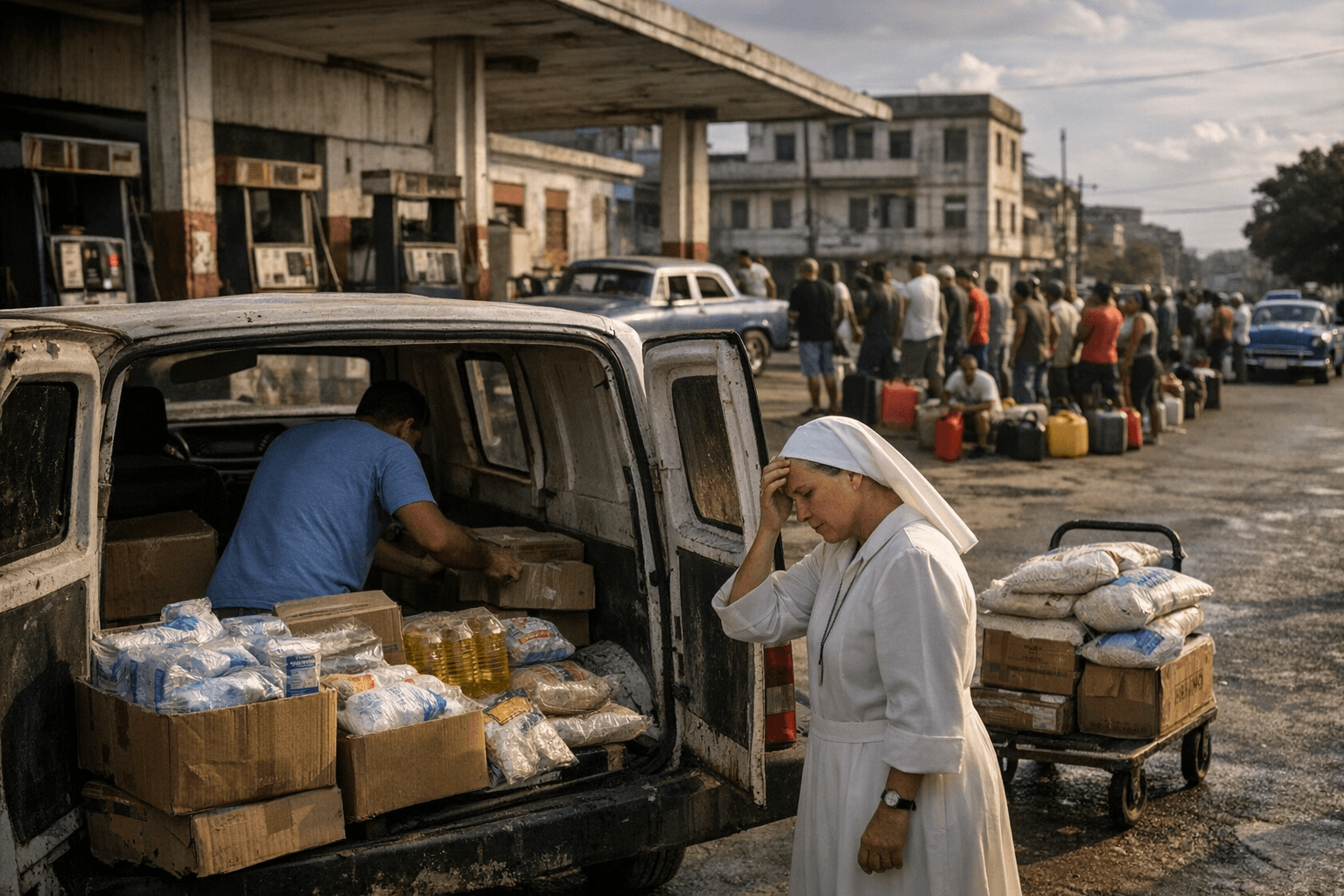
Even the Catholic Church could not move aid through Cuba reliably anymore, Archbishop Thomas Wenski said, after a container of chicken bound for Caritas Cuba had to be distributed with improvised methods because fuel scarcity had broken basic transport and handling. For Wenski, the fact that church relief was getting stuck was the clearest sign yet that Cuba’s crisis had moved beyond discomfort and into breakdown.
Wenski, the Miami archbishop, said the assistance his archdiocese sends to Cuba is tiny compared with the scale of need, but even those shipments had become much harder to distribute as fuel grew scarce. What used to move with relative predictability now depended on patchwork arrangements once the cargo landed. He said Cubans were telling him the island was approaching a kind of zero hour, when shortages stop looking temporary and start behaving like a broader humanitarian emergency.
That warning matched the U.N.’s own assessment. On April 6, the United Nations said Cuba was facing a “critical tipping point” after three months without sufficient fuel, and described the humanitarian situation as worsening. Francisco Pichon, the U.N. resident coordinator in Cuba, said the crisis remained “quite acute and persistent” even after limited fuel arrivals, including a Russian shipment that was allowed to dock. The U.N. said its updated action plan aimed to support around two million people across eight provinces, with the collapsing power grid among the central problems.
The knock-on effects were already severe. The U.N. said the energy crisis had left more than 96,000 surgeries pending, including 11,000 for children. It also said roughly one million people were dependent on water trucking because diesel was scarce. That is the kind of number that tells you this is no longer just about lines at gas stations. It is about whether hospitals can operate, whether water reaches neighborhoods, and whether food can move from port to parish to household.
The pressure has intensified under the wider confrontation with Washington. The U.N. said measures taken at the end of January blocked oil supplies from entering Cuba, while the Cuban bishops warned on January 31 that the risk of social chaos was real amid oil-supply cuts and U.S. tariffs on countries exporting oil to the island. Pope Leo XIV followed on February 1 with a call for “sincere and effective dialogue,” joining the bishops’ warning about humanitarian and social deterioration.
That is why the church’s delivery problem matters so much. The Catholic Church has long been one of the few practical channels for relief in Cuba, especially where state systems are strained. When even a church shipment of chicken cannot move cleanly through the island, the fuel crisis is no longer just a supply issue. It is the thing breaking the last mile of daily life.
This article was produced by Prism’s automated news system from verified source data, official records, and press releases, then run through automated quality and moderation checks before publishing. The system is built and supervised by the people who set the standards it runs under. Read our full AI policy.
Did this article answer your question?