Cuba’s foreign minister defends political system, dodges question on free elections
Bruno Rodríguez called Cuba “a democracy, a different democracy,” then dodged the simplest test of that claim: what free elections would do to Communist Party rule.
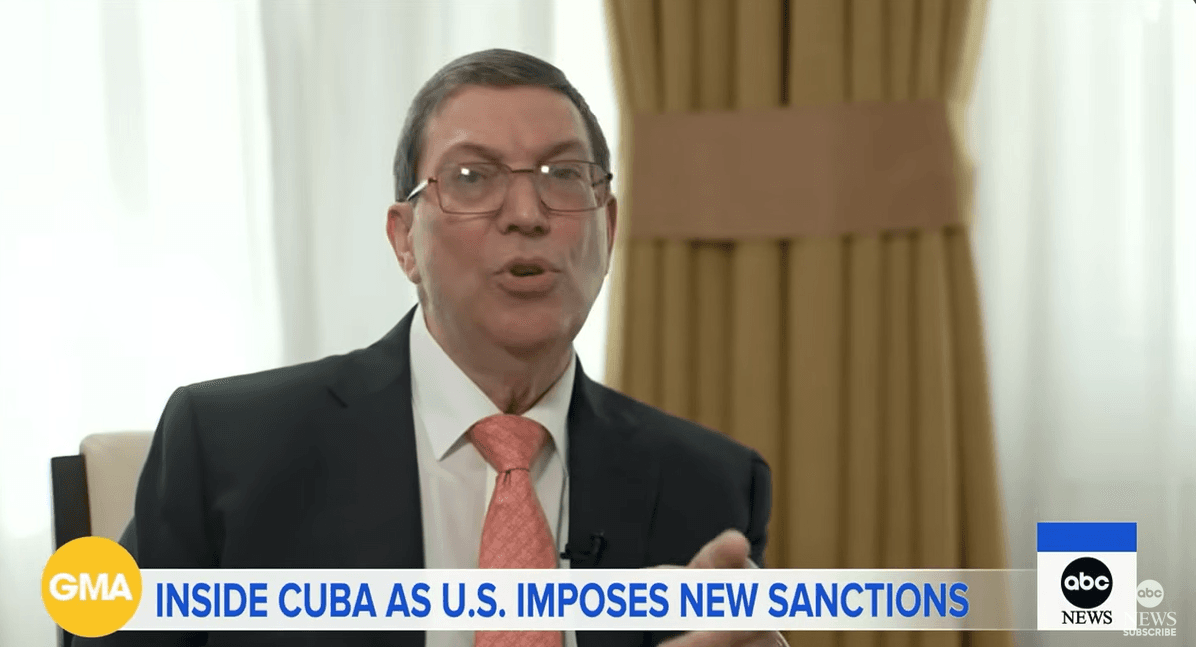
Bruno Rodríguez Parrilla was pressed on free elections and answered with defiance, not details. In an ABC News interview, Cuba’s foreign minister called the island “a democracy, a different democracy” and, when Whit Johnson pushed on what would happen if Cubans could freely choose their leaders, Rodríguez accused the journalist of “showing prejudice.”
That exchange went straight to the accountability gap at the center of Cuba’s political system. Rodríguez said Cuba had “its own history” and “its own particularities,” but he did not answer the basic question of whether the Communist Party could survive a genuinely competitive vote. Instead, he treated the question itself as an attack, a familiar move in Havana’s official rhetoric, where criticism is often recast as bias or outside hostility.
The constitutional structure backs up the skepticism. Cuba’s 2019 Constitution says the Communist Party of Cuba is the “superior driving force of the society and the State.” It also says the president is elected by the National Assembly of People’s Power from among its representatives for a five-year term, not by direct popular vote. The constitutional rewrite was published on January 5, 2019 and approved in a national referendum on February 24, 2019, but it did not open the door to multiparty competition or independent opposition power.
Outside monitors have kept landing on the same conclusion. Freedom House rated Cuba “Not Free” in 2025 with a score of 10 out of 100, including a political rights score of 1 out of 40. Human Rights Watch said that as of August 2024, Cuba held over 1,000 political prisoners, including 30 children under 18, and said more than 650 protesters were behind bars in its 2025 report, many connected to the July 2021 demonstrations that remained the largest anti-government protests since the revolution.
That is the backdrop to Rodríguez’s careful wording. Cuba’s government has been under pressure from sanctions, energy shortages, social frustration and rising international scrutiny, and the leadership keeps insisting that outside pressure will not decide the island’s future. But the ABC exchange showed how thin the state’s democratic argument looks when a minister is asked the one question he cannot comfortably answer: if Cubans voted freely, would the system he defends still hold?
This article was produced by Prism’s automated news system from verified source data, official records, and press releases, then run through automated quality and moderation checks before publishing. The system is built and supervised by the people who set the standards it runs under. Read our full AI policy.
Did this article answer your question?