Cuba’s Northern Keys Tell a Story of Light, Water, Memory
Cuba’s northern keys still sell the dream, but the numbers, the infrastructure, and the ecology all point to a tourism model under strain.
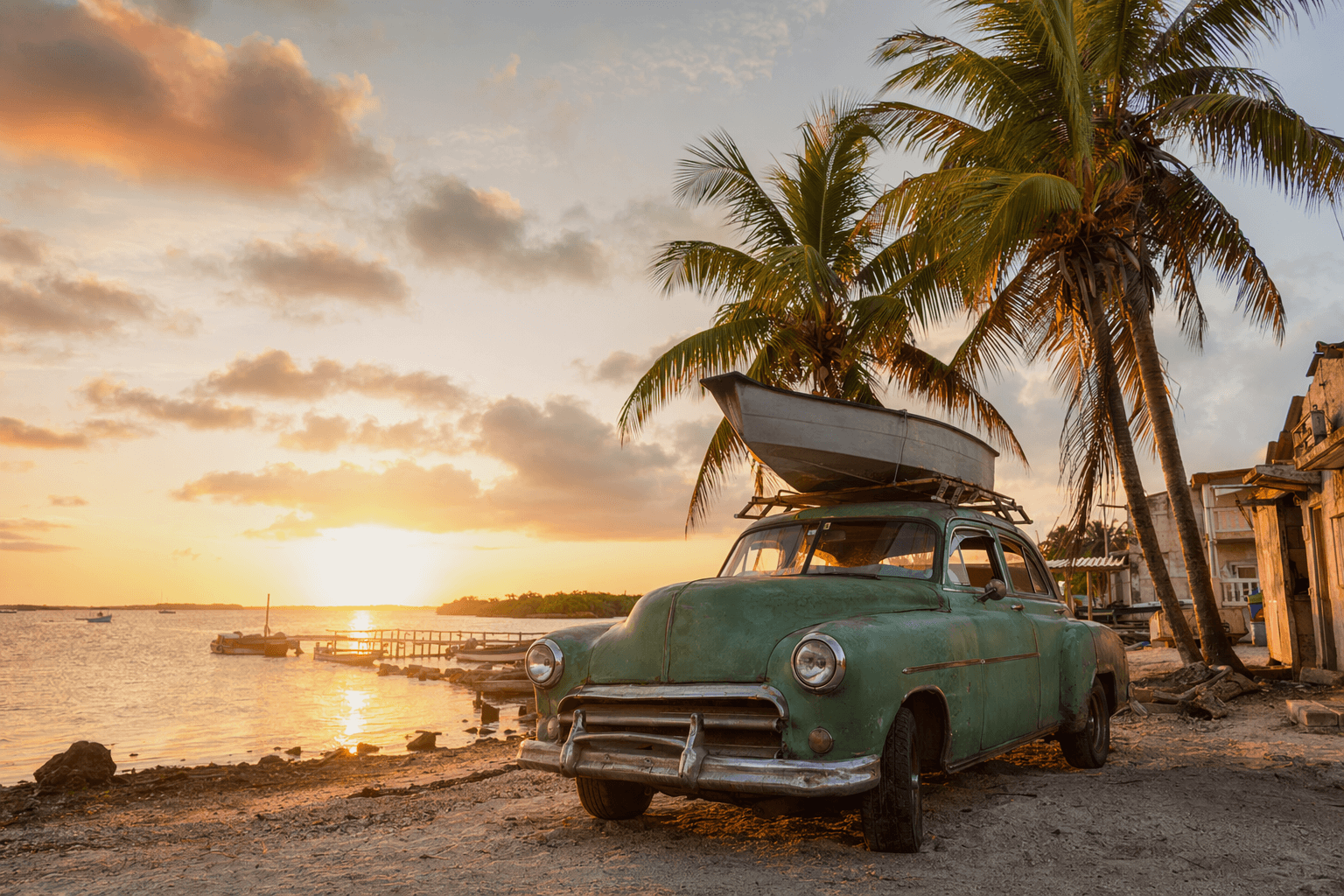
A postcard with a bill attached
Cayo Coco and Cayo Paredón still look like the Cuba most outsiders imagine first: white sand, bright water, and a horizon that seems designed for a brochure. But the real story in the northern keys is not just beauty, it is the tension between that beauty and a tourism system that has been losing altitude, with 2.2 million international visitors in 2024, far below the government’s 3.2 million target.
That gap matters because these cayos are not empty scenery. They are built assets in Cuba’s sun-and-sand economy, places meant to generate hard currency, keep hotels occupied, and justify the expensive machinery of coastal tourism. When you look at them closely, the obvious question is not how pretty they are. It is what the images leave out: occupancy levels, worker pressure, supply shortages, and whether this kind of destination still makes economic sense.
Where the northern keys sit in Cuba’s tourism map
Cayo Coco sits in Ciego de Ávila Province, inside the Jardines del Rey archipelago, and it is one of the best-known names in Cuba’s resort geography. It is linked to the mainland by a causeway that opened on July 26, 1988, and its first resort opened in 1993. The Jardines del Rey Airport, on Cayo Coco, serves the wider resort zone, including Cayo Coco, Cayo Guillermo, Cayo Paredón and Cayo Cruz.
That access changed the area from remote coastline into a purpose-built tourism corridor. Morón municipality became part of the practical geography of the route, the place many travelers and workers pass through on the way into the keys, where the landscape shifts from inland Cuba to water, bridge, and managed resort space. The result is a destination that feels isolated by design, even though it is tied tightly to the rest of the island by road, airport, and tourism planning.
Cayo Paredón Grande, farther east in the same corridor, adds a different layer of memory. It is anchored by the Diego Velázquez lighthouse, which sources date to 1859, a reminder that the area’s history did not begin with hotels and all-inclusives. That older landmark sits in sharp contrast to the newer resort infrastructure around it, and the contrast is part of what gives the northern keys their strange visual power.
What the images hide when the beaches are quiet
The problem with a beautiful photo essay is that it can make strain look serene. In the northern keys, the silence can be misleading, because these are places built for volume, turnover, and foreign spending. When arrivals slip and hotels thin out, the question becomes whether the apparent calm is just low season, or the symptom of a deeper collapse in demand.
Cuba’s tourism sector has been under severe pressure. Reports based on official data said arrivals continued to fall in 2025 after the island drew 2.2 million international visitors in 2024, and tourism brought in about $1.3 billion in foreign currency that same year. Those numbers make the cayos more than a scenic detour. They make them a test case for whether the country’s most marketable landscape can still carry the weight of the national economy.
- Are the rooms full, or only staged to look that way?
- Are the buffet lines stocked with the same consistency the photography suggests?
- Are workers stretched across too few guests, too many properties, and too little inventory?
- Is the destination still pulling in enough revenue to justify the fuel, maintenance, imports, and labor that keep it running?
Those are the questions that matter when the coastline starts to look less like a vacation and more like a balance sheet.
The land underneath the resort model
The beauty of Cayo Coco comes with a footprint. A study presented by the Association for the Study of the Cuban Economy found that the causeway altered currents and increased salinity, which affected mangrove coverage nearby. That is the hidden cost of turning a fragile coastal zone into a mass-tourism corridor: once water flow changes, the landscape does not simply stay the same around the infrastructure.
This is why the northern keys should be read as more than a pretty location. The same road that made access easier also changed the ecology that makes the setting possible in the first place. Mangroves, currents, salinity, and shoreline stability are not side issues here. They are part of the tourism product, even if they never appear in the marketing photos.
Cayo Paredón Grande, with the Diego Velázquez lighthouse standing in the background, sharpens that contrast. You get the sense of duration, of memory layered over development, of an old navigational landmark presiding over a newer economy that still depends on imported goods, operational discipline, and a steady flow of visitors that is no longer guaranteed.
Why these cayos still matter, and why the question is harder now
For Cuba watchers, Cayo Coco and Cayo Paredón remain central because they show both the promise and the fragility of the island’s resort strategy. They are among the clearest examples of how Cuba has tried to monetize its coastline, and they still carry the visual identity that the country sells to the outside world. But the broader picture is harder to ignore now: less traffic, weaker returns, and a tourism sector that has not bounced back the way planners hoped.
That is what makes the northern keys such useful evidence. They show that Cuba still has extraordinary natural assets, especially in light and water, but also that those assets now sit inside a battered economy and an underused resort machine. The central contradiction is no longer hidden in the background. It is the story.
In the end, Cayo Coco and Cayo Paredón are not just places to admire. They are a measure of how much Cuba can still ask from its most photogenic coastline, and how long a tourism model can survive when the water stays beautiful but the numbers keep telling a different story.
This article was produced by Prism’s automated news system from verified source data, official records, and press releases, then run through automated quality and moderation checks before publishing. The system is built and supervised by the people who set the standards it runs under. Read our full AI policy.
Did this article answer your question?