Electric tricycle taxis keep Havana suburb moving, despite low profits
Before sunrise in San José de las Lajas, tricycle drivers chase a few pesos while the suburb leans on them to keep workers, students, and patients moving.
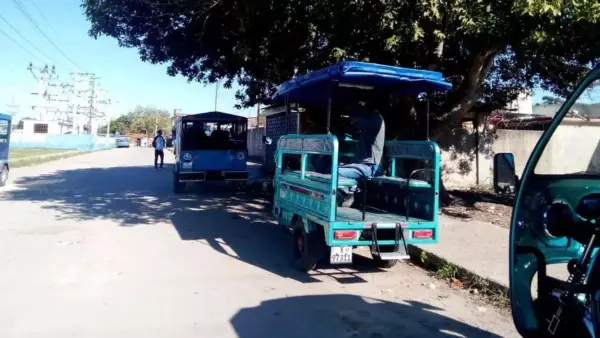
The stand at dawn
At the old train station in San José de las Lajas, the workday starts before sunrise and the money still comes in slowly. Drivers line up under makeshift tarps, wait for the first passengers, and watch the line swell and then thin out again as the morning slips away. What looks like a simple ride is really a daily gamble: enough trips to cover the battery charge, the repairs, and the family bills back home, or a day that ends with almost nothing left.
Julio Cesar Contreras says he tries to reach the stand before 6:00 a.m. so he can get ahead of the crowd and grab the best trips before noon. That timing matters because ridership drops sharply by late morning, and after that the stand can crawl for hours. The people who still need rides early are the ones who cannot wait around, workers heading in, students trying to make class, older residents who need to get somewhere while the transport window is still open.
Why a 300-peso ride still feels like a loss
The numbers explain why these electric tricycles are both essential and precarious. Short city trips can cost 300 to 400 pesos, but the drivers say that is often still not enough once you factor in what the day demands from the vehicle and the person driving it. Battery charging eats into the take, and so do maintenance problems that never seem to wait for a good week.
That is the brutal part of the tricycle economy in San José de las Lajas: the fare may look like a steady source of income from the sidewalk, but the margin is thin after the expenses and the waiting. Drivers are not just selling a ride, they are trying to squeeze a living out of a machine that depends on electricity, endurance, and a stream of passengers that is far from guaranteed. When the line is short, the whole math falls apart.
Because short hops are often too cheap to be worth it, drivers keep looking for longer routes. The better runs go out to Cotorro, Catalina de Güines, or Madruga, where a full trip can be more worthwhile than a string of small city fares. Even then, the ride is a negotiation, because riders haggle hard and many households simply cannot pay much more.
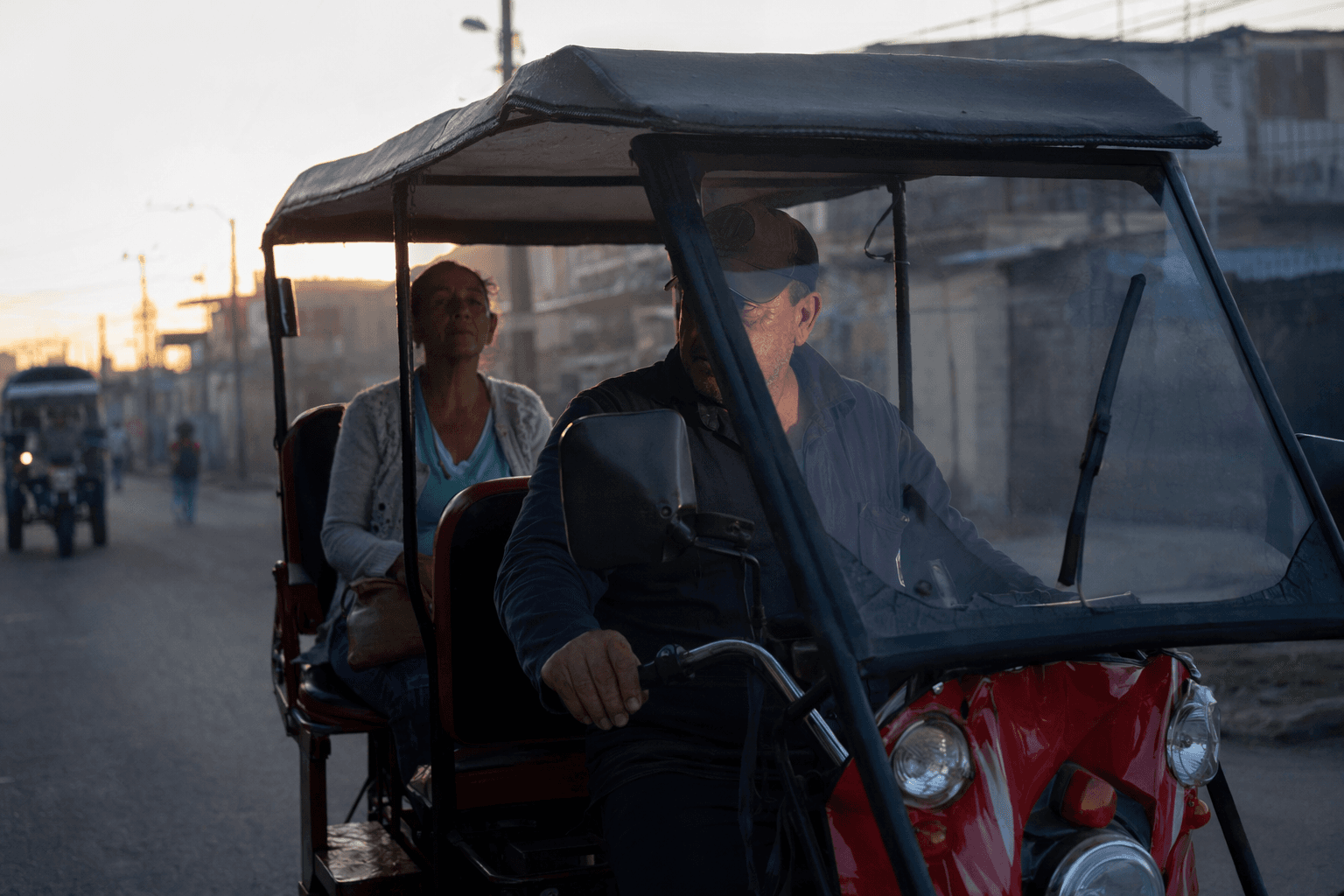
A transport system built on improvisation
The electric tricycle has become one of the few practical alternatives left in Cuba’s broken transport landscape. Conventional public transit remains limited, fuel is scarce, and private operators have stepped into the gap the state cannot fully cover. In that sense, the tricycle is not a luxury or a curiosity. It is a survival service, stitched together from battery power, local know-how, and the willingness of drivers to keep showing up.
The scale of that shift is bigger than one suburb. In August 2025, Cuba’s transport ministry said 432 electric tricycles were operating across most provinces, backed by domestic manufacturing, strategic suppliers, and the Public Transport Development Fund. AFP also reported in February 2026 that six- and eight-seater e-trikes had become a lifeline for cash-strapped Cubans, a sign that this is not just a local fix but part of the country’s wider attempt to keep people moving with what it has.
San José de las Lajas sits squarely inside that emergency response. On February 13, 2026, state media in Mayabeque reported that eight ecotaxis were put into service there to reinforce urban transport amid fuel shortages. The move underscored what riders and drivers already know: the city’s transport network is being patched together route by route, vehicle by vehicle, because the old system is not carrying the load anymore.
The crisis behind the wheel
The bigger pressure comes from the energy crisis. UN News said on February 26, 2026 that Cuba’s humanitarian situation was worsening as fuel shortages deepened, with oil accounting for more than 90% of the country’s energy needs. The report said Cuban authorities rolled out a month-long contingency plan and warned that the strain was spreading across healthcare, water services, food distribution, transportation, and other essential services.
Those effects are not abstract. UN News said that by February 2026 more than 32,000 pregnant women faced risks to services, and about one million people depended on drinking water delivered by tanker trucks. That is the backdrop to every tricycle stand in places like San José de las Lajas. When fuel is tight and essential services are stretched, the little electric vehicle that gets someone to work or a clinic starts to carry the weight of an entire failing system.
Reuters reported in early February that President Miguel Díaz-Canel said the government would roll out a plan to deal with the fuel shortage. The urgency of that response shows how deep the pressure has gone, especially after U.S. measures tightened the flow of oil supplies into the island. By then, the transport crisis was already visible in the way Cuba’s streets were changing, with more electric tricycles, more improvisation, and fewer reliable options.
Who gets stranded when the trikes stop
The hardest part of this story is that the tricycles are not just keeping drivers afloat. They are keeping neighborhoods connected. When they stop running, the people stranded are the ones with the least flexibility: workers trying to clock in, students trying to get to class, older residents who cannot walk long distances, and anyone headed to a clinic, a market, or an intermunicipal connection.
That dependence is what makes the business so fragile. A driver can spend the whole morning chasing passengers, then still come home with too little to cover the day. A passenger can complain about a fare, then still need the ride because there is no better option. In San José de las Lajas, the tricycle stand near the old train station has become a small but vital piece of civic infrastructure, one that runs on scarce power and constant compromise.
That is why the electric tricycle is such an uneasy symbol of the present moment in Cuba. It is innovative, necessary, and already overworked. It keeps the suburb moving, but only by asking drivers to survive on margins that keep shrinking.
This article was produced by Prism’s automated news system from verified source data, official records, and press releases, then run through automated quality and moderation checks before publishing. The system is built and supervised by the people who set the standards it runs under. Read our full AI policy.
Did this article answer your question?