GAESA emerges as central target in U.S.-Cuba tensions
GAESA sits inside Cuba’s hotels, banks, ports, and remittance pipes, which is why Washington is treating the military conglomerate like the island’s pressure valve.

What GAESA actually is
GAESA is the name behind a lot of Cuba’s hardest economic truths. The acronym stands for Grupo de Administración Empresarial S.A., and it describes a sprawling business empire run through the Cuban Revolutionary Armed Forces, not a normal private conglomerate or a civilian state holding company.
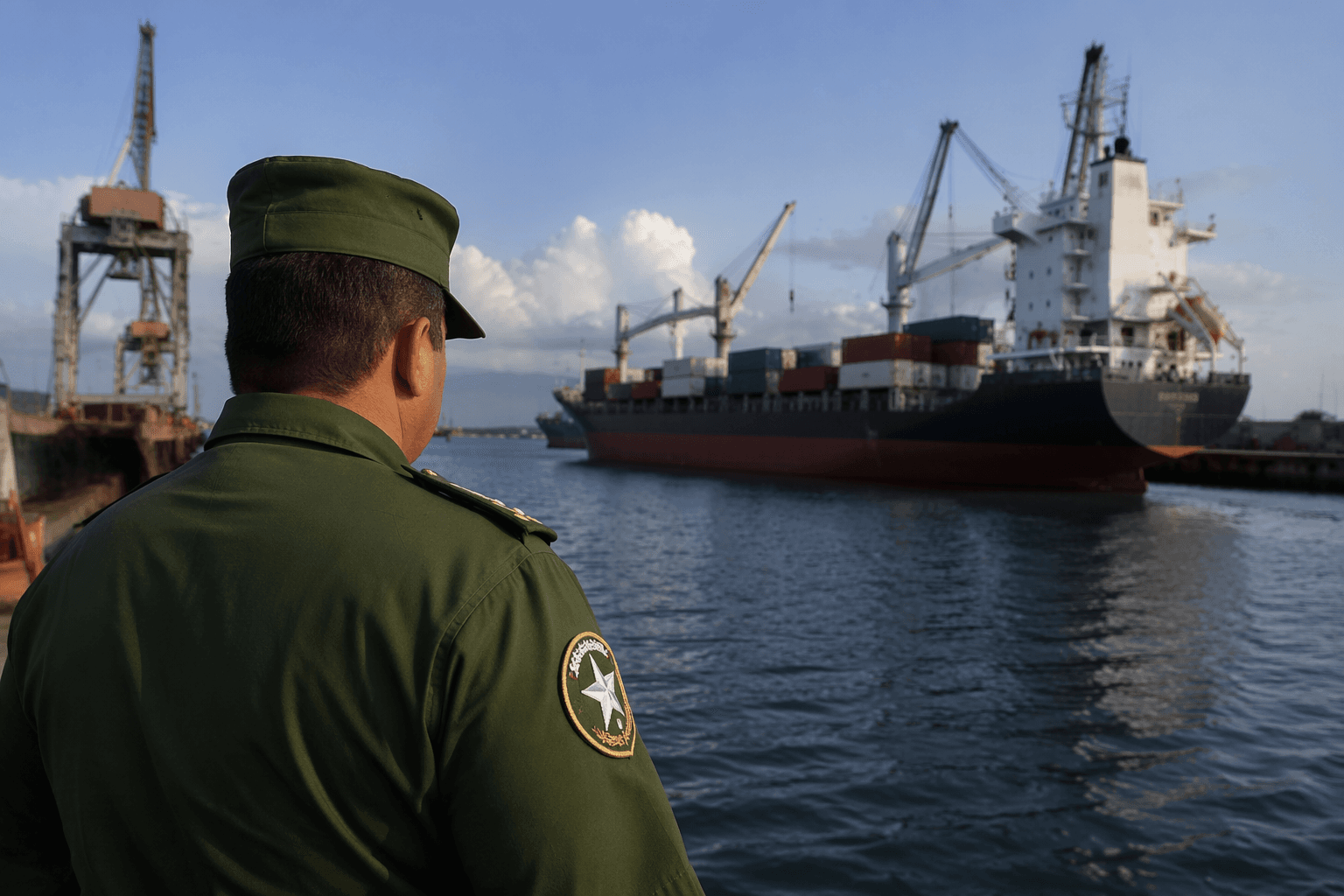
That matters because GAESA is not some side player tucked away in one sector. It sits at the center of the island’s most dollar-generating businesses, which is exactly why it keeps showing up in U.S. policy statements. When Washington talks about squeezing Cuba’s hard currency access, GAESA is the obvious target because so much of that money flows through its hands.
Where the money and power run
GAESA’s footprint is broad and unusually practical. It controls major hotels, the port at Mariel, Cuba’s top commercial bank, and a wide spread of supermarkets, gas stations, and remittance businesses. A Columbia University Cuba Capacity Building Project analysis goes further, saying GAESA dominates tourism, retail, wholesale trade, finance, remittances, logistics, storage, and the Port of Mariel.
That is the key to understanding why GAESA matters more than a generic “military conglomerate” label suggests. If the same network is handling tourists, foreign exchange, consumer goods, and cash transfers, then pressure on GAESA hits all of those channels at once. The U.S. State Department says the group controls an estimated 40 percent or more of Cuba’s economy, which is why it now sits at the center of the confrontation rather than the margins.
Why Washington sees a pressure point
The U.S. case is straightforward: if GAESA is where Cuba’s most valuable money moves, then sanctions aimed at GAESA can hit the regime’s core revenue streams instead of just its optics. That is why Secretary of State Marco Rubio has repeatedly singled it out in public comments, including a Spanish-language video message in which he said, “Cuba is controlled by GAESA.”
The State Department’s latest move sharpened that approach. In May 2026, it said it was sanctioning 11 Cuban regime-aligned actors and three entities under Executive Order 14404, while describing GAESA as a Cuban military-controlled umbrella enterprise. The department said GAESA controls an estimated 40 percent or more of the island’s economy. That language is not accidental. It frames GAESA as the operating system behind the economy, not just one business group among many.
The family, the military, and the machine
GAESA was established in the 1990s by then-defense minister Raúl Castro, and later it was headed by his son-in-law, Luis Alberto Rodríguez López-Calleja, until his death in 2022. That history explains why the group is treated in Washington as more than a commercial actor. It is tied to the military command structure and to the ruling family’s economic architecture.
That kind of ownership story changes how outsiders read Cuban capitalism, such as it is. If the military controls the profitable sectors and the management chain runs through regime insiders, then GAESA becomes the bridge between political power and hard currency. For critics of Havana, that is the point of leverage. For the Cuban government, it is the structure that keeps the economy functioning under pressure.
Tourism is the clearest example
Nowhere is the contradiction sharper than in tourism. Cuba keeps pouring resources into hotel stock and glossy projects, yet much of that capacity sits underused or idle while the broader economy stalls. The best symbol is Torre K, a 42-story building in Havana that houses the Iberostar Selection La Habana hotel and was completed in 2025, but now sits idle.
That image lands because it captures the split-screen reality of modern Cuba. On one side, there is visible investment in tourism infrastructure. On the other, there are shortages, blackouts, and weak purchasing power that keep rooms empty and revenue soft. GAESA sits right in the middle of that contradiction because its hotel empire is supposed to turn visitors into cash, yet the country’s broader collapse keeps undercutting the payoff.
The U.S. State Department’s Cuba Restricted List, as of July 14, 2025, explicitly names GAESA, Gaviota, CIMEX, and numerous hotel properties, including Torre K and Iberostar Selection La Habana. That list is the practical version of Washington’s theory of pressure. It tells U.S. persons where the line is drawn and makes clear that GAESA-linked tourism assets are not ordinary commercial opportunities.
Remittances, retail, and daily life
GAESA is not only a hotel and port story. Its control over supermarkets, gas stations, and remittance businesses means it reaches into daily life in a way most sanctions targets never do. When the same network touches food shelves, fuel access, and money sent from abroad, pressure on the conglomerate is not abstract. It shows up in consumer access and in the channels families use to survive.
That is why GAESA is so useful to policymakers in Washington and so combustible inside Cuba. A sanctions hit can be sold as a way to choke off military revenue, but the spillover lands on ordinary people who need imported goods, fuel, and remittances. The debate over GAESA is really a debate over whether that pain is the point or the collateral damage.
The shortages argument cuts both ways
The fight over GAESA sits inside a bigger dispute over responsibility for Cuba’s crisis. In early May 2026, UN experts said a January 2026 U.S. executive order restricting fuel shipments amounted to “energy starvation.” They said it worsened fuel shortages, disrupted hospital access and schooling, and contributed to a backlog of more than 96,000 pending surgeries, including 11,000 for children.
Havana and its supporters argue the opposite: that U.S. sanctions and fuel restrictions are the main engines of the emergency. Washington says the military economy is the real problem. That split is why GAESA has become so central. Each side is using the same crisis to tell a different story about causation, blame, and leverage.
What the numbers suggest
The Columbia analysis gives the clearest sense of scale. It says GAESA’s gross profits on sales are close to 37 percent of Cuba’s GDP, that its revenues are about 3.2 times the annual revenues of the Cuban state budget, and that it holds about $14.5 billion in liquid dollar reserves. It also says the group operates outside normal audit and legislative oversight.
Those figures help explain why the U.S. is not treating GAESA as a niche target. If those numbers are even roughly right, then the conglomerate is not just part of Cuba’s economy, it is a parallel engine that shapes how the island earns, stores, and moves money. That is the real meaning of the current escalation. Once you map the hotels, the port, the bank, the remittance channels, and the retail network, GAESA stops looking like a bureaucratic acronym and starts looking like the switch Washington wants to flip.
Know something we missed? Have a correction or additional information?
Submit a Tip