U.S. Embassy Havana Delays Services April 2 Due to Regime Plaza Event
The Cuban regime staged a plaza event that closed streets around the U.S. Embassy Havana on April 2, pushing consular services back to 11 a.m. and postponing morning appointments.
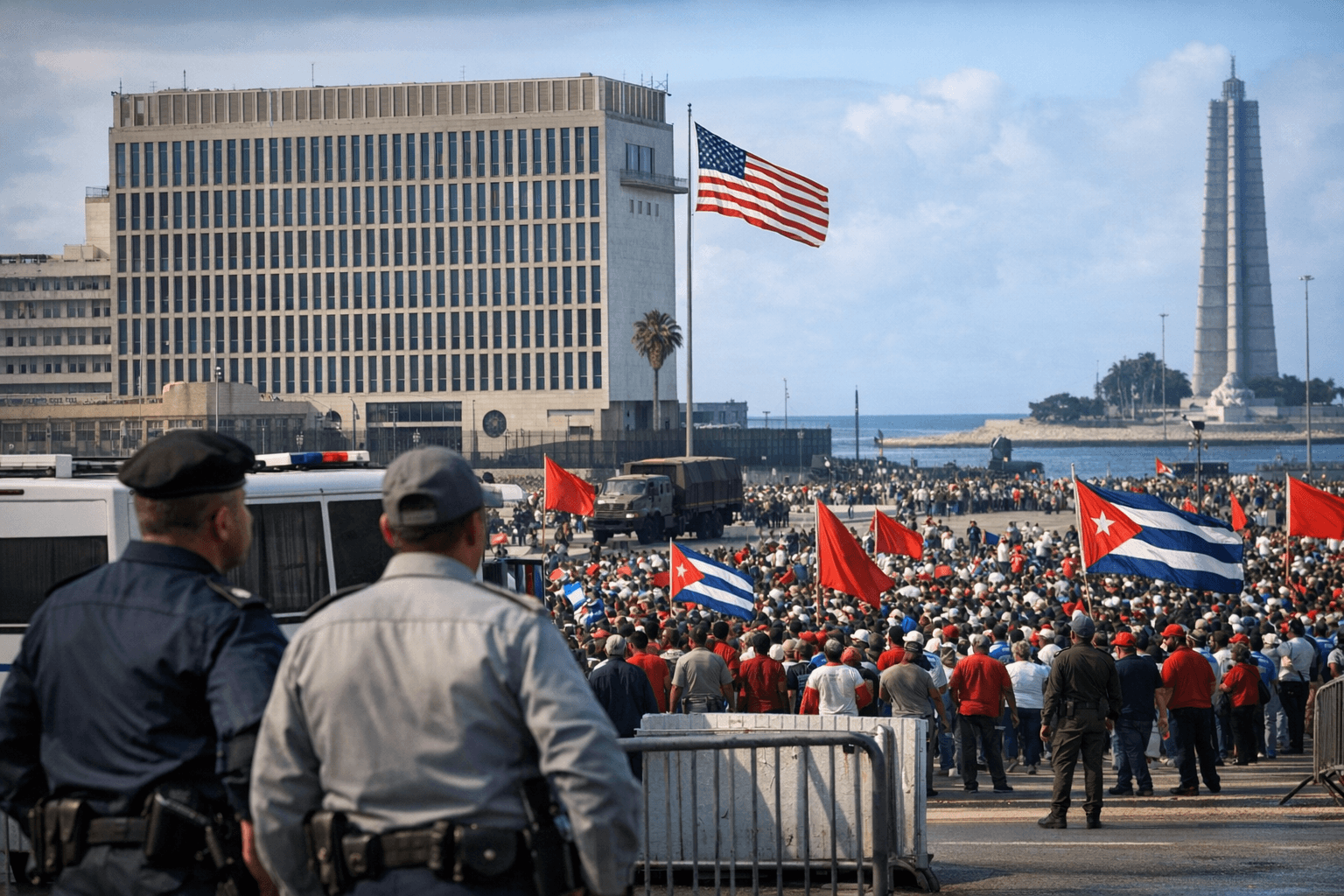
A regime-organized event in the plaza directly in front of the U.S. Embassy Havana shut down the surrounding neighborhood and pushed consular services back to 11:00 a.m. on April 2, forcing anyone with a morning appointment to absorb the disruption on short notice.
The advisory was posted to OSAC on April 1, drawn from U.S. Embassy Havana guidance, and it was specific: streets in the embassy's immediate vicinity were closed, U.S. citizen services were restricted during the event, and the 11:00 a.m. opening delay was firm. The timing, one day before the event, gave travelers and operators a narrow window to adjust.
The notice landed against a security environment in Havana that had already been shifting throughout early 2026. OSAC's alert archive for the period included demonstration alerts and security messages from earlier in March, a pattern reflecting how frequently street access and operational movement have been disrupted since the energy crisis and political standoffs that defined the start of the year. Anti-U.S. and pro-regime demonstrations have been running alongside opposition activity, each capable of closing streets and compressing whatever schedule a traveler had built.
Street closures for state-organized events carry a secondary complication beyond the obvious: access roads used for airport transfers can be affected. On April 2, building in extra margin for any airport run was not a suggestion but an operational necessity. Identifying alternative pickup and drop-off points in advance was the practical minimum.
For travel operators and journalists working the island, the April 2 advisory reinforced a standing rule: confirm local permissions before the morning of any state-organized event, not after the security perimeter is already up. The alert also pointed to STEP enrollment, the Smart Traveler Enrollment Program, as the baseline for staying ahead of these notices. Given that Havana generated multiple security alerts within a single month, STEP is less a precaution than a necessity for anyone operating on the island right now.
The Cuban government has staged plaza events in front of the embassy before, typically as organized shows of political positioning. The April 2 edition fit that pattern, with the addition of a security environment that has grown considerably more active since the political standoffs and energy crisis of early 2026 brought both pro-government mobilization and opposition activity to the streets at the same time.
This article was produced by Prism’s automated news system from verified source data, official records, and press releases, then run through automated quality and moderation checks before publishing. The system is built and supervised by the people who set the standards it runs under. Read our full AI policy.
Did this article answer your question?