Dwarf Fortress world-gen guide argues for smarter customization
The best Dwarf Fortress worlds are often smaller and shorter-lived. Medium or small islands, plus a tuned End Year, can cut setup time without flattening the story.
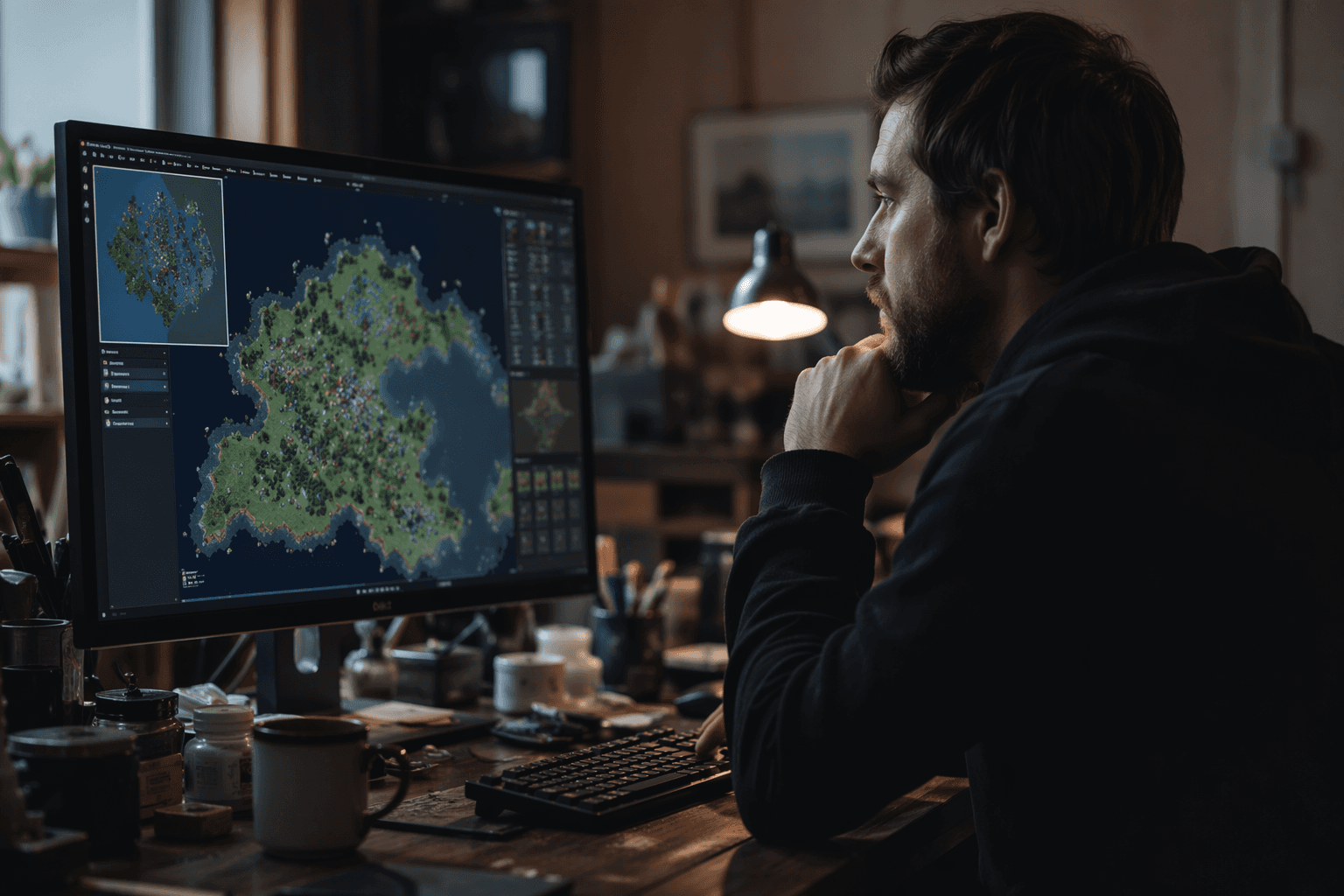
In Dwarf Fortress, advanced world generation lets you decide world size and history length before a campaign starts. The game is built as a fantasy world simulator with an evolving history, and every generated world creates a unique challenge, so the setup screen already shapes the campaign you are about to play. If you want a smoother start, better performance, and a world that still feels alive, intentional customization is usually smarter than leaving everything on stock.
Worldgen is the first meaningful decision
World generation is the “heart of the game” in the Dwarf Fortress wiki, and that framing fits the way experienced players actually approach it. Advanced world generation, also called detailed mode, sits behind the main menu and opens up far more control than the basic setup screen. It decides how long history runs, how much the simulation has to carry, and how much of that history you will have to manage later in Fortress Mode or explore in Adventure Mode.
The default setup is usually fine if you just want to get in and play. If you already know you want a curated world, the advanced screen gives you the tools to build one without spending extra time on a giant, noisy simulation you do not actually want.
Why world size is a gameplay choice, not a cosmetic one
Freaky James’s most direct recommendation is Medium Island. The reason is simple and very Dwarf Fortress: it keeps the world manageable while still generating enough material to matter. Medium is a strong fit because it helps with FPS and still leaves you with lots of things generated in the world. It is also the size that lets you feel like you can actually see the whole world, which is a real advantage when you are trying to keep long campaigns organized in your head.
Small Island pushes the same logic further. If you want better performance, a smaller world, or something easier to explore in Adventure Mode, it is a sensible choice. That smaller footprint can make the game feel less sprawling, and for some players that is the whole point.
Bigger worlds still have a place. If you want a denser stage for wandering history, larger population spread, or a broader sense of a living setting, the larger options are still worth considering. More world means more simulation and more load.
History length does more than fill a timeline
In advanced mode, “End Year” is the setting that controls how long the world runs before you start playing. The first playable year begins when world generation stops, and by default that happens at year 100. In advanced mode, you can set the stop point to exact values, with available endpoints ranging from 5 to 500 years.
Shorter histories generate more quickly, which helps with startup time, and they keep the world younger. The longer the world history, the more megabeasts are confronted and killed off, which makes the world safer for civilization. A shorter history preserves more of the dangerous old stuff, which means more megabeasts, more ancient threats, and more historical actors still roaming around when you finally embark.
Dwarf Fortress worlds usually move through the Age of Myth, then the Age of Legends, and then the Age of Heroes. World size may affect how long an age lasts, so size and history length are working together even when you are only touching one setting. If you want a world that feels older, safer, and more settled, longer histories help. If you want a world that still has teeth, shorter histories are often the better trade.
Island worlds can feel alive or strangely empty
Island settings are attractive because they create neat, self-contained worlds, but they can also produce odd geography. Island worlds can strand civilizations without land connections, which reduces interaction and can make the world feel less alive unless you regenerate it. That is the catch with a highly curated map: if you isolate too hard, you can accidentally cut off the trade routes, invasions, and historical movement that make Dwarf Fortress feel like a breathing simulation.
A smaller or island-heavy world can be excellent if you want cleaner planning and faster loading, but you still need enough connective tissue for trade routes, invasions, and historical movement.
The community already treats worldgen like a loadout
Players share custom presets and tune settings like caverns, erosion, and world size in Steam Community discussions. DFFD also hosts pregenerated worlds and worldgen files, so players do not treat worldgen as disposable; they reuse and refine it.
An archived worldgen example includes presets built with performance in mind because of long-running worlds and FPS issues.
This article was produced by Prism’s automated news system from verified source data, official records, and press releases, then run through automated quality and moderation checks before publishing. The system is built and supervised by the people who set the standards it runs under. Read our full AI policy.
Did this article answer your question?