Cartridge Needle Sizing and Grouping Explained for Geometric Tattoo Artists
Needle gauge and grouping choices make or break clean geometric work; here's what every number and configuration actually means for your lines and fills.

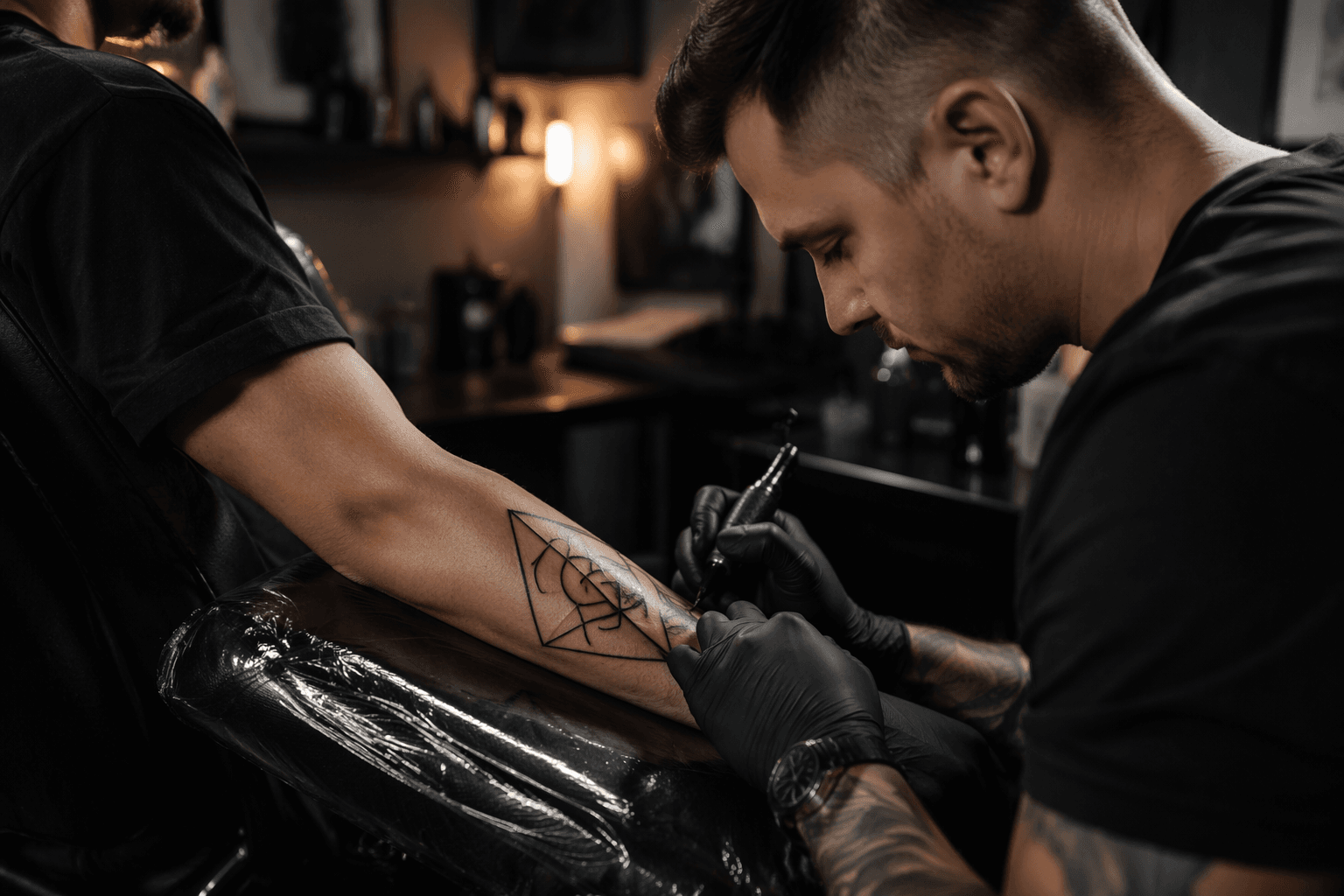
Getting clean, crisp geometry on skin starts long before you touch the machine to a client. It starts when you're loading your cartridge. The gauge of the needle, the way those needles are grouped, and how tightly they're soldered together all determine whether your sacred geometry piece looks like a laser-cut mandala or a blurry mess six months down the road. If you've been guessing at needle selection or just defaulting to whatever came in your starter kit, this breakdown will change how you work.
Understanding needle gauge: What the numbers actually mean
The number stamped on a cartridge refers to the diameter of each individual needle in the grouping, measured in hundredths of a millimeter. The most common gauges you'll encounter are #10 (0.30mm), #12 (0.35mm), and #14 (0.40mm). For geometric tattoo work, gauge selection is one of the most consequential decisions you'll make per session.
A #10 gauge, sometimes called a "double zero" or "bug pin," is the thinnest standard option. These needles require slower passes and more deliberate machine tuning, but they reward the patient artist with extremely fine detail. If you're building intricate linework inside a metatron's cube or creating the micro-fine divisions inside a mandala, #10 groupings give you a level of precision that a #12 simply can't match at the same scale.
A #12, or "standard gauge," is the workhorse of the industry. Most cartridge manufacturers design their groupings around #12 needles, so your selection at this gauge is broadest. For geometric work that sits in the mid-scale range, meaning pieces roughly palm-sized or larger with lines you intend to pack and shade, #12 hits the sweet spot between control and ink saturation per pass.
The #14 gauge is the heavyweight. Thicker needles push more ink and create bolder lines in fewer strokes, which sounds appealing until you're trying to maintain 0.5mm spacing between parallel lines in a grid pattern. Reserve #14 groupings for bold outlines on large-scale geometric pieces or when you're packing black into a large fill region and don't need surgical precision.
Grouping configurations: Rounds, magnums, and what they do
Beyond gauge, the arrangement of needles within a cartridge defines the type of mark it makes. The main configurations you'll work with in geometric tattooing are round liners (RL), round shaders (RS), and magnums (M1 or curved M1).
Round liners are soldered tightly together in a circular cluster. The tighter the solder, the more defined and precise the line. A 3RL or 5RL is your precision instrument for single-pass geometric lines, compass-drawn circles, and the kind of crisp angles that define sacred geometry styles. When clients ask for the razor-thin lines they see in fine-line geometric work, you're almost certainly reaching for a tight 3RL or 5RL in #10 gauge.
Round shaders are configured with a looser solder and a slightly wider spread. They're not your first call for linework in geometric pieces, but they're genuinely useful for softly shading the interior faces of geometric shapes, building subtle gradients inside dodecahedrons or within the petals of a flower of life design. A 7RS or 9RS in #12 gauge can lay down a smooth wash without the hard edge a liner would leave.
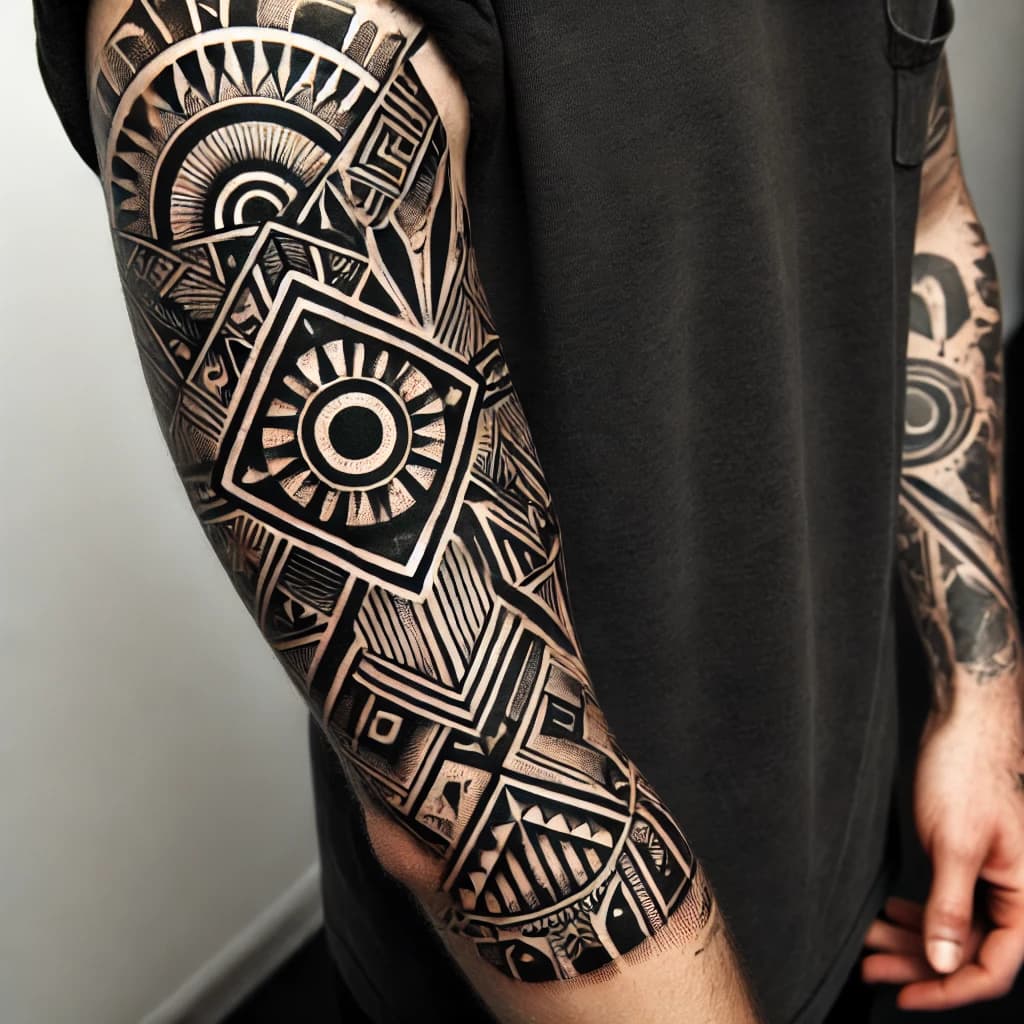
Magnums, particularly curved or soft-edge magnums, are the go-to for any significant fill or blending work in geometric tattooing. A curved 7M1 or 9M1 follows the contour of the skin more naturally than a flat configuration, reducing trauma and allowing for smoother ink saturation across the interior planes of larger geometric forms. If you're doing any kind of geometric blackwork with large filled sections, a curved magnum will do it faster and more cleanly than a round shader.
Needle count: Matching the grouping to the task
The number preceding the configuration abbreviation tells you how many needles are in the grouping. A 3RL has three needles. A 15M1 has fifteen. Choosing the right count is about matching the tool to the scale and detail level of the specific element you're working.
For geometric tattooing specifically, a useful mental framework is to think in three tiers:
- Micro-detail work (fine grid lines, small text within geometric pieces, micro-mandala details): 3RL or 5RL in #10 gauge
- Standard linework and medium fills (most sacred geometry outlines, mid-scale mandala lines, Platonic solid outlines): 7RL or 9RL in #12 gauge
- Large fills and blending (blackwork background fills, large shaded interior planes, gradient backgrounds behind geometric foreground elements): 9M1 to 15M1 curved in #12 or #14 gauge
Jumping too large in needle count on linework creates drag and inconsistency, especially on curved geometric elements like circles and arcs. Staying too small on fills means excessive passes, which adds trauma and healing complications. The geometry itself tells you what count to reach for.
Taper and membrane: The details inside the cartridge
Two more variables inside the cartridge itself affect your results: needle taper and membrane tension. Taper refers to how long the point of each needle is ground down from full diameter to tip. A long taper (sometimes called an extra-long or "EL" taper) enters and exits the skin more gently, deposits ink deeper in a single pass, and is preferred for fine linework in geometric pieces where repeated passes would cause unnecessary trauma to already-stressed skin.
A short or medium taper pushes more ink per stroke and is better suited to packing or shading. For the fill regions in geometric blackwork, a medium-taper curved magnum will saturate more efficiently.
Membrane tension in the cartridge housing controls needle retraction and affects the "snap" of your line. A stiffer membrane gives you more consistent needle return, which translates to more uniform dot placement in dotwork geometric styles and cleaner starts and stops on line segments. If you're doing a piece heavy in stippling or pointillism as part of a geometric composition, pay attention to membrane quality. Budget cartridges often cut corners here, and you'll feel it in the inconsistency of your dots.
Putting it together for geometric work
The discipline of geometric tattooing punishes vague tool choices. A mandala where the outer ring lines are fractionally thicker than the inner rings because you grabbed the wrong cartridge is not a subtle flaw. Clients who commission geometric work are often acutely detail-oriented, and they will notice.
Build a system: know which cartridge handles your finest linework, which handles your standard outlines, and which handles your fills. Label your setups if you're working across multiple machines in a session. The precision that makes geometric tattoos visually compelling is only achievable when the technical foundation beneath the art is equally deliberate.
This article was produced by Prism’s automated news system from verified source data, official records, and press releases, then run through automated quality and moderation checks before publishing. The system is built and supervised by the people who set the standards it runs under. Read our full AI policy.
Did this article answer your question?