Dotwork geometric tattoos create depth through patient, precise ink density
Dotwork gives geometric tattoos their cleanest long-term structure by building shadow from tight, patient density. The payoff is clarity that ages better, if you respect placement, sun, and healing.
Why dotwork holds geometric work together
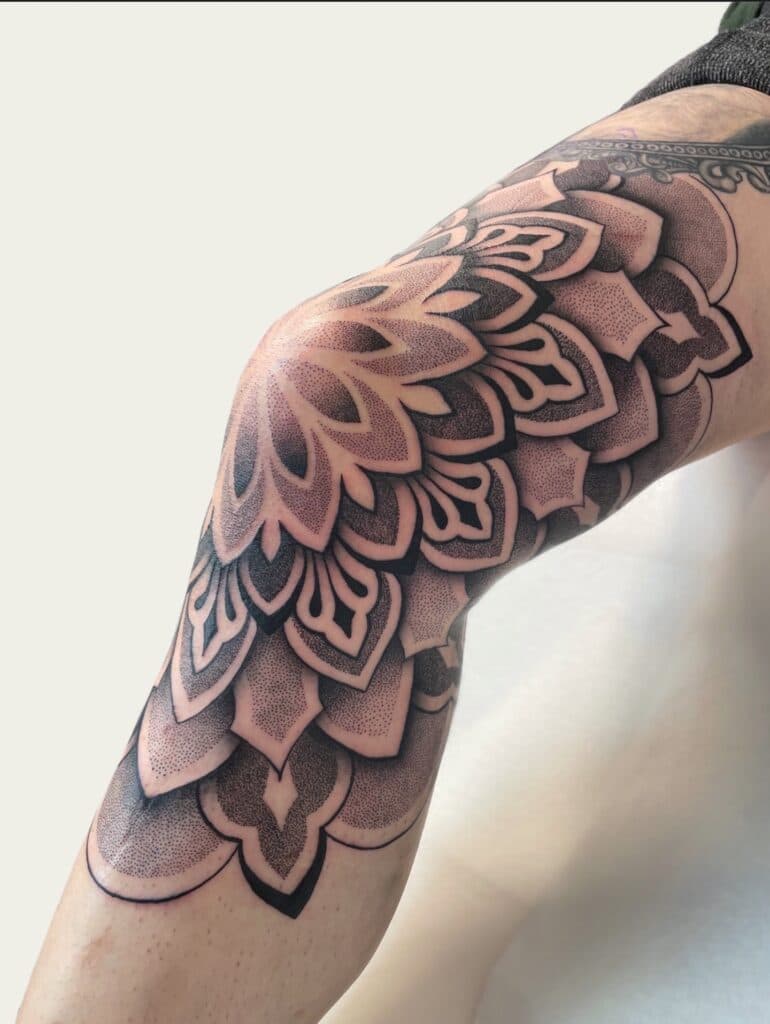
The first thing to understand about dotwork geometry is that it does not rely on hard outlines to do the heavy lifting. Every triangle, ring, and sacred-geometry repeat is built from individual points of ink, so the depth comes from density, not from a smooth gradient or a heavy border. That is why a well-made dotwork piece can look soft and almost engraved up close, then snap into a crisp pattern from a few feet away.
That structure matters over time. When a geometric tattoo is built around density patterns instead of razor-sharp edges, it can stay legible longer as the skin ages, because the design is not depending on one fragile line to carry the whole image. If you have ever seen a geometric piece start strong and then collapse into a muddy blur, you already know why this technique earns its reputation. It is precision by accumulation, not by outline.
How density creates the effect readers actually want
Dotwork shines when the artist controls spacing with real discipline. Pack the dots tightly and the area reads dark, grounded, and dimensional. Open the spacing up and the same form breathes lighter, which is how triangles, circles, and angular blocks can emerge from the same composition without looking mechanically flat.
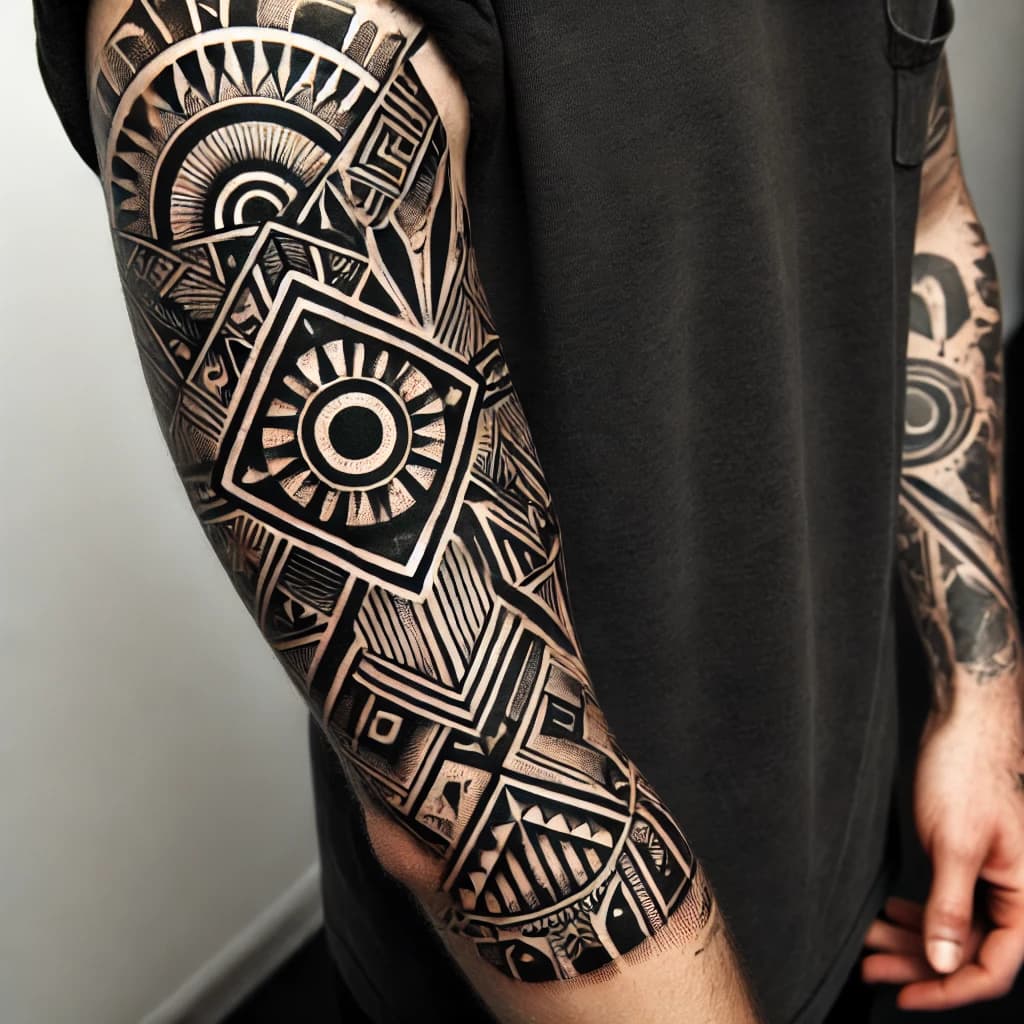
That is what makes the style so effective for sacred geometry, mandalas, and yantra-inspired work. A dotwork mandala can build concentric rings and symmetry without the visual stiffness that sometimes comes with pure linework. The Flower of Life, Seed of Life, and Metatron’s Cube all benefit from that treatment because the repeated shapes need both structure and softness to feel alive on skin. The best versions do not look pasted on. They look like they rise out of the tattooed skin itself.
The placements that keep dotwork clearest
Placement matters more with dotwork than people expect, because the style rewards calm skin and punishes anything that constantly distorts the pattern. Flat, stable areas give the design room to breathe, which is especially useful when the piece depends on concentric symmetry or a tight geometric center. When the skin moves less, the dots hold their relationship to one another more cleanly, and the whole structure stays easier to read.
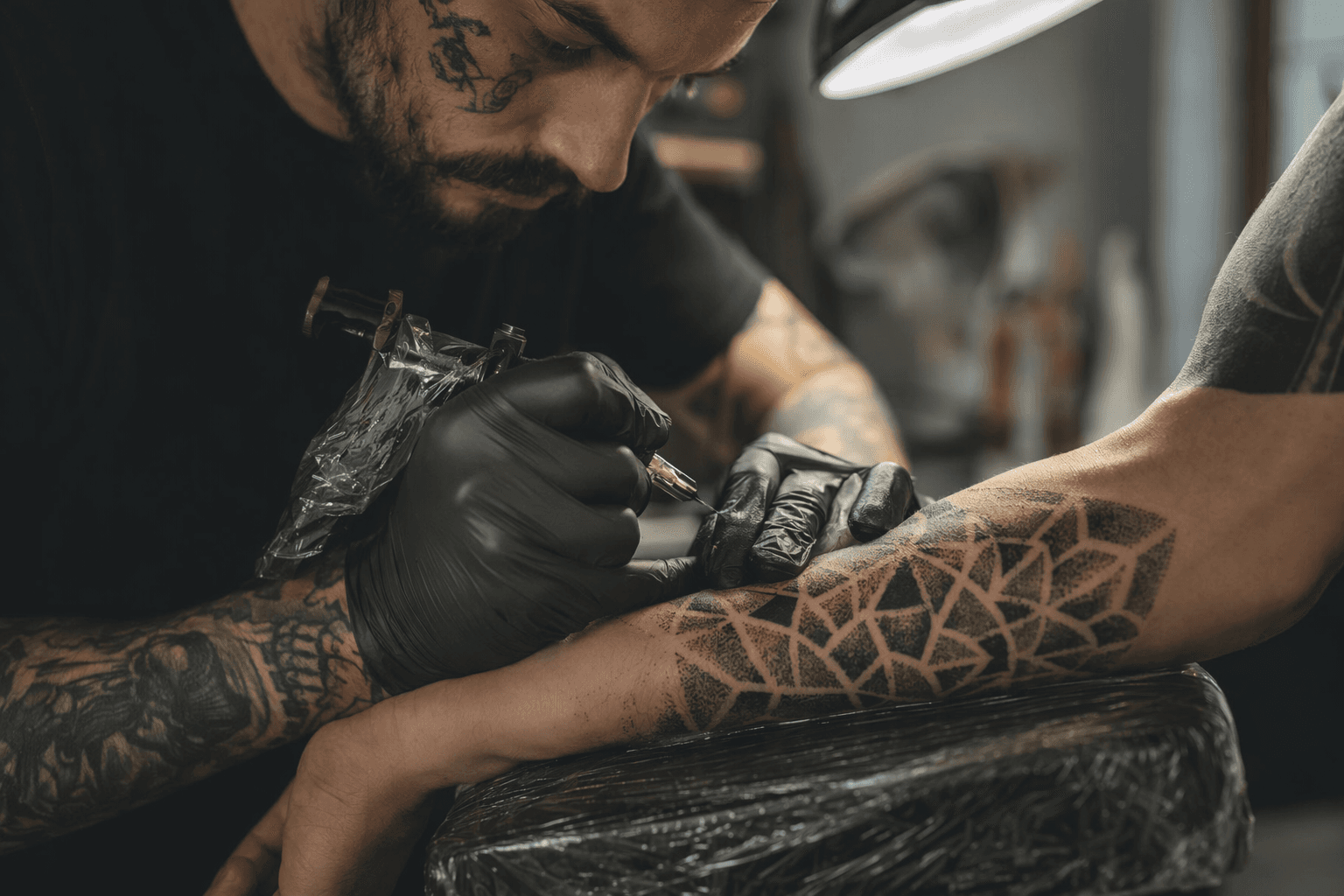
Sun exposure is the other big variable. The American Academy of Dermatology is blunt about UV light fading tattoo ink, and that matters even more when a design is built on subtle shifts in density rather than thick outlines. If a piece lives on skin that sees a lot of daily sun, it will ask for more upkeep than work placed where clothing blocks some of that exposure. That is the practical side of geometric tattooing that gets ignored in mood boards: the cleaner the pattern, the more you want the placement to protect it.
What dotwork does better than linework
Dotwork is especially useful when you want structure without harsh edges. Geometric linework can feel exact, but dotwork gives you precision with atmosphere. That is why it can soften sacred geometry, add dimensionality to portrait work, and make botanical or symbolic designs feel less rigid. The same technique that builds a mandala can also give a skull a quiet, sculpted weight or turn a portrait into something with real texture instead of a flat stencil effect.
The history behind the look helps explain why it feels so familiar even when it looks modern. Tattooing has existed for thousands of years across cultures, and modern tattoo styles have developed independently in different places. Dot-based image making also has a clear art-historical cousin in pointillism, the late-19th-century technique associated with Georges Seurat, where tiny dots build a larger image. That connection is part of why dotwork reads as both contemporary and old-world at the same time. It feels engineered, but it also feels handmade.
Why black ink is the safest bet
If longevity is the goal, black ink is still the safest bet for this style. Dense black dotwork gives sacred geometry the contrast it needs without depending on color saturation, which can be less predictable over the years. The darker areas stay readable, the lighter areas still have room to breathe, and the pattern keeps its hierarchy longer than a more decorative color-heavy approach usually does.
There is also a safety angle that belongs in any serious conversation about tattoo longevity. The Food and Drug Administration considers inks used in intradermal tattoos to be cosmetics, and public-health guidance from the Centers for Disease Control and Prevention has documented tattoo-associated infections linked to contaminated ink and nonsterile dilution water. The American Academy of Dermatology also notes that ink can spread to nearby lymph nodes and that tattoo skin can react in unexpected ways. None of that means fear should drive the choice. It does mean the same patience that shapes the tattoo should extend to the materials and the shop doing the work.

What the process demands from you
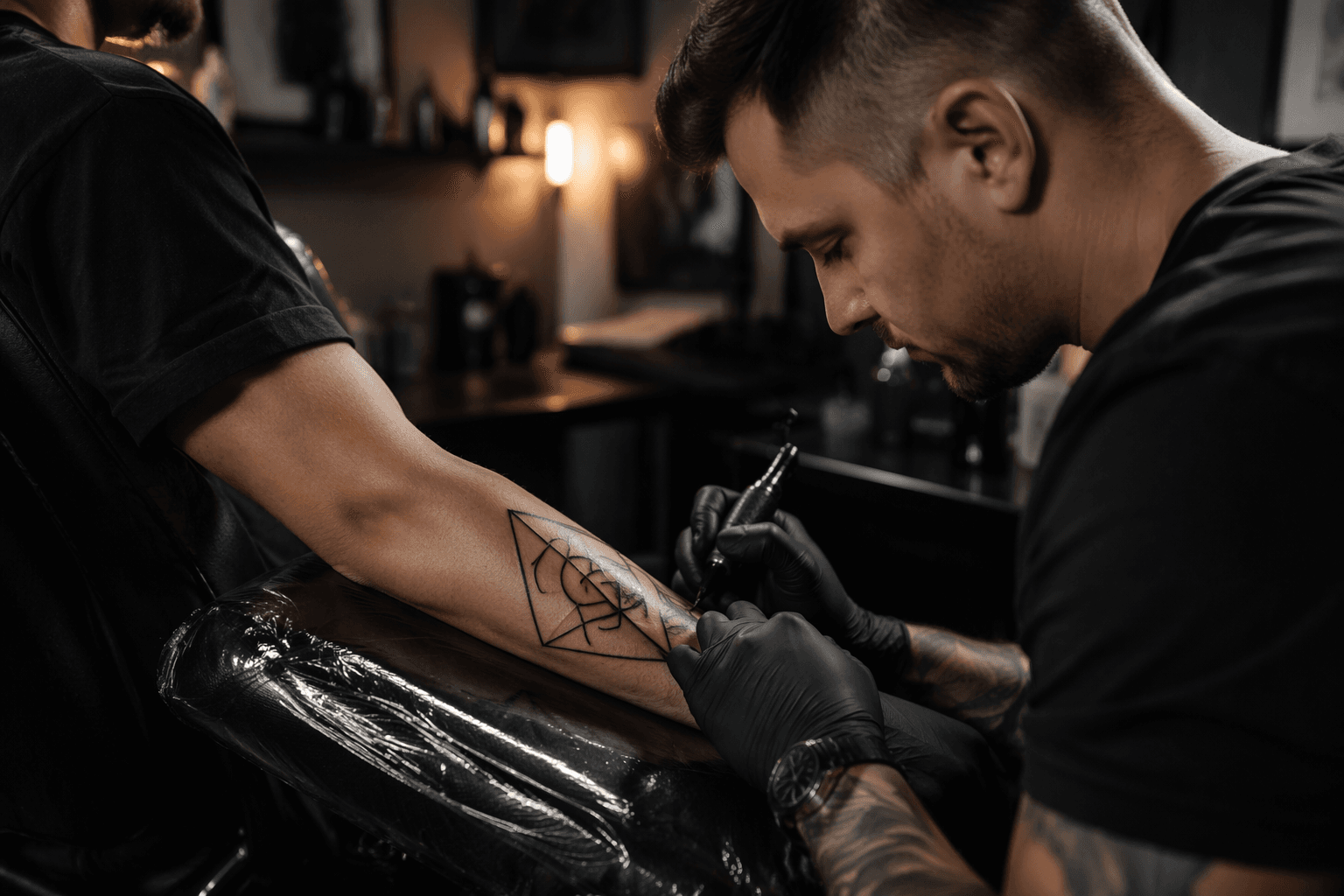
Dotwork is slow by design. It takes patience from the artist and patience from the client, because the form is built point by point instead of blocked in with fast shading passes. That slower rhythm is part of why the style feels meditative, but it also means you need to plan for longer sessions than you might expect with simpler line-heavy geometry. Big mandalas, dense sacred-geometry centers, and multi-layered compositions can stretch across multiple appointments when the goal is clean spacing and consistent rhythm.
Healing deserves the same respect. Cleveland Clinic notes that tattoos can take a few months to fully heal depending on size and location, and bad aftercare can lead to infection, rashes, scars, or smudges. That matters for dotwork because the style’s beauty lives in spacing and contrast, and rough healing can soften those relationships fast. A geometric tattoo that was built carefully can still lose its edge if it is overexposed to sun, picked at, or treated like it is healed just because the surface looks calm.
The real payoff
This is why dotwork works so well for geometric tattoos over time. It gives you depth without relying on brittle outlines, symmetry without stiffness, and darkness without flattening the design. When the dot density is controlled well, sacred geometry stays crisp, mandalas keep their pulse, and the piece ages with a kind of quiet authority that linework alone rarely matches.
If you want geometric ink that still reads clean years later, this is the technique that rewards restraint, not speed. Dotwork asks for patience up front, then gives it back every time the tattoo keeps its shape on skin.
This article was produced by Prism’s automated news system from verified source data, official records, and press releases, then run through automated quality and moderation checks before publishing. The system is built and supervised by the people who set the standards it runs under. Read our full AI policy.
Did this article answer your question?