Lion Tattoos Turn Geometric, Minimalist, and Personal in 2026
The geometric lion works because it edits power, not just the animal. In 2026, symmetry, negative space, and cleaner linework are doing the heavy lifting.
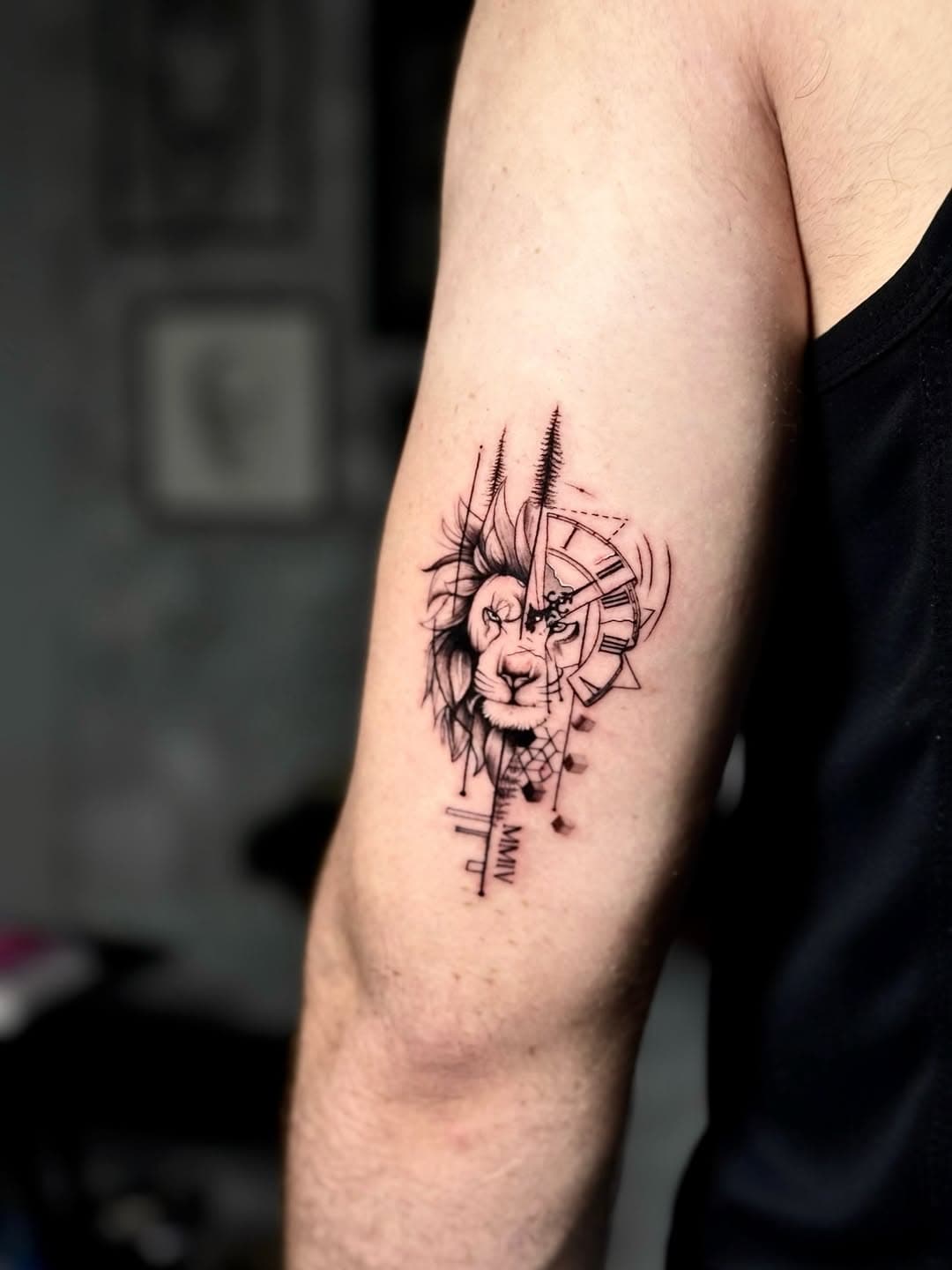
The lion still carries strength, leadership, protection, and sometimes vulnerability, but the best versions now look more intentional than aggressive. Nearly one in three adults in the United States already has at least one tattoo, according to Pew Research Center, which helps explain why the geometric lion has moved from niche aesthetic to mainstream identity piece. On skin, that shift is obvious: the roaring head is no longer the only language for power, and in the right hands a lion can read spiritual, abstract, or deeply personal without losing its authority.
What the geometric lion changes, and what it keeps
A strong geometric lion does not erase the animal’s meaning. It keeps the core cues, the mane, the eyes, the muzzle, the sense of forward force, then reorganizes them through symmetry, angles, and negative space. That is the difference between a lion that feels like a blunt emblem and one that feels designed for the body rather than pasted onto it.
The best versions split into three practical directions. One keeps realism at the center, but softens the mood with shading and a halo effect, which gives the lion a quieter, almost spiritual authority. Another pushes the face into a fine-line and abstract-geometry hybrid, breaking the mane into sharp planes and partial sketch marks so the tattoo feels editorial instead of heavy. A third threads the lion profile together with a human face in one continuous line, turning the piece into a symbol of instinct meeting intellect. If you want raw intimidation, geometry is probably the wrong path. If you want the symbol to feel more refined, it is exactly the right one.
Why geometry is the new translation layer
Recent tattoo trend roundups have been leaning hard into geometric precision, symmetry, negative space, and abstract line compositions, and that matters because those elements change how an animal reads on the body. Geometric tattoos are built from shapes, patterns, symmetry, and sometimes sacred geometry or mandala motifs, so the lion becomes less about muscle and more about structure. In practice, that means the mane stops being a wall of shading and starts becoming a frame, a crown, or a faceted pattern that can be controlled visually.
That control is why this style is so effective for collectors who want something sharper than realism but less ornamental than a full mandala piece. The lion’s face can stay readable while the rest of the tattoo becomes pattern, and that balance is the whole appeal. When the geometry is clean, the design feels deliberate. When it is not, the lion loses clarity fast and the piece slides into decorative noise.
Mane structure, symmetry, and the risk of overworking the design
The mane is where a geometric lion succeeds or fails. In a realistic portrait, the mane carries weight through texture and shadow. In a geometric version, it has to be translated into edges, repetition, or negative space without becoming muddy. That means every line needs a job, because random detailing only makes the lion look busy instead of powerful.
This is where precision matters more than pigment. The tattoo lives or dies on stencil quality, spacing, and execution, because the strength of the design depends on structure more than on dense shading. If the linework is crowded or the angles are inconsistent, the image can collapse into a blur once the skin settles and the edges soften. The cleanest geometric lions usually preserve the eyes and muzzle as anchors, then simplify the mane into faceted architecture that still suggests motion.
A useful rule is simple: if you cannot describe what the mane is doing in one sentence, it is probably trying to do too much.
Placement changes the meaning
Placement is not an afterthought with this kind of tattoo. Forearms work especially well because the vertical shape supports the composition, and that gives a lion room to breathe without being forced into a cramped circle or an awkward square. On a forearm, the lion can hold posture, and the body’s natural line helps the symmetry instead of fighting it.
That placement choice also changes how personal the tattoo feels. A forearm piece is visible every day, so small problems in symmetry, spacing, or line weight will bother you more than you expect. The upside is that the same visibility can make the lion feel like a daily reminder of composure or protection, which is exactly why people keep choosing it for personal symbolism rather than pure decoration. If you want the tattoo to read as quiet confidence instead of loud dominance, forearm placement is one of the cleanest ways to do it.
Why the lion keeps getting reinterpreted
The lion is not just a power symbol. Britannica ties lion imagery to heraldry, the long system of hereditary symbols used to distinguish individuals, armies, institutions, and corporations, which tells you how deep this image runs in visual culture. Ancient Egypt adds another layer: the Great Sphinx at Giza dates to the reign of King Khafre, around 2575 to 2465 BCE, and Bastet was worshiped in the form of a lioness and later a cat. That history gives modern geometric lions a pedigree that goes well beyond trend.
It also explains why the symbol can hold so many meanings at once. A geometric lion can still suggest rule and protection, but it can just as easily lean into guardianship, family legacy, or introspection. Contemporary lion pieces are already being used for custom family and legacy designs, which makes sense because the animal has always balanced force with care. The new version simply strips away the obvious aggression and lets the symbolism do more of the talking.
What to ask for if you want the cleanest result
- Ask for a stencil that respects the lion’s natural symmetry before any geometric overlay is added.
- Keep the eyes and muzzle legible, then let the mane carry the abstraction.
- Decide early whether you want realism, faceted abstraction, or a hybrid that uses one continuous line.
- Choose line weights that can survive healing, because fine-line work only looks elegant when the spacing is disciplined.
- Make sure the design fits the body’s shape, especially on forearms, where vertical flow helps the tattoo settle visually.
The safety side matters too. The Centers for Disease Control and Prevention has warned that tattoo-associated nontuberculous mycobacterial infections can come from contaminated inks or nonsterile water used for dilution, and it recommends sterile ink, sterile water, and hygienic tattooing practices. That is not separate from design quality. Minimalist and geometric tattoos rely on crisp lines, and bad hygiene can wreck both healing and the final edge quality.
Why this style is landing now
The larger market tells the same story. Ipsos found that 30% of Americans had at least one tattoo in 2019, up from 21% in 2012, and 92% of tattooed Americans said they were happy with theirs. That is a big enough base to support style-specific choices like geometric lions, especially when those tattoos can be tuned to read masculine, feminine, spiritual, or purely artistic depending on the linework.
That is the real 2026 takeaway: the geometric lion is not a watered-down lion. It is a more controlled one. When the structure is right, the piece keeps the symbol’s force while giving you something more subtle, more personal, and a lot harder to get wrong.
This article was produced by Prism’s automated news system from verified source data, official records, and press releases, then run through automated quality and moderation checks before publishing. The system is built and supervised by the people who set the standards it runs under. Read our full AI policy.
Did this article answer your question?