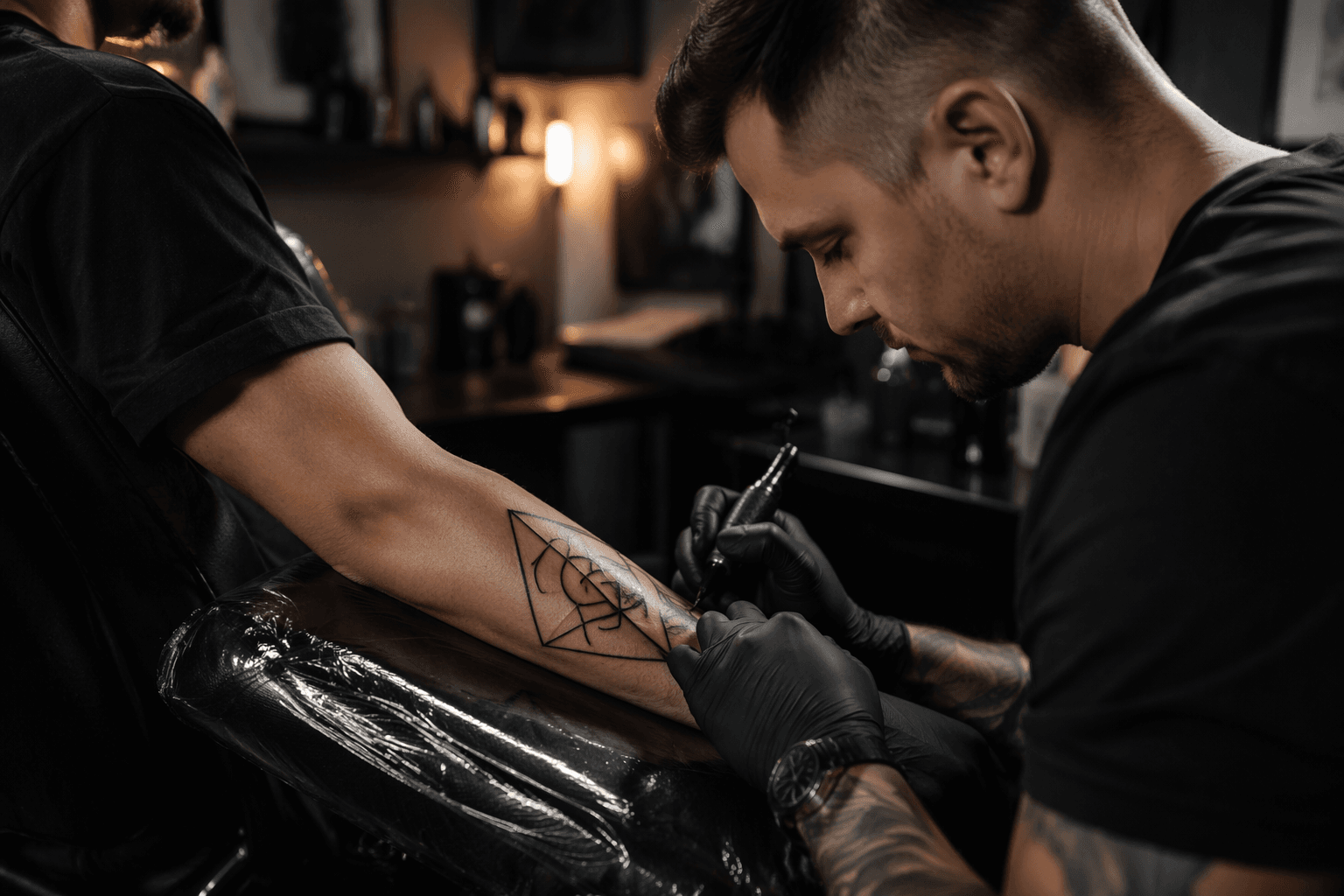
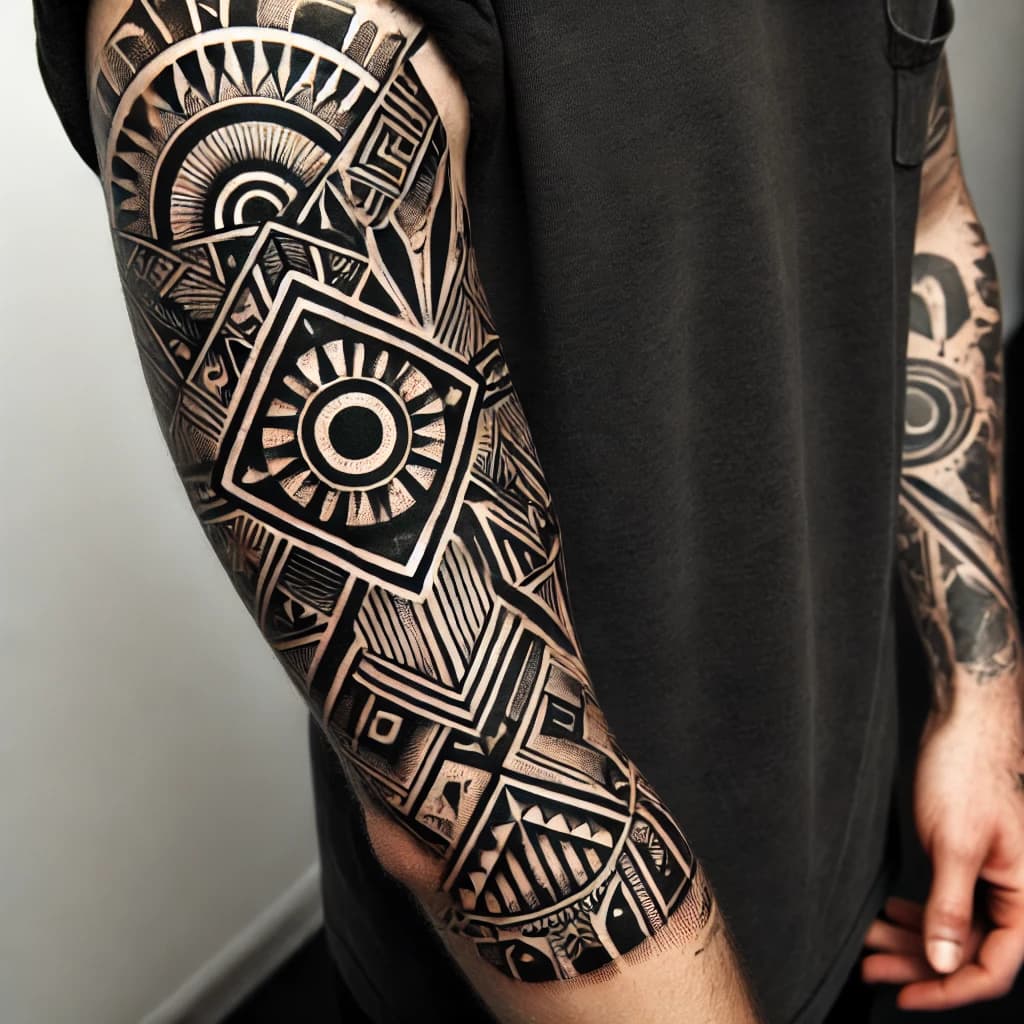
Geometric Finger Tattoos, bold blackwork designs with powerful meaning
Finger geometry works when it is bold, simple, and built for motion. Tiny, overworked detail is what turns a sharp idea into a muddy blur.
Nearly one in three U.S. adults already has a tattoo, but fingers are still one of the harshest places to put one. On a hand, every bend, wash, scrape, and hour of sun makes the difference between a clean geometric mark and a smudged regret.
Why geometric finger tattoos make sense
Finger tattoos work best when the design can survive a life of movement. The placement is high-visibility and high-impact, which is exactly why so many people use it for reminders of pivotal moments, relationships, and beliefs. That same visibility also means the idea has to be simple enough to read at a glance, because the finger is constantly moving and the skin is never sitting still for long.
Geometry fits that reality better than most styles. Compact forms, strong outlines, and pattern-based motifs can keep their shape where softer shading starts to disappear. A tiny geometric mark can feel elegant and tough at the same time, but only if the artist understands spacing, motion, and long-term wear.
The real advantage is legibility
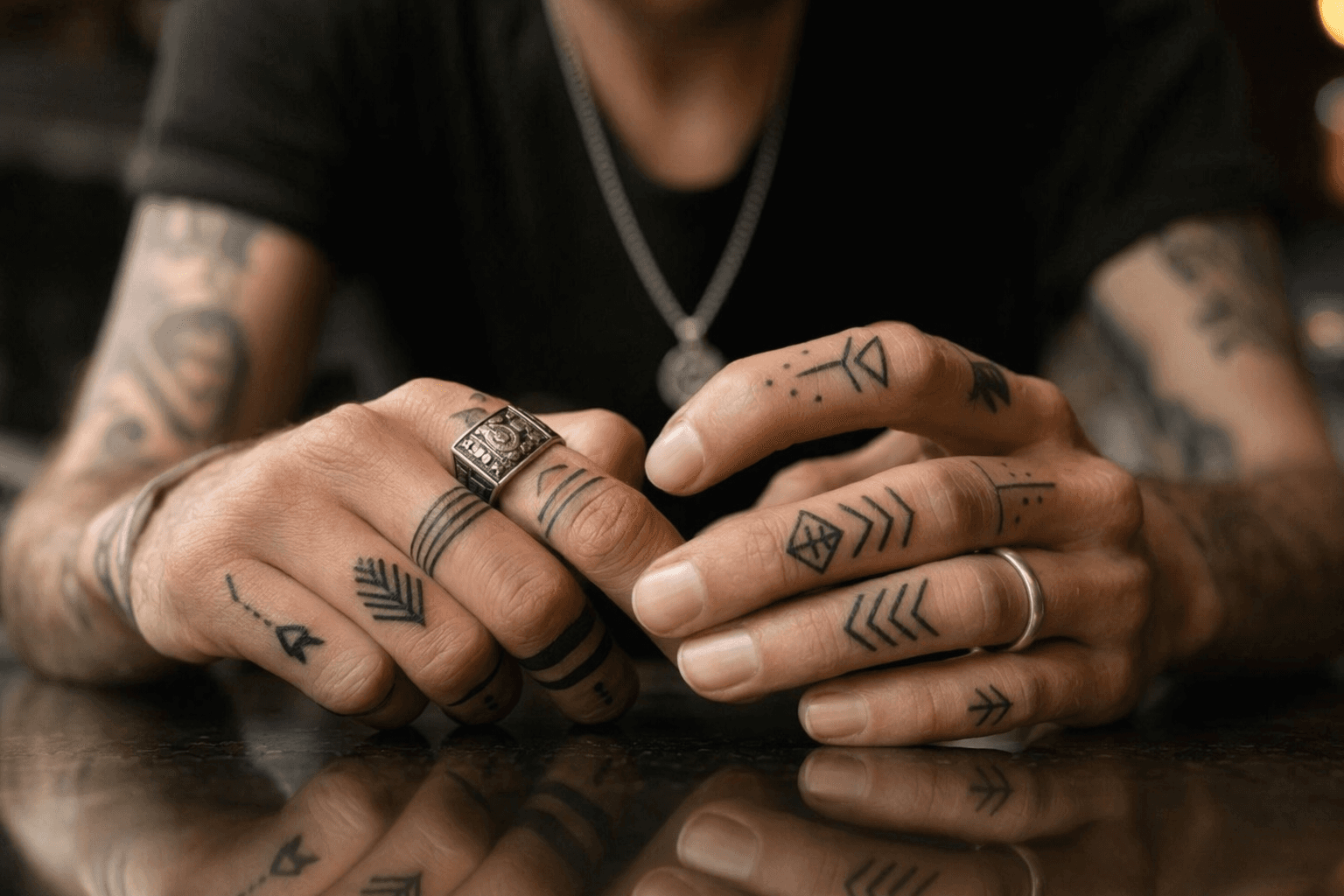
The strongest finger pieces are the ones that read cleanly from across the room. A single geometric emblem, a short banded pattern, or a shape built from solid black elements usually holds up better than anything that depends on whisper-thin linework. That is the basic rule of this placement: if the design needs a magnifying glass to make sense, it is probably too fussy for a finger.
The best blackwork finger tattoos lean on silhouette first. Bold shapes and dense contrast create a clear visual language even in a narrow space. That is why simple geometric forms often beat ornate ones here. The finger gives you very little real estate, so every line has to earn its place.
What holds up, and what does not
Best bets for finger-scale geometry
On fingers, the safest geometric choices are the ones with a strong outer shape and minimal interior clutter. Think compact symbols, short repeating motifs, and black-packed pattern fragments that still read cleanly when the hand bends. The more the design relies on a crisp outline and a decisive fill, the better it usually ages in this spot.
A practical way to think about it is this:
- simple geometric shapes with clear edges
- blackwork bands and solid silhouettes
- small repeat patterns with enough spacing to breathe
- designs that keep their meaning even if a few details soften over time
The unifying thread is restraint. Finger tattoos are not the place to chase complexity for its own sake. A piece can still be symbolic, stylish, and personal without cramming every possible detail into a space the size of a fingertip.
The designs that look better in mockups than in real life
Hyper-detailed geometry is where people get burned. Tiny sacred geometry, dense mandala fragments, and intricate dot-heavy structures often look incredible in inspiration photos, then start to blur once they meet skin movement, friction, and healing. Sacred geometry can promise precision, but on a finger that promise can collapse into a muddy blur if the pattern is too busy.
The same goes for ultra-fine shading and microscopic line intersections. Those elements depend on perfect spacing and perfect healing, and fingers do not offer either for free. Once the skin flexes and the tattoo begins to wear, crowded geometry can lose the crispness that made it attractive in the first place.
Why blackwork is the safest visual language
Blackwork is the style that makes the most sense on fingers because it does not apologize for being bold. Solid black ink and high contrast give compact geometric designs a sharper read, which matters when the canvas is narrow and the skin is always in motion. Blackwork can also carry real weight, whether the meaning is cultural, personal, or tied to a private moment of clarity.
That is part of the appeal. A small black geometric mark can be understated and still feel powerful. Shape does not need extra ornament to communicate something important, and on fingers that economy is often the difference between a tattoo that feels intentional and one that just looks crowded.
For people choosing between a compact emblem and a small text tattoo, geometry has one big advantage: it keeps its identity without needing language. A shape can signal belonging, memory, or intention without the risk of a four-letter word turning awkward as the skin ages.
The placement comes with real consequences
Finger tattoos are demanding because the placement is subject to wear and tear all day long. The hand gets friction, washing, sun exposure, and constant movement, so the ink has to survive a much rougher environment than a forearm or upper arm piece. Healing also takes patience. Cleveland Clinic notes that tattoo healing can take a few months depending on size and location, and poor aftercare can lead to infections, rashes, scars, or smudges.
That is why aftercare matters just as much as the design. The American Academy of Dermatology says tattoos can react in unexpected ways even when they are done by a licensed artist and followed by aftercare. It also notes that tattoos fade with sun exposure, and sunscreen helps protect tattooed skin. Tanning beds and sunlamps can fade tattoos too, while also raising skin cancer risk.
There is another reason to be careful. The American Academy of Dermatology says more research is still needed on whether tattoos are linked to skin cancer, and tattoos may disguise skin cancer and make it harder to detect. Cleveland Clinic adds that the U.S. Food and Drug Administration does not regulate tattoo ink, and contaminated ink or a nonsterile environment can contribute to infection. On fingers, where the skin is exposed and constantly used, that matters.
How to choose a finger geometric tattoo that stays readable
The smartest approach is to choose a motif that still makes sense if it softens a little. Build around bold black shapes, open spacing, and a silhouette that can survive years of hand movement. Keep the design compact, but not crowded. Leave enough negative space that the eye can separate one element from the next.
If you are drawn to sacred geometry, remember the placement decides the outcome as much as the drawing does. The finger is perfect for a distilled version of a larger idea, not the entire idea itself. That is the real filter: select the piece that can keep its meaning when it gets smaller, flatter, and a little less perfect than the stencil.
Finger tattoos have become more culturally normal too. Pew Research Center found in 2023 that 32% of U.S. adults had a tattoo and 22% had more than one, based on a survey of 8,480 adults conducted July 10-16, 2023. That does not make the hand an easy canvas, but it does explain why more people are willing to use visible ink as part of daily identity.
The bottom line is simple. On fingers, geometry works when it is disciplined. The best pieces are bold enough to read, spare enough to heal well, and smart enough to survive the kind of wear that turns weaker tattoos into background noise.
This article was produced by Prism’s automated news system from verified source data, official records, and press releases, then run through automated quality and moderation checks before publishing. The system is built and supervised by the people who set the standards it runs under. Read our full AI policy.
Did this article answer your question?