Geometric Tattoo Planning Starts With Clear Ideas and Precise Communication
Clear ideas beat pretty sketches when the lines have to survive skin, movement, and healing. The real geometric tattoo mistake is planning for paper instead of the body.

Nearly one in three U.S. adults already has a tattoo, so this is not some fringe decision anymore. In a geometric piece, though, the expensive mistakes still happen the same way: you fall in love with a shape before you know how it will read in skin, in motion, and after healing.
Start with the idea you can explain
A good geometric tattoo starts before the first line is drawn. Tattoo Build’s beginner guidance gets that part right: you do not need conventional artistic talent as much as a clear idea, the ability to communicate it well, and a realistic sense of what turns into permanent ink. That matters more in geometric work than in almost any other style, because a small mismatch in symmetry, spacing, line thickness, or scale can change the whole piece once it leaves the page.
If you cannot explain what you want, you are not ready to commission it yet. Bring references that show structure, not just mood. Be specific about whether you want hard symmetry, layered linework, a more open negative space treatment, or a design that feels strict and architectural instead of ornamental. The strongest custom tattoos are collaborative objects, and the artist’s job is to refine your intent, not guess it.
Design the brief, not just the sketch
For a geometric piece, your brief should answer three practical questions: what it is, where it lives, and how exact it needs to be. That means deciding whether you want a small, crisp accent or a larger composition that can carry repeated shapes, and it means being honest about how much detail can survive at the size you want. A design that looks elegant at 12 inches can turn crowded at 3.
This is where precise communication pays off. Tell the artist if a line must be thicker to hold up over time, if the spacing between elements has to stay consistent, or if one axis matters more than the rest. Do not hand over a vague geometric mood board and hope the artist will magically translate it into a tattoo that belongs on your body. You want intent, constraints, and preferences on the table before anyone inks anything.
Map the body before you map the pattern
Paper is flat. Skin is not. That is the first thing people forget when they plan a forearm grid, a sternum mandala, a spine piece, or a shoulder cap that needs to stay clean from every angle. The same shape can look balanced on a sketchbook page and subtly wrong once it wraps around a limb or crosses a contour.
Placement matters even more when you are dealing with areas that flex. Healthline notes that tattoos near joints or on mobile areas like wrists and ankles take longer to heal than tattoos on less mobile parts of the body, and Medical News Today says size and location affect healing too. For geometric tattoos, that is not a minor detail. A design placed across a wrist crease or a high-movement area can distort visually and heal more slowly, which is a double hit if your whole point is precision.
Healing also takes longer than the fresh surface would suggest. Outer healing often looks complete in 2 to 3 weeks, but deeper skin healing can continue for up to 12 months. That should shape how you think about line density, edge placement, and how ambitious the layout really is. If you want something with razor-clean geometry, choose a body area that gives the design room to stay stable.
Treat stencil approval like the real test
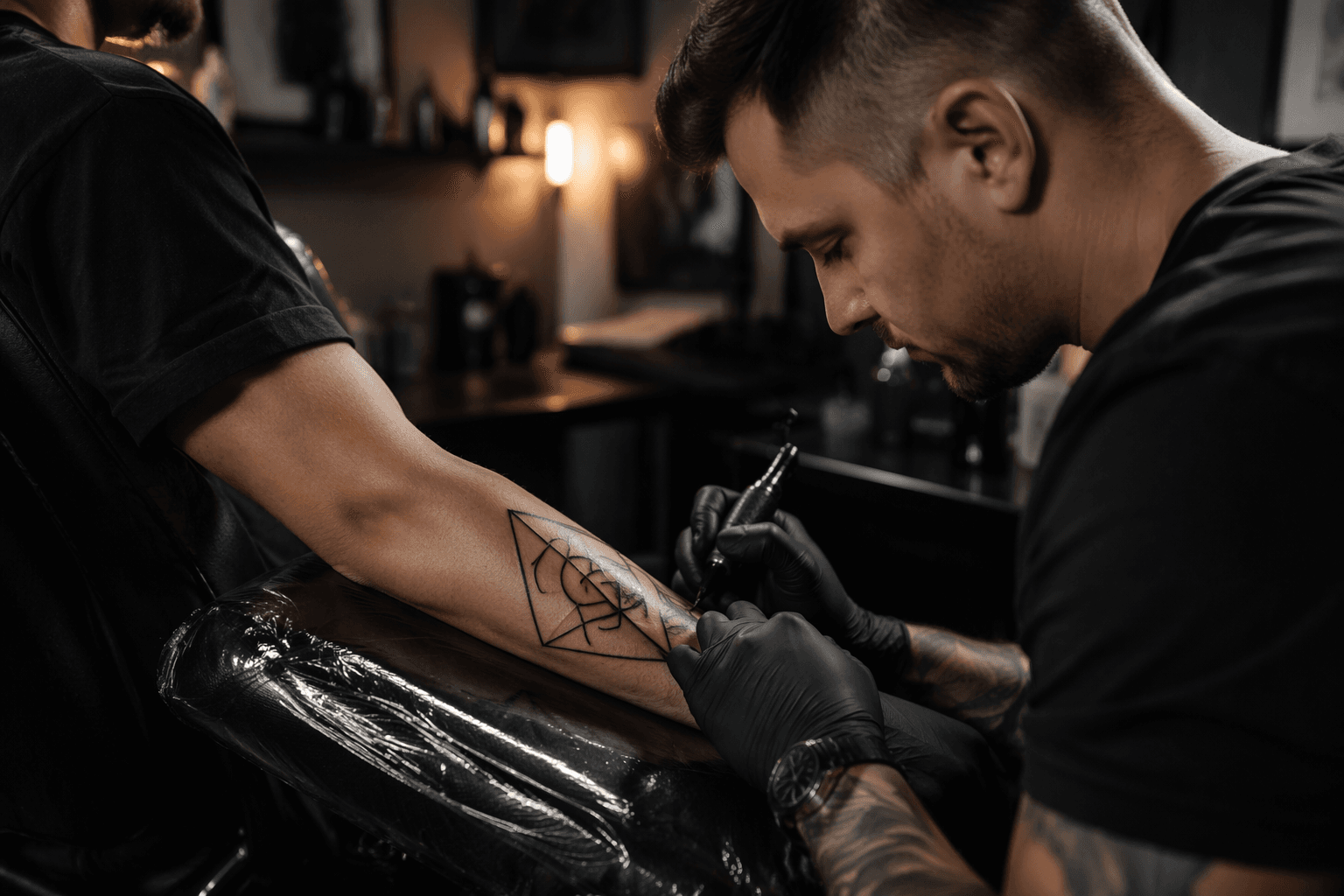
Stencil day is not a formality. It is the moment you find out whether your idea actually works at tattoo scale on your skin. This is where you check the details that matter most in geometric work: centerlines, equal spacing, mirrored elements, line thickness, and whether the overall shape still feels balanced from the viewing distance your tattoo will actually live at.
You should also be ready to simplify. Geometric work rewards discipline, not clutter, and some paper-perfect ideas become muddy once they are shrunk to fit a forearm or wrapped around a shoulder. If the artist says a detail needs to be opened up, thickened, or removed so the structure survives, that is not a creative failure. That is the tattoo becoming more honest.
The best stencil approval is a conversation about exactness. You are not asking, “Do I like the idea?” You are asking, “Does this placement preserve the geometry I came here for?” That shift is what keeps a piece clean after the skin settles.
Remember that permanence comes with safety questions
The FDA defines a tattoo as a permanent mark, design, or drawing created by inserting colored ink into the skin, and it is difficult to remove once it is there. That permanence is part of the appeal, but it also means your planning has to include the shop, the ink, and the hygiene standards behind the chair. The FDA also issued a 2019 safety alert and warning letters involving microbially contaminated tattoo inks, which is a sharp reminder that the process is as important as the design.
The CDC has documented tattoo-related infections too. One report covered 22 cases of tattoo-associated nontuberculous mycobacterial skin infections across four states in 2011 and 2012. Another described 44 tattoo recipients affected in clusters linked to unlicensed tattooists and nonsterile equipment in Ohio, Kentucky, and Vermont. Those numbers should make any first-timer slow down and choose a professional setup, because a clean-looking design means nothing if the environment behind it is sloppy.
WHO’s International Agency for Research on Cancer adds another layer to the conversation. It says tattoo pigments often do not remain in the dermis and may travel to lymph nodes and potentially other organs, and it notes that poor hygiene during tattooing has an established link to increased viral infection risk. The long-term health picture is still being studied, which is exactly why a geometric tattoo should be planned with the same seriousness you would give any permanent body decision.
Why ornamental and geometric live so close together
A lot of people come to geometric tattoos through ornamental work, and the overlap is real. Tattoodo connects contemporary ornamental tattooing to mandalas, mehndi-inspired patterns, and sacred geometry, which is why the line between the two styles can blur so easily in the consultation chair. If you like both, say so, but be clear about what you want to borrow from each side.
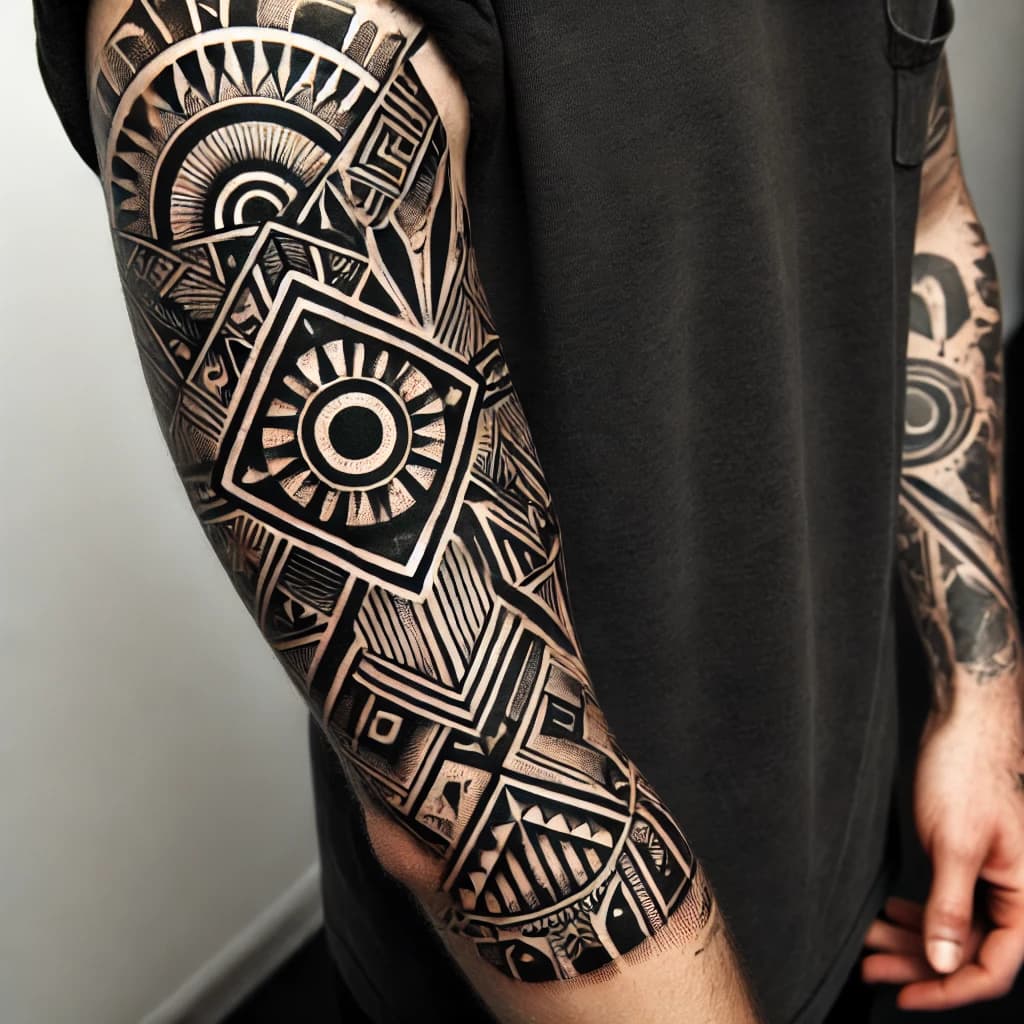
That distinction matters because ornamental work brings flow, cultural references, and decorative rhythm, while geometric work usually depends on stricter structure and cleaner visual discipline. Tattoodo also warns that motifs drawn from certain cultural traditions can raise questions of cultural appropriation versus appreciation, so style choice is not just about looks. Inked Magazine’s geometric coverage reinforces the technical side of that equation, emphasizing impeccable placement and flawless lines. In other words, the style looks simple only when the artist does it well.
The smartest geometric tattoo plan is the one that respects the body as much as the drawing. If you start with clear intent, communicate the exact shape you want, choose placement that works with skin instead of fighting it, and approve the stencil with a critical eye, you give the design a real chance to stay sharp. In geometric tattooing, precision is not a luxury. It is the difference between a piece that reads clean for years and one that only looked right on paper.
This article was produced by Prism’s automated news system from verified source data, official records, and press releases, then run through automated quality and moderation checks before publishing. The system is built and supervised by the people who set the standards it runs under. Read our full AI policy.
Did this article answer your question?