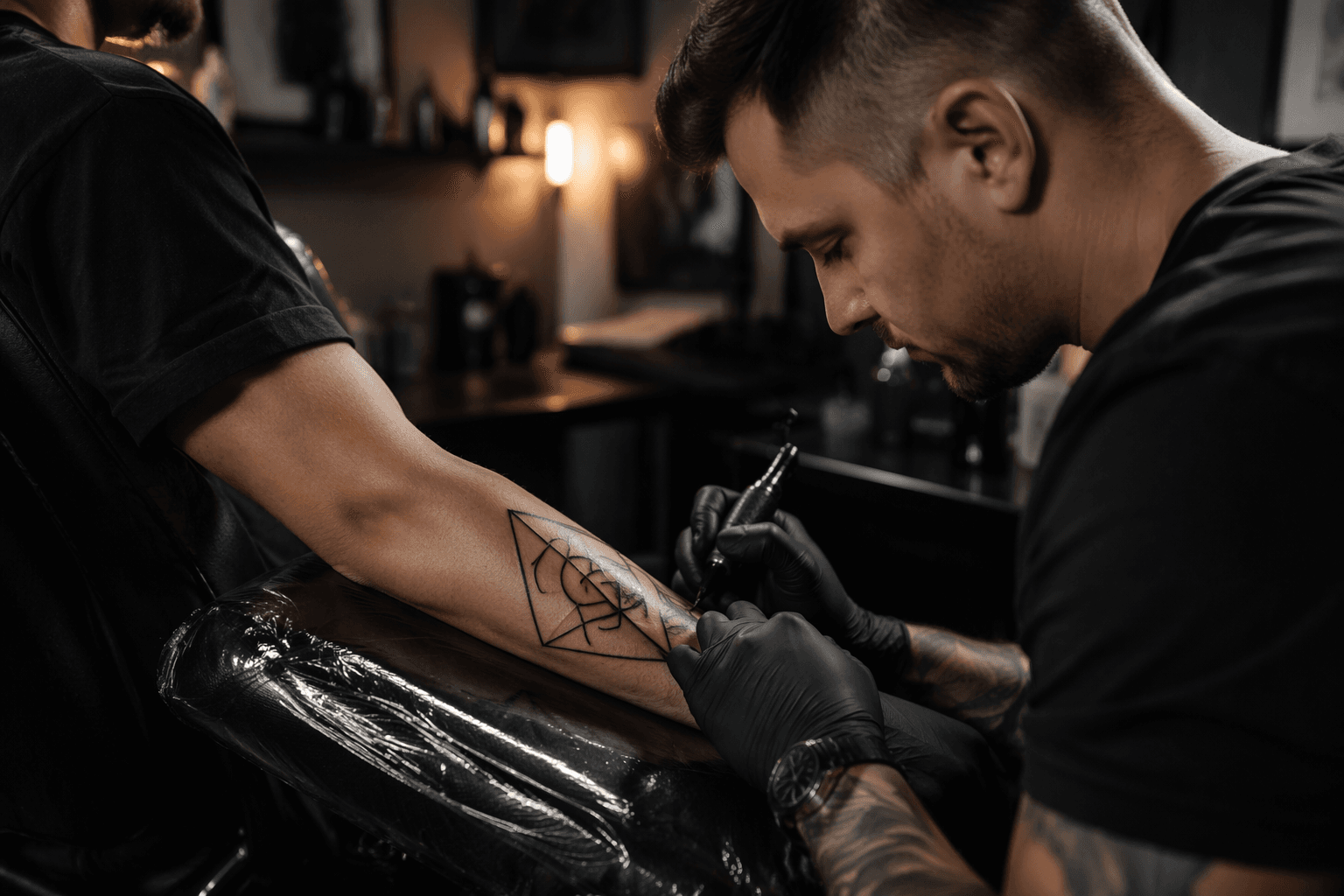
Gods of Ink 2026 spotlights geometric tattoos, global tattoo culture in Frankfurt
Gods of Ink 2026 showed geometric tattooing moving from niche detail to main-stage language, with roughly 400 invited artists and ornamental work on the podium.
Geometric tattoos are not the side act anymore
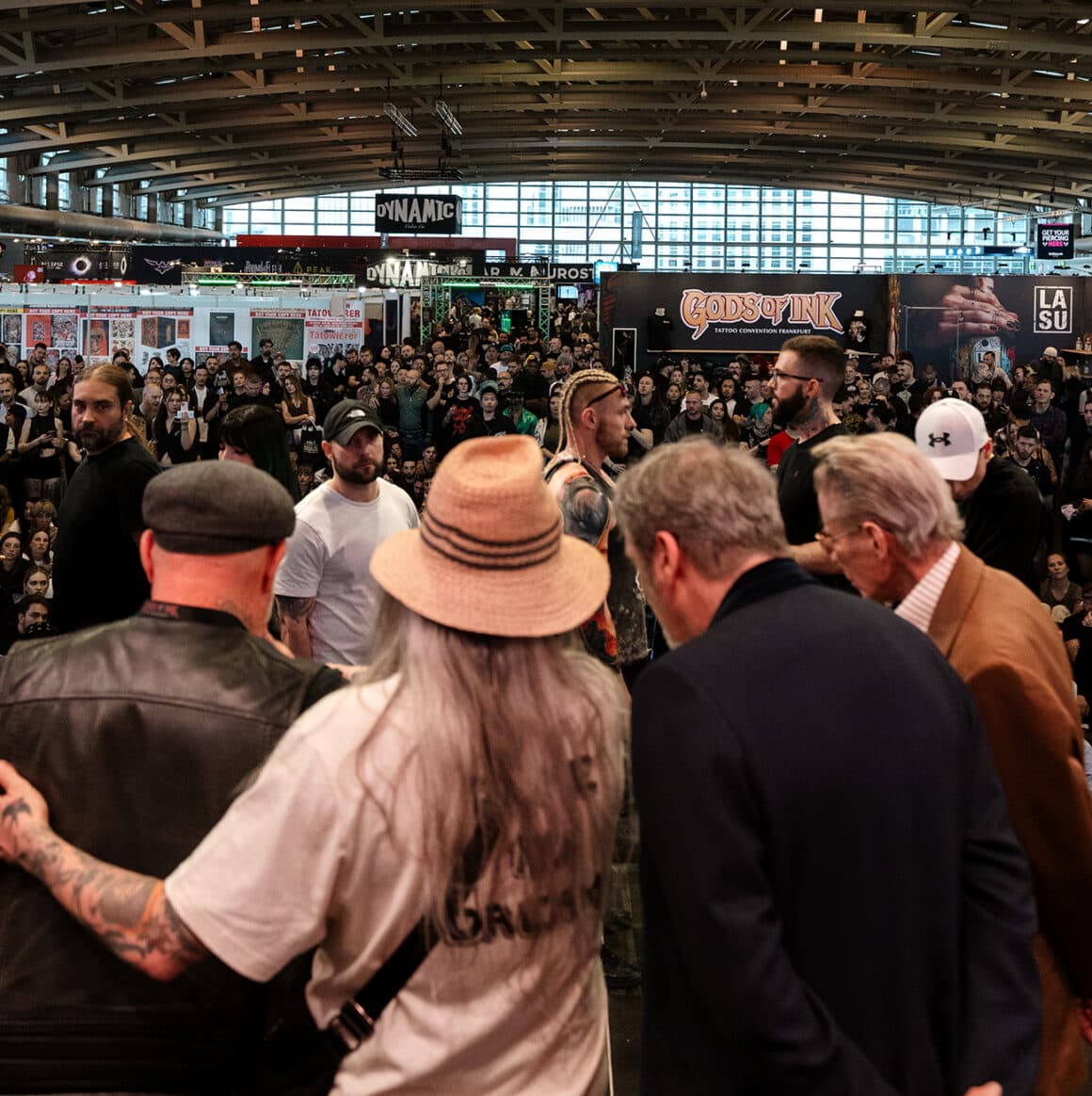
Roughly 400 invited artists packed Messe Frankfurt Hall 1.2, and the strongest signal for geometric tattoo fans was simple: the cleanest, most structural work at Gods of Ink 2026 was not being treated like filler. It was standing beside realism, color, black and grey, and full-body narratives as one of the languages that defines where tattooing is headed next.
That matters because the show, held from April 17 to April 19, 2026, was built around a very specific idea of what top-level tattoo culture looks like. Gods of Ink is not a booth-rental free-for-all. The convention says artists are personally invited, which gives the floor a different feel: fewer random set-ups, more work that has been selected because it can hold up in front of other professionals. For geometric readers, that is the point. If a style survives in that environment, it is not surviving on trendiness alone.
What the Frankfurt floor said about geometric work
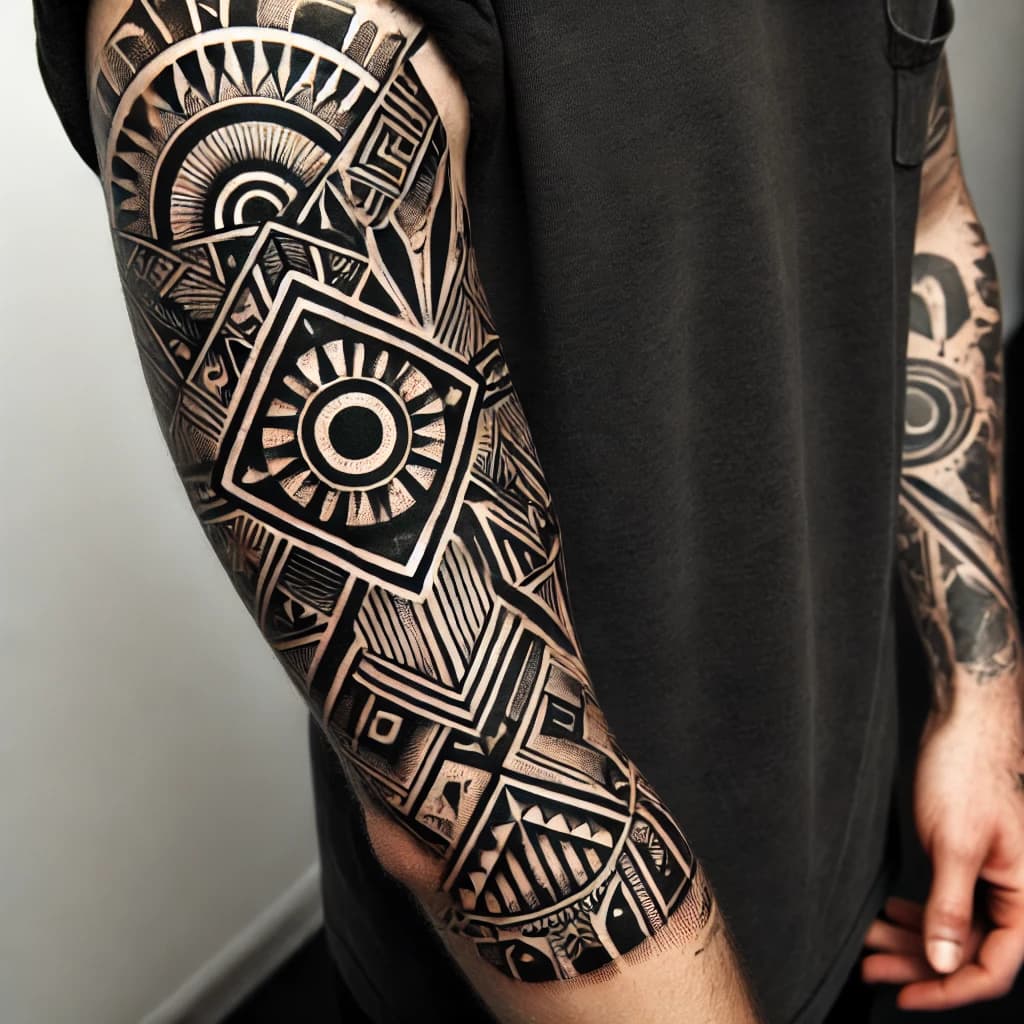
Tattoo Life’s coverage made the clearest case for geometry by describing how some of the dominant work turned the human body into geometric compositions. That is not a small detail. It tells you the style has moved beyond isolated mandalas, wrist bands, and filler patterns into larger-scale planning that uses the whole body as a frame.
The visual language on display also showed how close geometric tattooing now sits to other major styles. The same event that featured structured geometry also produced bodies that read as landscapes, cosmic scenes, and hybrid narratives. That crossover is exactly where the current demand is heading: clients want symmetry, but they also want the symmetry to carry mood, story, and flow. In practice, that means geometric work increasingly sits beside ornamental, dotwork, and even illustrative construction rather than existing as a sealed-off category.
Why ornamental keeps rising beside geometry
If you are trying to understand where geometric tattooing is going, the ornamental category at Gods of Ink is the clearest clue. The official schedule put ornamental on Saturday, April 18, 2026, alongside best black and grey and best of day, which is a loud statement all by itself. The convention also centered style-based competition rounds across the weekend: best colours and best realism on Friday, best black and grey and best ornamental on Saturday, then best back piece and coverage plus best of show on Sunday.
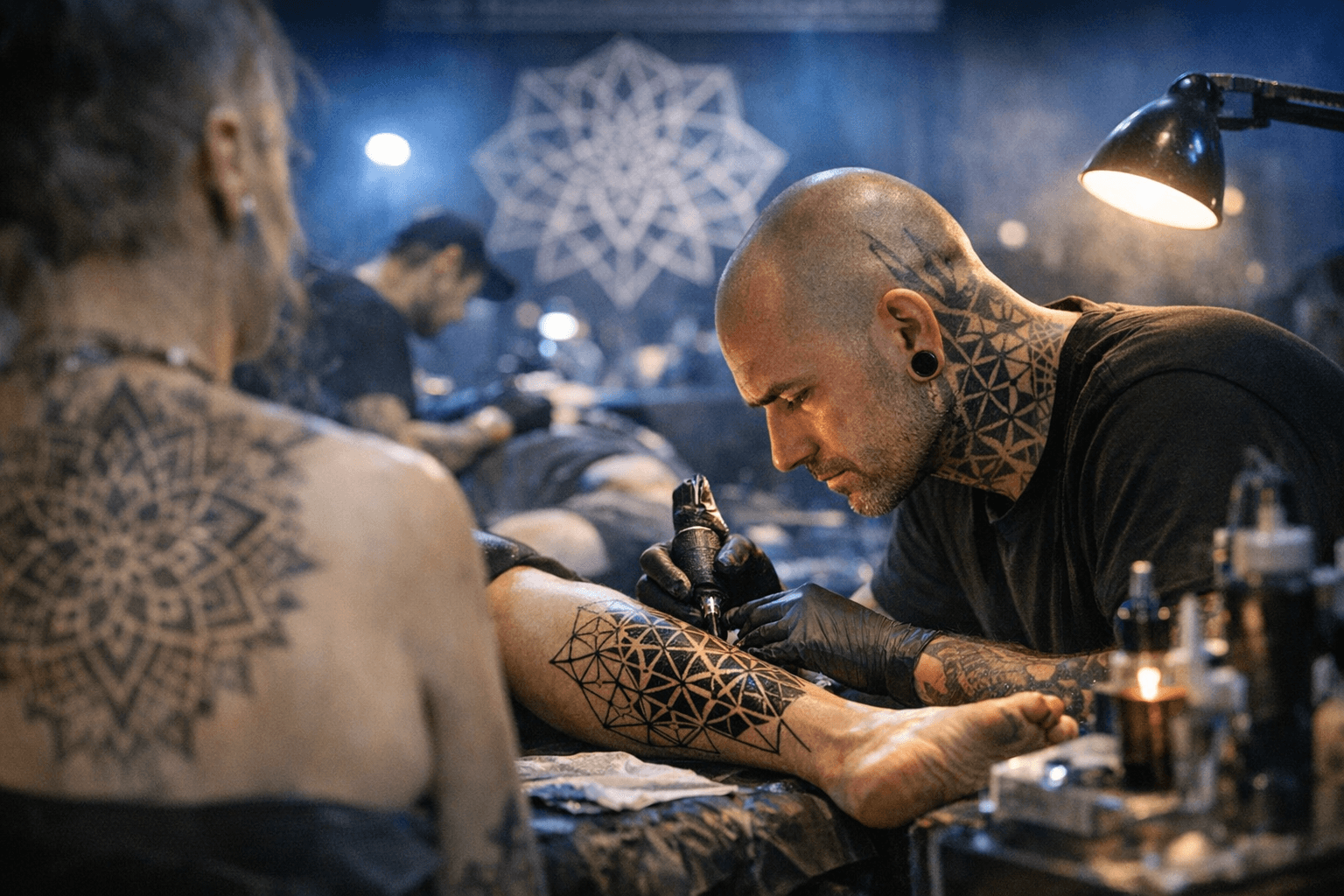
That structure tells you ornamental and geometry are no longer fringe design decisions. They are competitive categories with their own standards. The overlap is obvious to anyone who has watched the scene closely: ornamental work depends on balance, spacing, line control, and visual rhythm, which are the same muscles geometric tattooing needs. The difference is that geometry usually pushes harder on precision and architecture, while ornamental often lets the pattern breathe more like lace, jewelry, or textile.
For a client, the takeaway is practical. If you want a geometric piece that looks expensive instead of crowded, the ornamental crossover is worth paying attention to. It is where artists are proving they can control negative space instead of just filling skin with repeat motifs.
The real standard now is scale, not just neatness
The old assumption that geometry is only about clean lines is getting left behind. At Gods of Ink, the work that stood out was often built at a scale that required the body to be mapped in advance. That means shoulders, sternum, ribs, back panels, and sleeves were being treated as connected architecture, not separate canvases.
This is where negative-space planning becomes non-negotiable. Large geometric pieces fall apart fast when the artist does not understand how the skin will move or how much breathing room the pattern needs. The convention’s emphasis on body suits and large compositions makes that clear. If the piece is too tight, the symmetry chokes. If the spacing is too loose, the design stops reading as intentional.
The precision linework standard is equally unforgiving. In a room full of invited artists, line quality is not a bonus point. It is the entry fee. That is why geometric work can stand out so sharply at events like this: there is nowhere to hide a wobble, a blown corner, or a pattern that was not planned across the body as a whole.
Why the scale of the show matters to geometric clients
Gods of Ink 2026 was the fourth edition in Frankfurt, and the scale has remained remarkably stable. The 2025 show also featured around 400 tattoo artists, which is useful because it shows the event is not expanding by chasing noise. It is holding a high bar and keeping the same concentration of talent. The 2025 edition was the third edition and used a different Messe Frankfurt venue configuration, while the first edition in 2023 was described as a major return of tattoo meet-ups and exchanges.
That arc matters for anyone choosing a geometric tattoo. It shows the style is being shaped in the same international conversation that defines the rest of high-level tattooing. Gods of Ink keeps functioning as a live exchange, not just a photo op. Even with travel disruptions, strikes, and rising costs making it harder for some artists to get to Frankfurt, the convention still pulled in a global crowd and kept the collaboration culture intact.
Tattooing remains one of the rare creative fields where mobility is part of the work itself. Ideas travel with the artist, and the best geometric pieces often show that movement: one studio’s grid logic meets another artist’s ornamental instincts, then the result gets refined on a back piece, a sleeve, or a full torso.
Why Frankfurt keeps producing this kind of signal
Messe Frankfurt’s Hall 1.2 helped make the whole thing work. The hall is described as a column-free exhibition level, which is exactly the kind of space large-scale tattooing needs. Open sightlines, room for live work, and enough flexibility for competition staging all help explain why a convention like this can support body suits, live sessions, and style-specific judging without feeling cramped.
The event’s curator also matters. Miki Vialetto, who is identified as the creator and director of Gods of Ink and a key figure in the international tattoo scene, gives the convention a clear point of view. That is part of why the show feels less like an expo and more like a statement about the culture itself. The whole setup is built around visibility, exchange, and respect, and those values show up directly on skin.
For geometric tattoo fans, the lesson from Frankfurt is blunt: the style is moving up a level. The best work is getting larger, cleaner, and more integrated with ornamental structure, and the artists setting that standard are being invited to prove it in front of the sharpest crowd in the scene. If you are planning a geometric piece now, think bigger than isolated patterning. Think body mapping, negative space, ornamental crossover, and linework that can survive a room full of experts.
This article was produced by Prism’s automated news system from verified source data, official records, and press releases, then run through automated quality and moderation checks before publishing. The system is built and supervised by the people who set the standards it runs under. Read our full AI policy.
Did this article answer your question?