How tattoo blowout can ruin crisp geometric line work
A single depth error can smear a geometric tattoo’s symmetry and spacing. In line-heavy work, blowout is a structure problem, not just a blur.
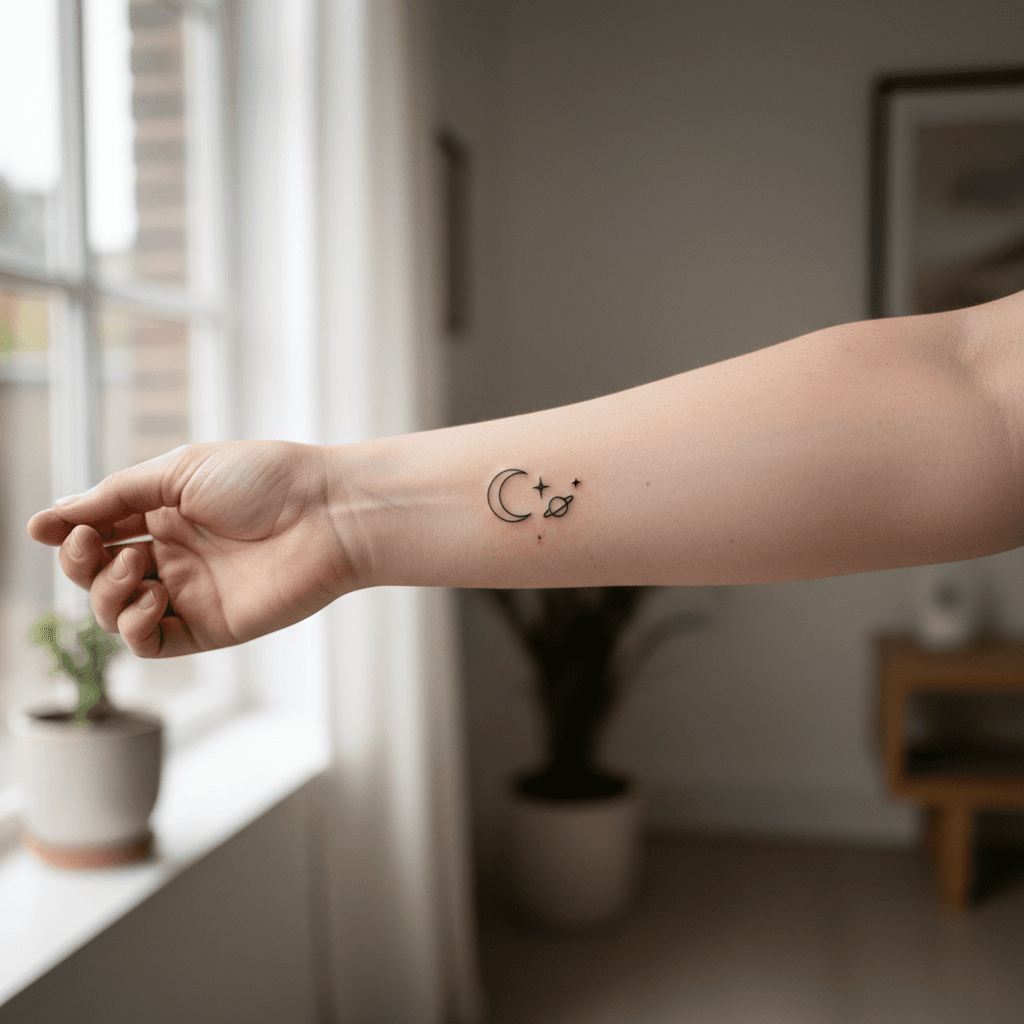
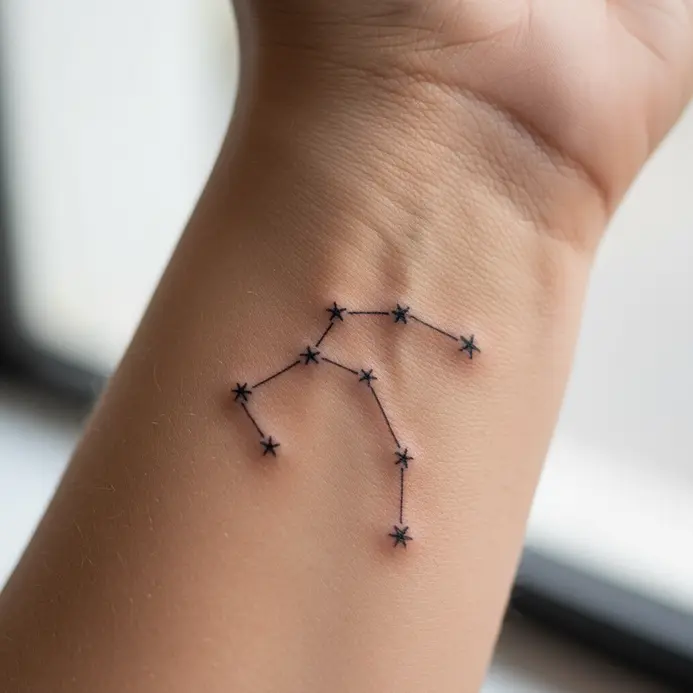
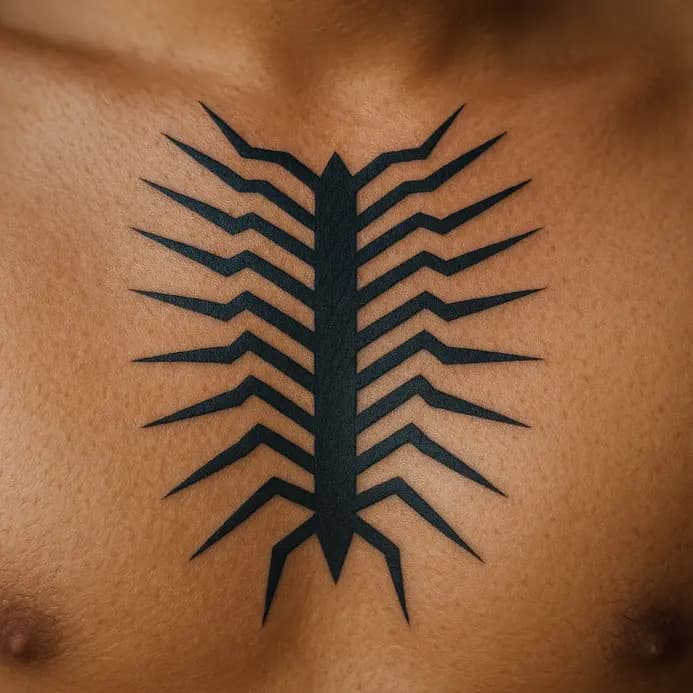
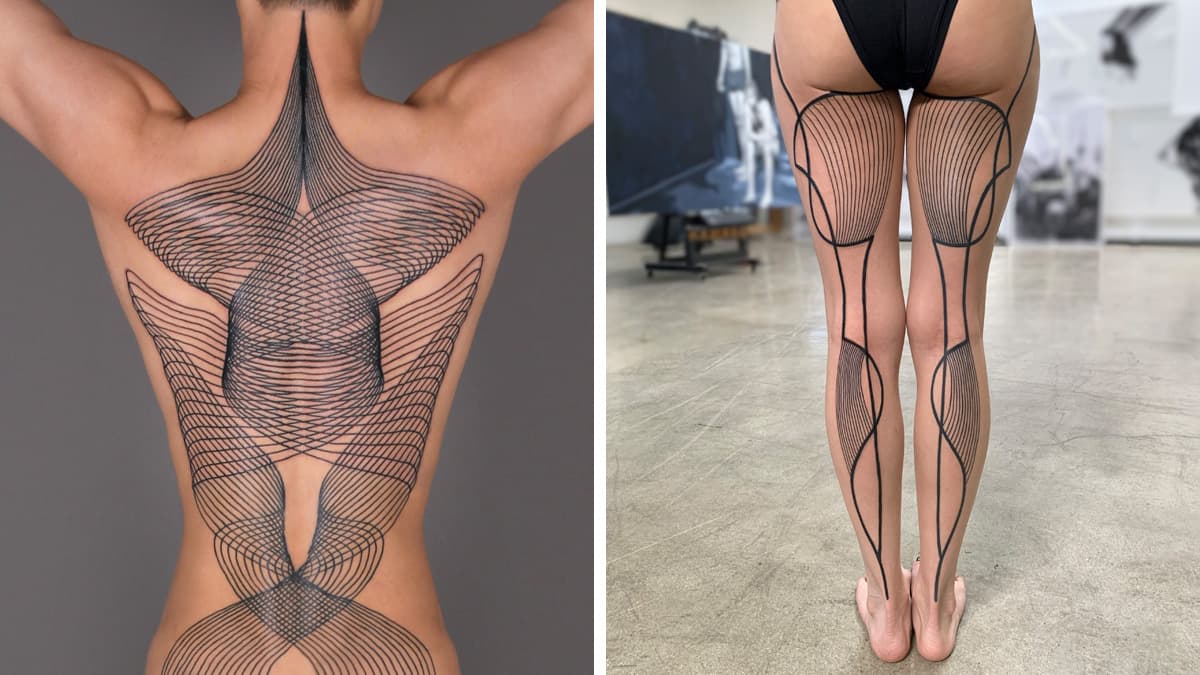
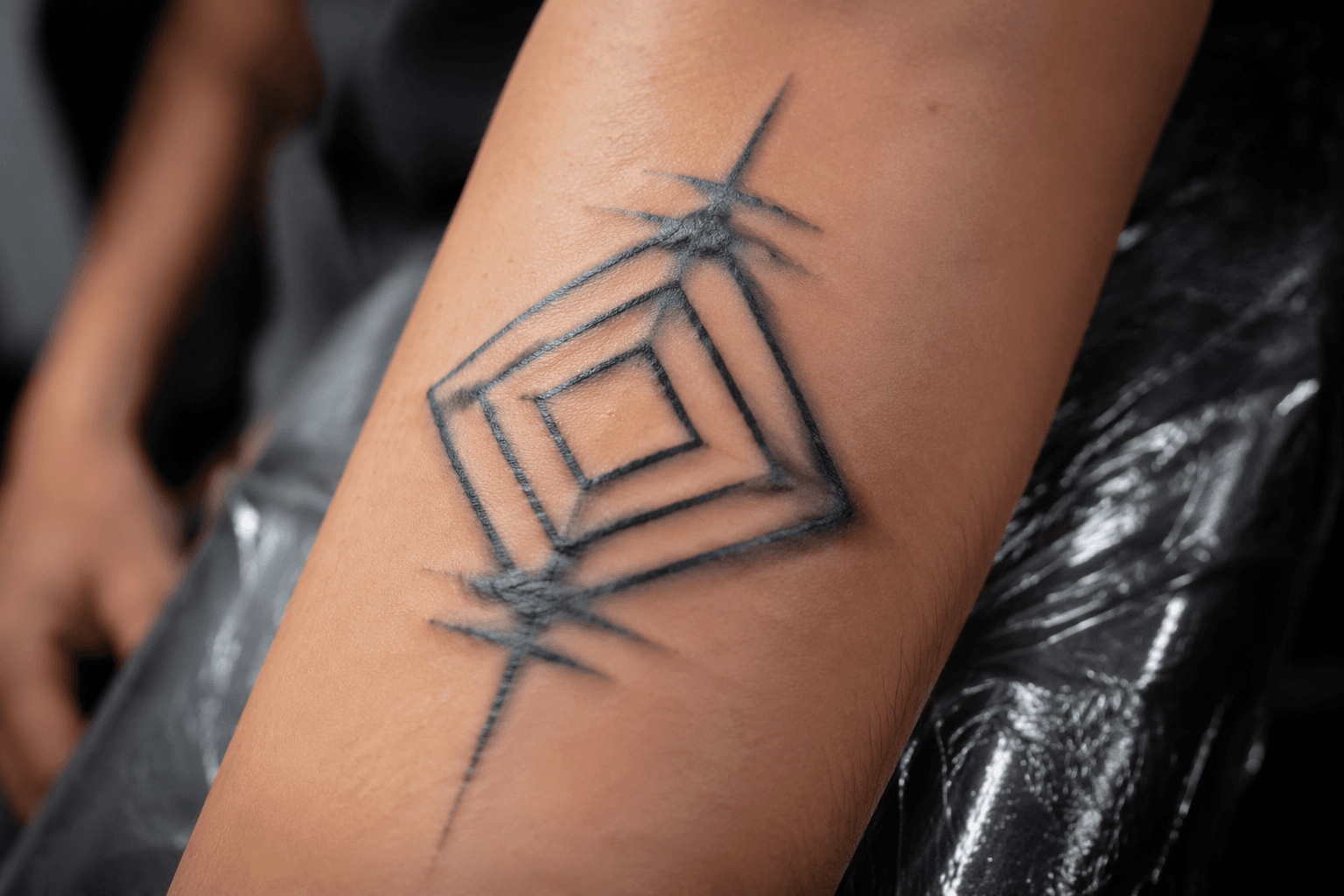
A geometric tattoo lives or dies on clean edges. One blurred line can throw off symmetry, distort spacing, and make the whole design read crooked even if the stencil was perfect. That is why tattoo blowout hits geometric work harder than softer or more illustrative styles: in this lane, crispness is the composition.
Why blowout is such a big deal in geometry
Tattoo blowout happens when ink goes too deep and spreads beyond the intended line, creating a blurry or shadowy halo around the tattoo. Mayo Clinic notes that tattoos are made by inserting ink beneath the top layer of skin, and Cleveland Clinic breaks the skin into the epidermis on top, the dermis in the middle, and the hypodermis at the bottom. The sweet spot is the dermis, and once the needle pushes past it, the ink can migrate where it does not belong.
That matters more in geometric work because geometry depends on visual logic. A mandala ring, a sacred geometry grid, or a straight ornamental border can survive a lot of style variation, but it cannot hide a soft edge the way a painterly piece can. Fine-line geometry is especially exposed because single-needle and 3RL setups leave very little room for error.
Where the risk climbs fastest
The highest-risk placements are the places where skin is thin, bony, or difficult to tension cleanly. The usual problem zones show up again and again: inner wrist, inner bicep, ankle, top of foot, ribcage, side torso, behind the knee, inner elbow, fingers, and outer hand. Related placements such as wrists, hands, feet, ribs, and the collarbone area are also repeatedly flagged as blowout-prone.
That list should make geometric clients pause for a second, because those are exactly the spots where line-based, symmetry-heavy work gets asked to do the most. A thin border on the outer hand can soften fast; a radial pattern over the ribs can look perfect on the day and still drift once healing starts. If your design depends on repeated spacing, concentric shapes, or mirrored angles, a single halo can break the whole rhythm.
What usually causes it in the chair
Blowout is not random bad luck. The common technical causes are straightforward: needle depth, excess pressure, improper stretching, and machine tuning problems. In plain English, the artist either goes too deep, pushes too hard, does not hold the skin correctly, or runs a machine that is not dialed in for controlled linework.
That is why geometry demands more than a pretty portfolio. You want someone who can keep a steady hand at a consistent depth, especially on thin or awkward skin. If the artist treats linework like a race, geometric tattooing is where that speed shows up as a problem, not a virtue.
What to look for before you book
If you want crisp geometry, judge the artist on control, not just style. Clean healed linework matters more than fresh stencil photos, because a fresh tattoo can look deceptively sharp before swelling and settling reveal depth mistakes. Look closely at healed examples of fine-line geometry, ornamental work, and any piece with repeating structure.
- Even line weight across long runs
- Consistent spacing in repeated shapes
- Clean healed photos, not only fresh ones
- Comfort working on hard placements like wrists or ribs
- A portfolio that shows control in fine-line or single-needle work
A strong geometric artist usually shows:
If the portfolio is full of busy screenshots but thin on healed close-ups, that is a warning sign. Geometry is unforgiving, and the work should prove it can survive after the redness fades.
How to prevent blowout before it starts
Prevention is the whole game, because aftercare cannot fix a bad depth decision. Blowout can become visible within hours to days for some tattoos, while other pieces show it over the first few days to weeks as healing unfolds. That delay is exactly why people get fooled by a fresh, clean-looking session and then get hit with the truth later.
A practical prevention checklist looks like this:
1. Pick the right placement. If you want sharp geometry, think hard before choosing inner wrist, fingers, outer hand, ribs, ankle, or top of foot.
2. Prioritize healed work. Ask for examples that show how the artist’s lines settle, not just how they look on day one.
3. Watch for control, not force. Good linework should not look overdriven into the skin.
4. Respect the setup. Fine-line and single-needle work can be gorgeous, but the margin for error is small.
5. Assume healing will reveal everything. If the depth is wrong, time usually exposes it.
That last point is the one people underestimate. The stencil stage is not the verdict. The skin has the final say.
What can be saved, and what usually cannot
Here is the hard truth: blowouts are often permanent, or only partially correctable. Some minor blowouts can be disguised with touch-ups or cover-ups, but those fixes are about managing the damage, not erasing it. Once the ink has spread beyond the intended line, you are usually trying to preserve structure, not restore perfection.
Laser removal is another option, but Mayo Clinic makes clear that tattoo removal is more complicated and expensive than getting the tattoo in the first place, because the ink sits beneath the top layer of skin. That means removal is not a casual cleanup tool for a geometric piece that lost its edge. It is a heavier intervention, and on a line-driven tattoo, it can still leave you with a softer result than you wanted.
For geometric tattoos, that is the real lesson. Blowout is not just an aesthetic blemish, it is a structural threat. When the design depends on symmetry, spacing, and crisp boundaries, the difference between the dermis and the layer below it is the difference between a sharp pattern and a tattoo that starts arguing with itself as soon as it heals.
This article was produced by Prism’s automated news system from verified source data, official records, and press releases, then run through automated quality and moderation checks before publishing. The system is built and supervised by the people who set the standards it runs under. Read our full AI policy.
Know something we missed? Have a correction or additional information?
Submit a Tip