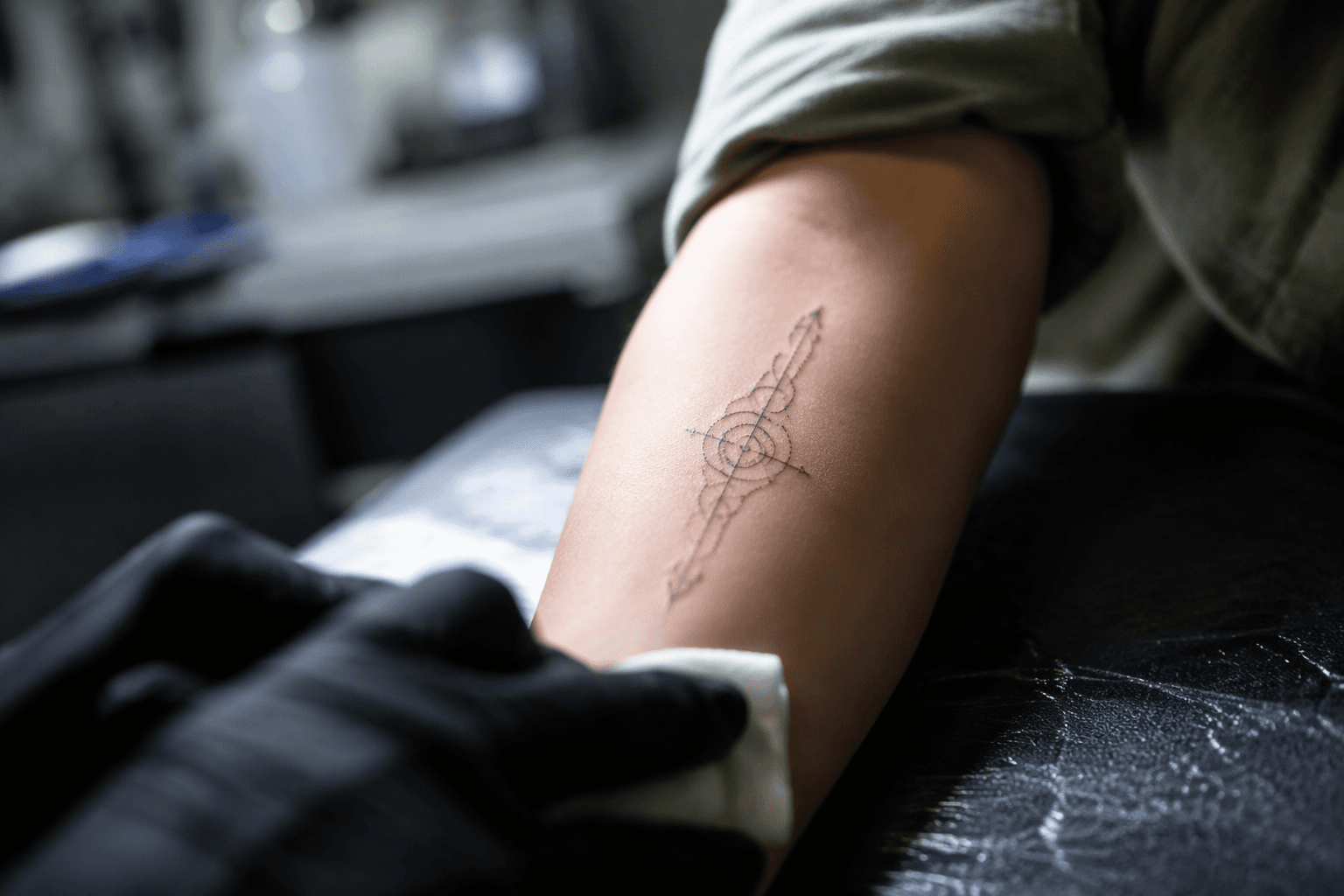
Jewelry tattoos turn skin into permanent geometric accessories
Jewelry tattoos work best when geometry, spacing, and placement all click. The prettiest versions are the ones that still read clean when skin moves.
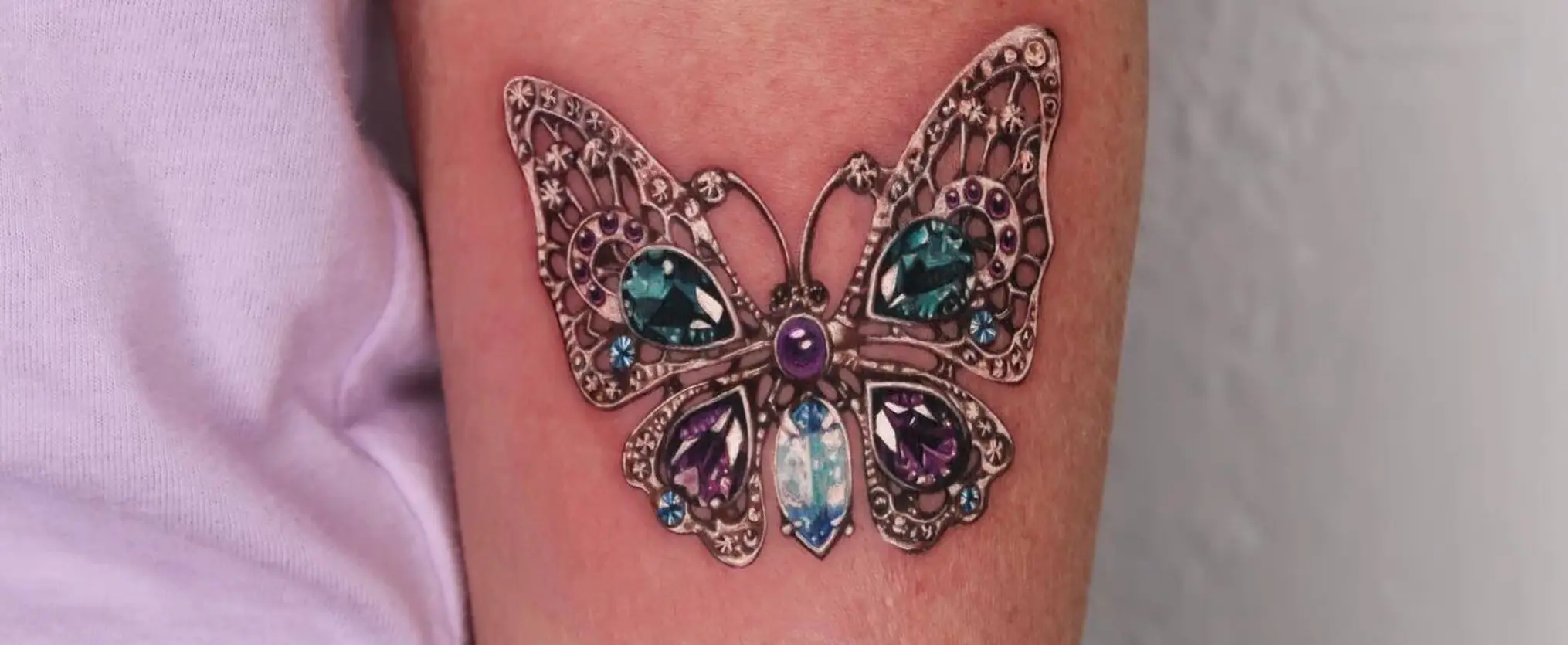
Jewelry tattoos look simple from across the room, but the good ones are built like tiny architectural drawings. The July 8 Inked piece on permanent accessorizing makes the case: necklaces, rings, and gemstone clusters only sell the illusion when the artist controls spacing, symmetry, and placement with near-geometric discipline. That is why this trend sits so naturally beside fine-line geometric work, where a line a few millimeters off can throw off the whole piece.
Permanent accessorizing, not just decoration
The appeal is obvious. Jewelry tattoos turn skin into something that looks adorned without the weight, maintenance, or daily takeoff that comes with actual accessories. Inked’s July 2026 coverage names Ryan Ashley Malarkey, Jenna Kerr, Ryan Smith, Jooa, Irae, and Tsyna as part of that moment, and each of those artists leans on clean contours and sparkle cues to make stones and metal read as dimensional rather than flat.
That visual language has a long echo behind it. Inked has previously pointed out that the earliest known jewelry predates Homo sapiens, with Neanderthals in Europe making pieces about 115,000 years ago. The tattoo version is obviously not archaeology, but it does tap the same human instinct: to mark the body with something that signals value, adornment, and identity at a glance.
Why geometric habits matter here
This trend overlaps with ornamental tattooing more than it first appears. Tattoodo describes ornamental tattooing as one of the oldest styles in the game, rooted in ancient tribal traditions, and says it typically emphasizes geometry, symmetry, black shading, and delicate pointillism. That is the exact toolkit that keeps jewelry tattoos from drifting into costume-jewelry chaos.

The same logic shows up in sacred geometry work, where proportion is everything and resized designs can fall apart fast. A gemstone shape that should feel centered can look lopsided if the negative space is wrong, and a chain link that should suggest weight can look pasted on if the repetition breaks. In other words, jewelry tattoos are not just about drawing pretty objects, they are about making those objects sit inside a strict visual system.
Tattooists working in this lane also have to think in fine-line terms. Tattoodo’s fine-line guide says artists often use round liner needles or even a single needle to create those thin, hair-like lines, and it ties that approach to Chicano tattooing’s single-needle lineage. That matters because jewelry tattoos depend on crisp outlines and subtle interior detail, not heavy contouring that turns a bracelet into a black band.
If you are looking for the right artist, these are the signs that matter most:
- Clean line control at small scale
- A strong sense of symmetry
- Comfortable use of black shading and tiny dotwork
- Enough restraint to leave negative space alone
- Experience placing work so it follows the body instead of fighting it
Placement is half the illusion
The body is not a flat page, and Inked’s anatomy coverage makes that clear. Posture, muscle tone, fat percentage, mobility, and day-to-day activity all change how a tattoo reads, which means the same design cannot be dropped onto every wrist, throat, hand, collarbone, or ankle and expected to work the same way.

That is the technical heart of jewelry tattoos. A bracelet on the wrist has to survive constant flexing and rotation. A chain on the throat has to keep its hang illusion when the neck bends. A gemstone cluster on the hand has to be readable in a place that moves all day and catches wear fast. The best versions are not just centered, they are anatomically negotiated.
This is also why body-specific design is winning over simple flash reproduction. A piece that looks gorgeous on a stencil can fail once it is mapped to real skin if the placement ignores movement, curvature, or the way a limb narrows and expands. Jewelry tattoos reward artists who can draft for the body that exists, not the body in the sketchbook.
The beauty comes with real technical risk
The more delicate the look, the easier it is to lose. Fine-line and ornamental work can be more vulnerable to fading and blur over time, especially when the design relies on thin outlines and tiny sparkle details. Sun exposure is a major culprit, and aftercare mistakes can damage healing lines before the tattoo has a chance to settle properly.
Health is part of the calculation too. The Mayo Clinic says tattoos carry real risks and need careful aftercare, and medical literature shows adverse reactions happen more often in colored tattoos than in black ones. That matters because jewelry designs often lean on vivid gem colors to sell the illusion, which gives you more visual payoff but also more potential trouble.

That does not mean color is off-limits. It means the decision should be deliberate. If the design depends on a sapphire, emerald, or ruby effect, you are trading toward more maintenance risk than a black-and-gray ornamental piece, and the aftercare has to be treated like wound care, not just routine lotion and hope.
What makes the style worth pursuing
Jewelry tattoos are worth the commitment when you want something subtle that still reads as special up close. They borrow the language of luxury without needing a huge canvas, and at their best they give you the elegance of an accessory with the permanence of a tattoo. But they only work when the artist understands structure as well as decoration.
That is the real overlap with geometric tattooing. Both styles depend on measured spacing, clean repetition, symmetry, and precise placement, and both punish sloppy drafting immediately. The cleanest jewelry tattoos look effortless because the hard part happened in the planning: where the center lands, how the piece follows the wrist or collarbone, how much detail the eye can hold before it turns noisy, and how the design will hold up once the skin starts doing what skin always does.
The trend sells permanence, but the technical discipline is what makes the illusion believable. When the geometry is right, the body does the rest.
This article was produced by Prism’s automated news system from verified source data, official records, and press releases, then run through automated quality and moderation checks before publishing. The system is built and supervised by the people who set the standards it runs under. Read our full AI policy.
Did this article answer your question?