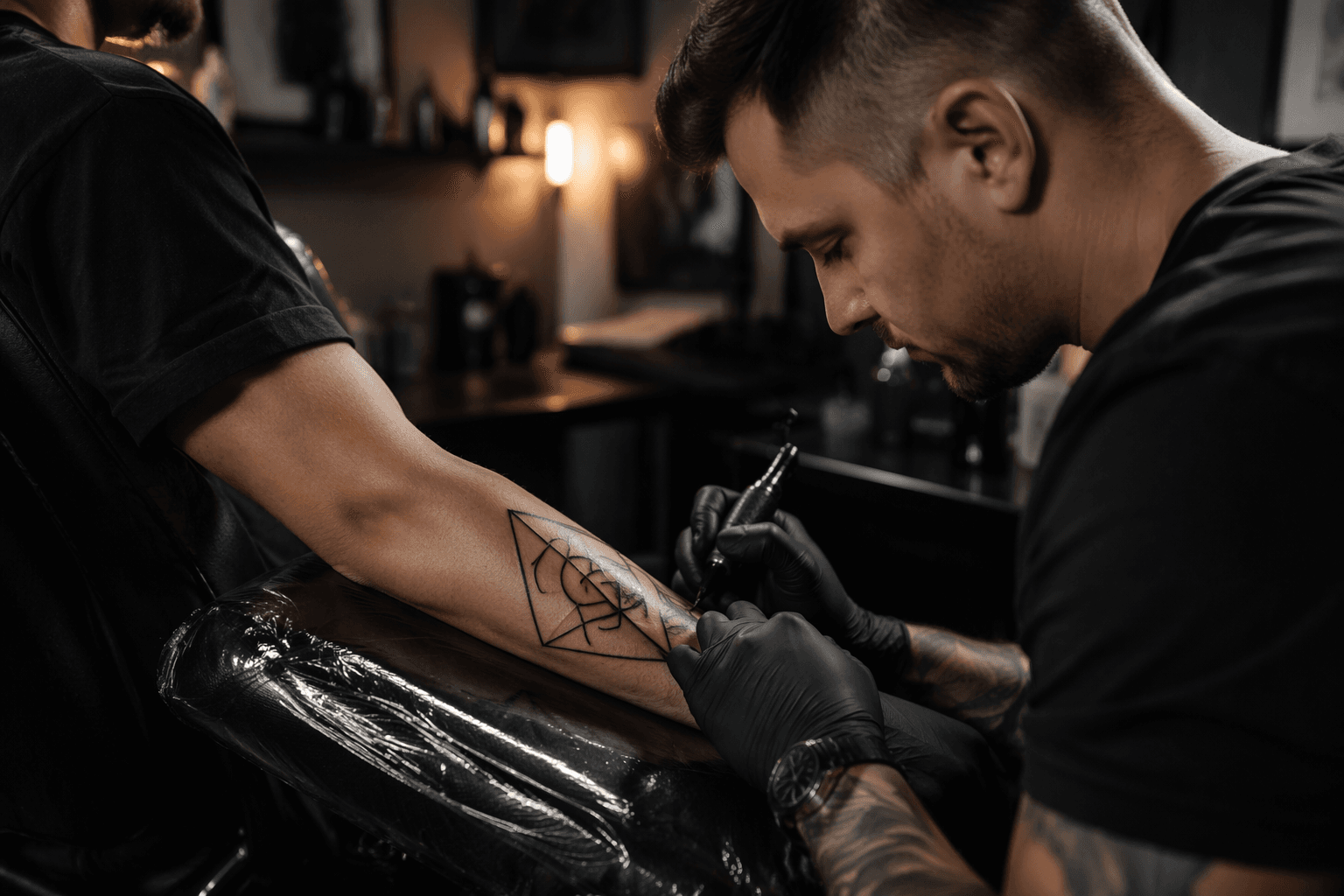
Julia Gillian Sakina turns fine lines into body-conscious geometric jewelry
Julia Gillian Sakina treats fine line like structure, not decoration, and the result reads like jewelry mapped to the body. Her method points geometric tattooing toward more wearable, anatomy-led design.
Fine line is becoming structure, not just delicacy
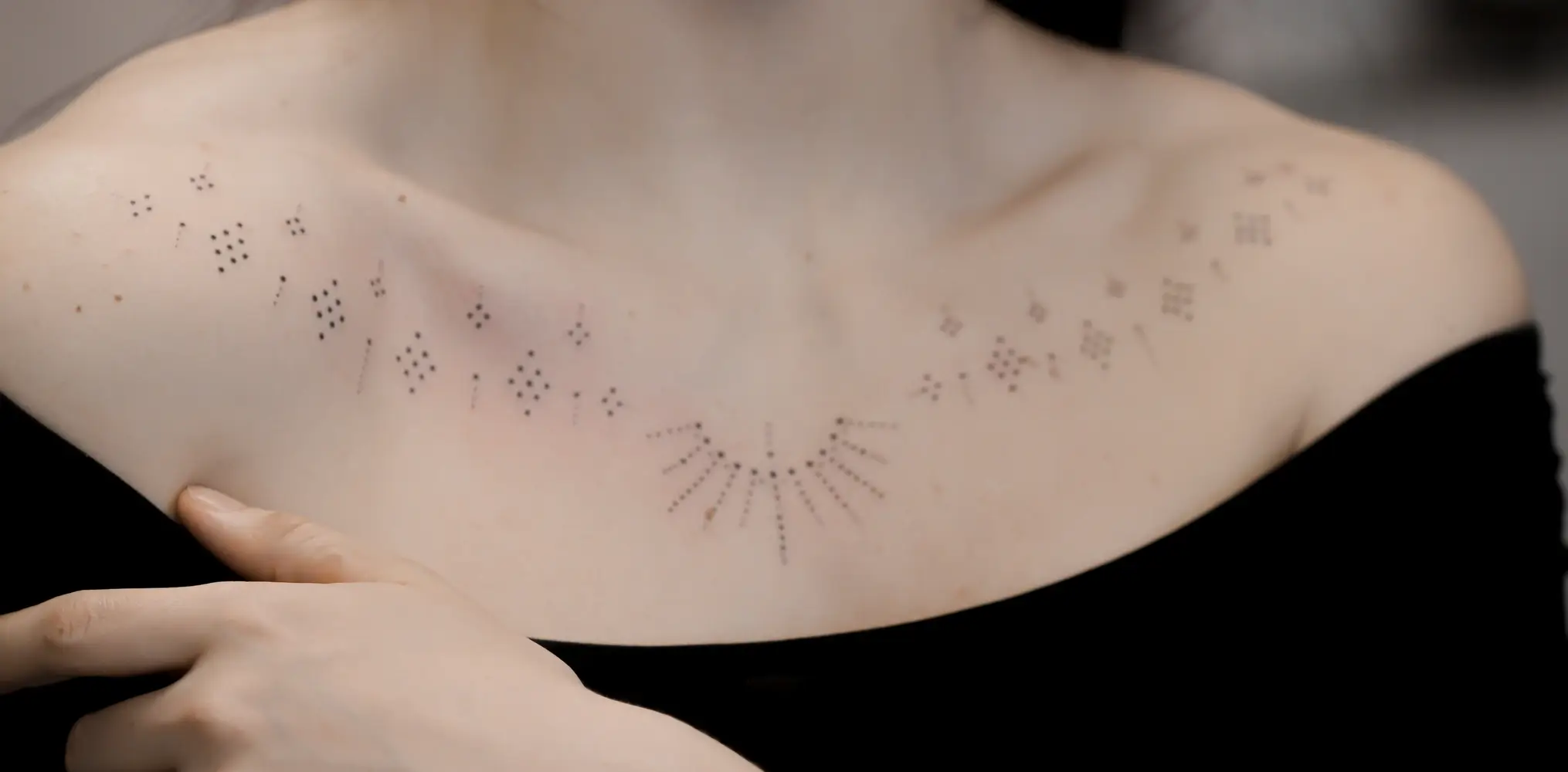
Julia Gillian Sakina is pushing fine line away from the idea that it only has to be small, delicate, and pretty. In her Jewelry Body Design approach, the line work behaves more like a structural system, built around the body instead of simply placed on top of it. That shift matters because it changes the goal: the tattoo is not just an image, it is a composition that has to live on a moving human frame.
That is also why her work feels so relevant to geometric tattoo readers. The most interesting thing happening here is not just thinner lines or cleaner edges. It is the way symmetry, spacing, and anatomy are being used together so the tattoo reads like permanent jewelry, not a sticker laid flat on skin.
Placement comes first, always
Sakina starts with anatomy, then builds outward. Placement is the first decision, and every line, gap, and transition gets mapped to how the body moves and how the tattoo will age over time. That is a very different workflow from clients who want something fast, minimal, and sharp right now without thinking about what happens after the skin settles.
This is where her approach gets more practical than trendy. A tattoo that complements the wearer has to work with the curve of a shoulder, the bend of a wrist, or the plane of a collarbone. If the design fights the body, it may look clever in a photo and awkward in motion.
Why this looks so geometric
Even when Sakina is working with ornamental patterns, florals, or dragons, the pieces are not laid on the skin like decals. They are built along bone structure and natural lines so the composition feels integrated. That is the geometric undercurrent in her work: the body becomes the frame, and the tattoo has to answer to that frame.
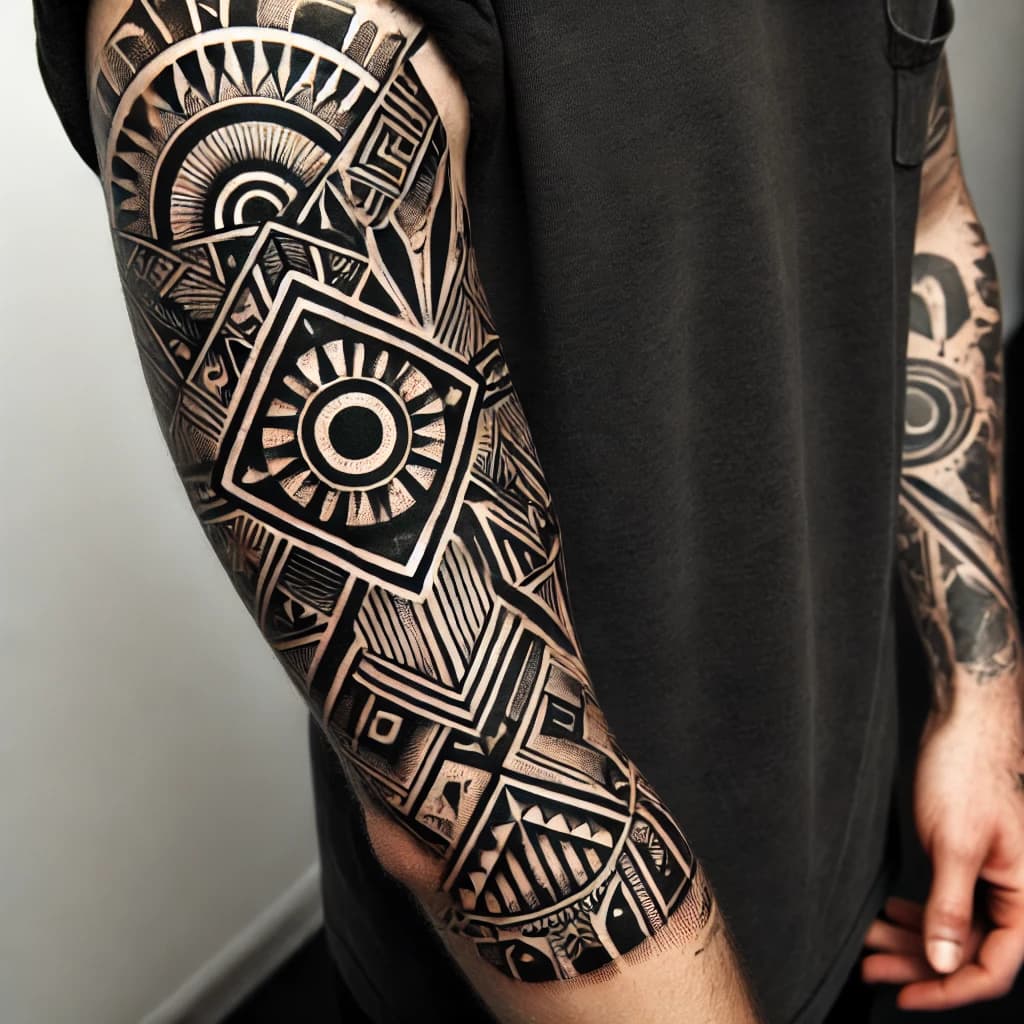
This is exactly where ornamental tattooing and geometric tattooing overlap. Ornamental work already leans on symmetry, fine lines, mandalas, mehndi-inspired patterns, sacred geometry, and decorative repetition. Sakina takes those same tools and uses them in a more body-conscious way, which makes the result feel less like isolated motif work and more like a wearable system.
What readers should look for before booking this kind of design
If you are thinking about a fine-line geometric piece, the usual questions are not enough. You need to ask how the design will move, where it will sit, and whether the spacing still makes sense when the body bends.
A smart consultation should cover:
- How the composition follows bone structure rather than ignoring it
- Where the negative space needs to stay open so the tattoo can breathe
- Which lines are doing structural work and which are only decorative
- How the design may soften over time as the skin changes
That last point matters because fine line has less visual mass than traditional work. There is simply less room for sloppiness, and less room for a design that depends on every hairline detail staying perfect forever.
A slower process is part of the design
Sakina does not rush the drawing phase. She develops multiple options, steps away from them, and comes back with fresh eyes before sending anything to a client. That slower process is not just a creative preference, it is a form of client education, because it forces the design to earn its place on the body.
That discipline is a useful counterweight to the current market for quick, minimal tattoos that look good immediately. Immediate sharpness is not the same thing as long-term quality. A tattoo that is built with placement and aging in mind usually ends up looking better than one designed only for the first week.
Why aging should shape the design from day one
Tattoo longevity is tied to where the tattoo sits on the body. Areas with more friction, more movement, and more sun exposure tend to age less cleanly, while quieter spots generally give detailed work a better chance to hold. That is why a body-conscious design strategy is not just aesthetic, it is practical.
The science backs up the caution. A PubMed-linked case report describes tattoo blowout as possible as early as one day after application, and it is associated with thin skin and technique issues. A 2023 in-vivo study also found tattoo pigments in both the epidermis and dermis, examining one freshly applied tattoo alongside 10 tattoos older than three years, which is a reminder that the skin is always part of the final result.
Dermatology literature adds another layer: the most common tattoo complications are hypersensitivity reactions, with other inflammatory patterns including granulomatous reactions and pseudolymphoma. In other words, the skin is not passive canvas. It is living tissue that can react, shift, and alter how the design reads.
Why this approach fits the moment
The broader tattoo landscape helps explain why Sakina’s work is landing now. Pew Research Center reported in 2023 that 32% of American adults have at least one tattoo, including 22% who have more than one. Women are more likely than men to have tattoos, at 38% versus 27%, which helps explain why so much of Sakina’s client base is female and why ornamental, body-integrated design has such strong momentum.
That mainstreaming creates a higher bar. As more people get tattooed, the market gets less impressed by novelty alone and more interested in tattoos that age well, sit well, and feel intentional on the body. Sakina’s method answers that demand directly: the design has to belong to the wearer, not overpower them.
What geometric tattoo readers can take from Sakina’s work
Her approach points to where geometric and fine-line tattooing may be heading next. The future is not just finer needles or denser detail. It is smarter composition, with symmetry, negative space, and anatomy working together so the tattoo reads like a system rather than a single motif.
That is also where the long game becomes obvious. IBISWorld says the U.S. tattoo artists industry has long-term data and forecasts through 2030 in its 2025 report, which tells you this is not a passing visual gimmick. Body-conscious geometric design is part of a larger shift toward tattoos that are built to live with the body, not just decorate it for a moment.
This article was produced by Prism’s automated news system from verified source data, official records, and press releases, then run through automated quality and moderation checks before publishing. The system is built and supervised by the people who set the standards it runs under. Read our full AI policy.
Did this article answer your question?