Mandalas have spiritual roots, bold geometric tattoos suit larger placements
Mandalas were never a men’s-only symbol. The real edge comes from scale, blackwork, and how the design follows the body.
The symbol is older than the label
Mandalas get marketed with all kinds of hard-edged shorthand online, but that framing misses the point. At their root, they are sacred diagrams from Hindu and Buddhist practice, built for rites, meditation, and the idea of mapping the universe itself. That is a long way from a demographic tag, and it matters because it changes how you read the tattoo before you ever talk about style.
The Metropolitan Museum of Art describes mandalas as diagrams developed to support Vajrayana Buddhist practice and guide devotees toward enlightenment. Britannica goes further, describing the mandala as a consecrated space, a receptacle for gods and universal forces, and a representation of the universe. In other words, the image is not just decorative geometry. It is a visual system with spiritual weight, and that is why it still hits so hard on skin.
Why the design reads stronger when it gets larger
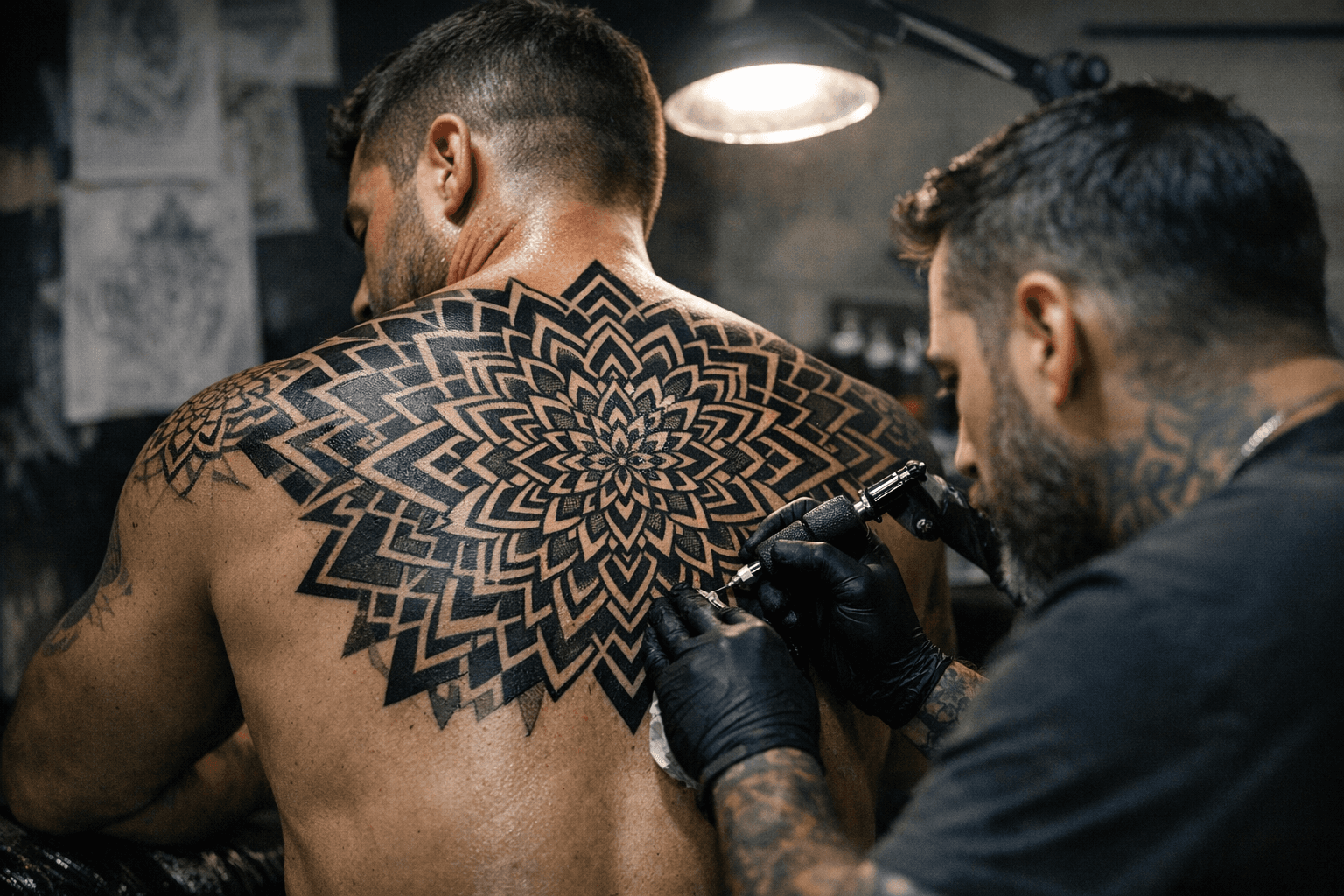
The biggest mistake with mandala tattoos is treating them like a flat badge instead of a structure. The boldest versions work because they give the design room to breathe: heavier fills, more blackwork, larger placements, and geometric extensions that push beyond the circular core. When the piece is too small or too delicate, the symbol loses the tension that makes it feel powerful.
That is where the old online habit of gendering the design starts to look lazy. The real distinction is not “for men” versus “for women.” It is whether the artist uses density, contrast, and placement to make the tattoo feel grounded. A mandala with solid blackwork and clean radiating lines reads completely differently from a light ornamental version, even when both carry the same sacred geometry.
The body shape does half the work
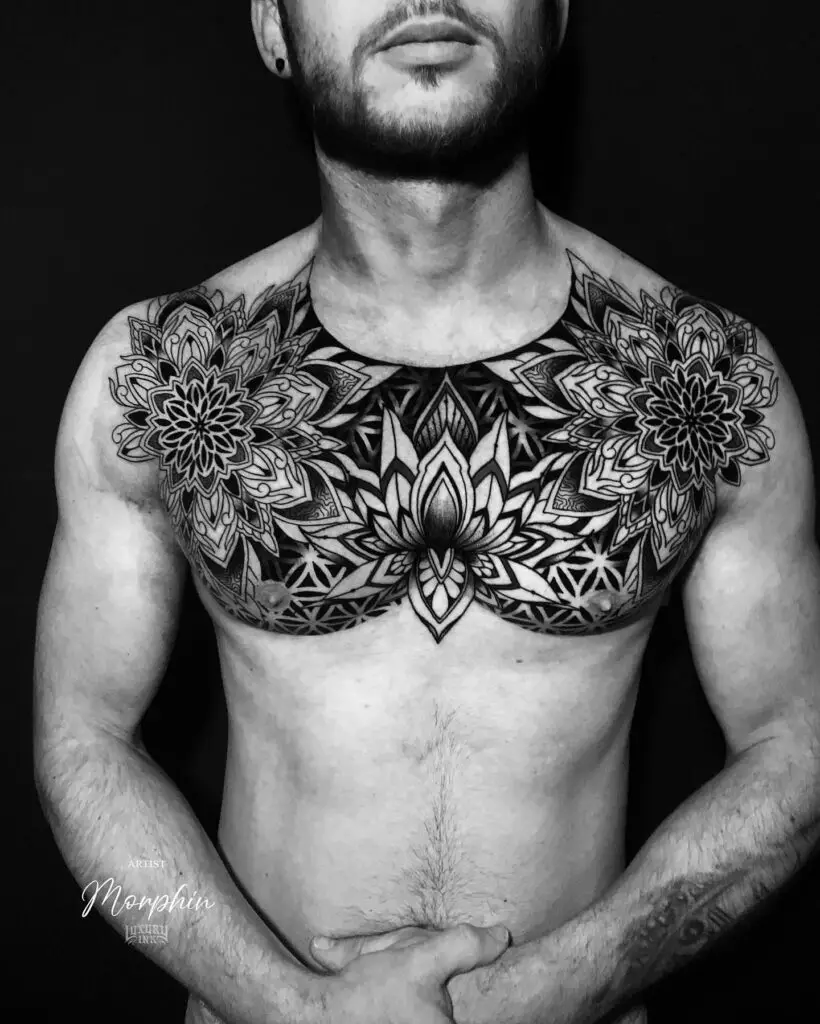
One reason mandalas keep showing up on chests, shoulders, backs, and sleeves is that the body already gives them a natural frame. A blackwork chest mandala works because the chest can hold a circular structure without the image feeling squeezed. A shoulder cap mandala follows the roundness of the joint, so the pattern moves with the body instead of fighting it.
The Metropolitan Museum of Art notes that mandalas can imagine a tiered sacred space, with gates leading from the outside in through increasingly sacred registers. That idea translates beautifully to tattoo composition. The center can feel like the core, while the outer rings, points, and linework become the threshold, and the placement on a rounded body part makes that progression feel physical instead of theoretical.
The styles that make the geometry feel intentional
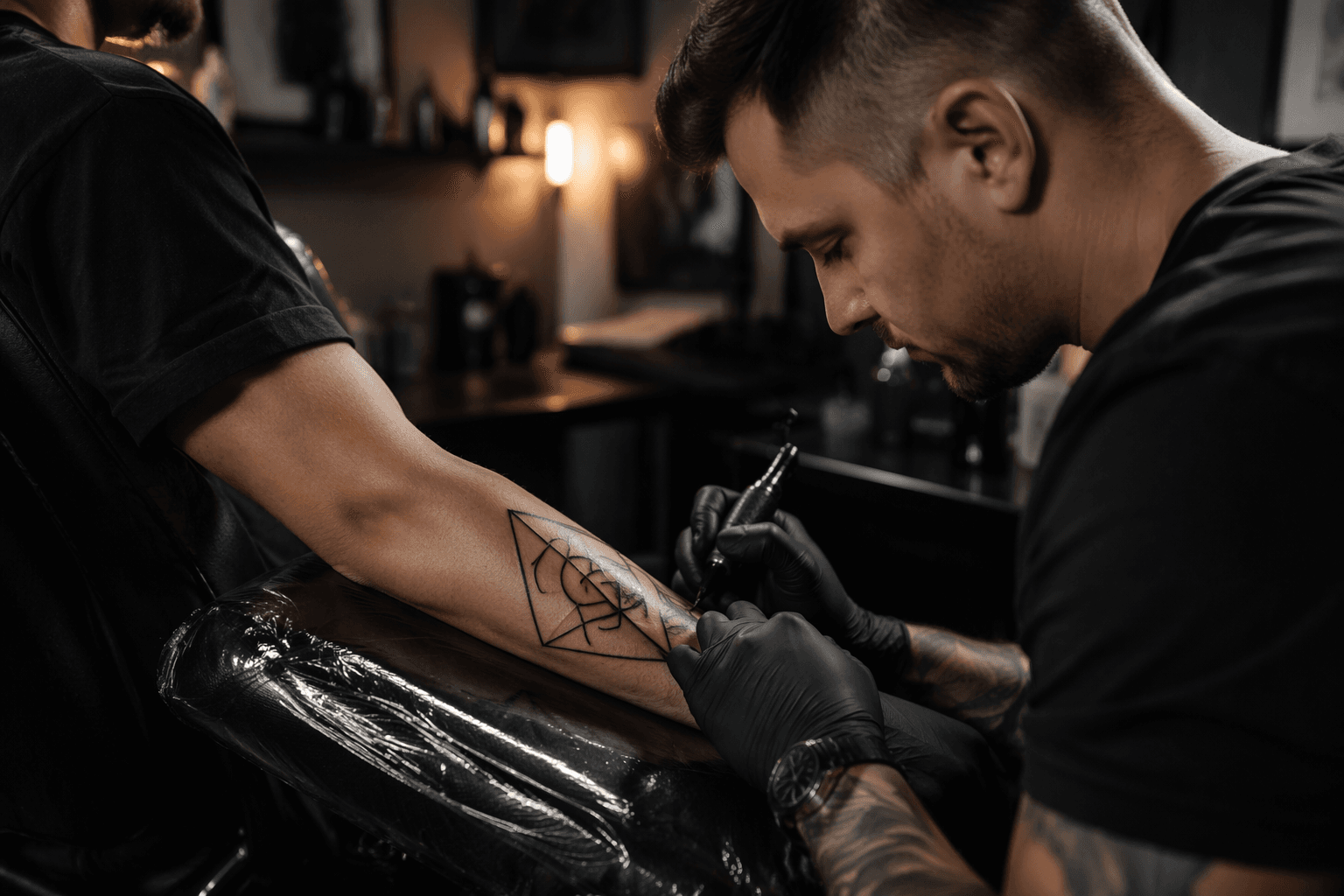
The strongest mandala tattoos do not rely on symbolism alone. They also need technical discipline, especially when the design leans into blackwork, dotwork, or extended geometry. A geometric forearm mandala, for example, can add triangles and radiating linework beyond the central circle, which gives the piece a more architectural feel. It stops being just an emblem and starts reading like a built structure.
A dotwork upper arm mandala takes a different route. Instead of a heavy solid fill, the texture comes from density. That can make the piece feel softer up close while still holding its shape from a distance. For readers who care about line quality and visual clarity, this is the difference between a mandala that looks merely busy and one that feels engineered.
Why the style exploded, and why that matters for your choice
Inked magazine says mandalas have exploded in popularity over the last ten years and are now among the most common tattoos many artists do. That popularity has a downside, because once a motif becomes common, a lot of people start copying the surface without understanding the structure. The result is a flood of pieces that look interchangeable.
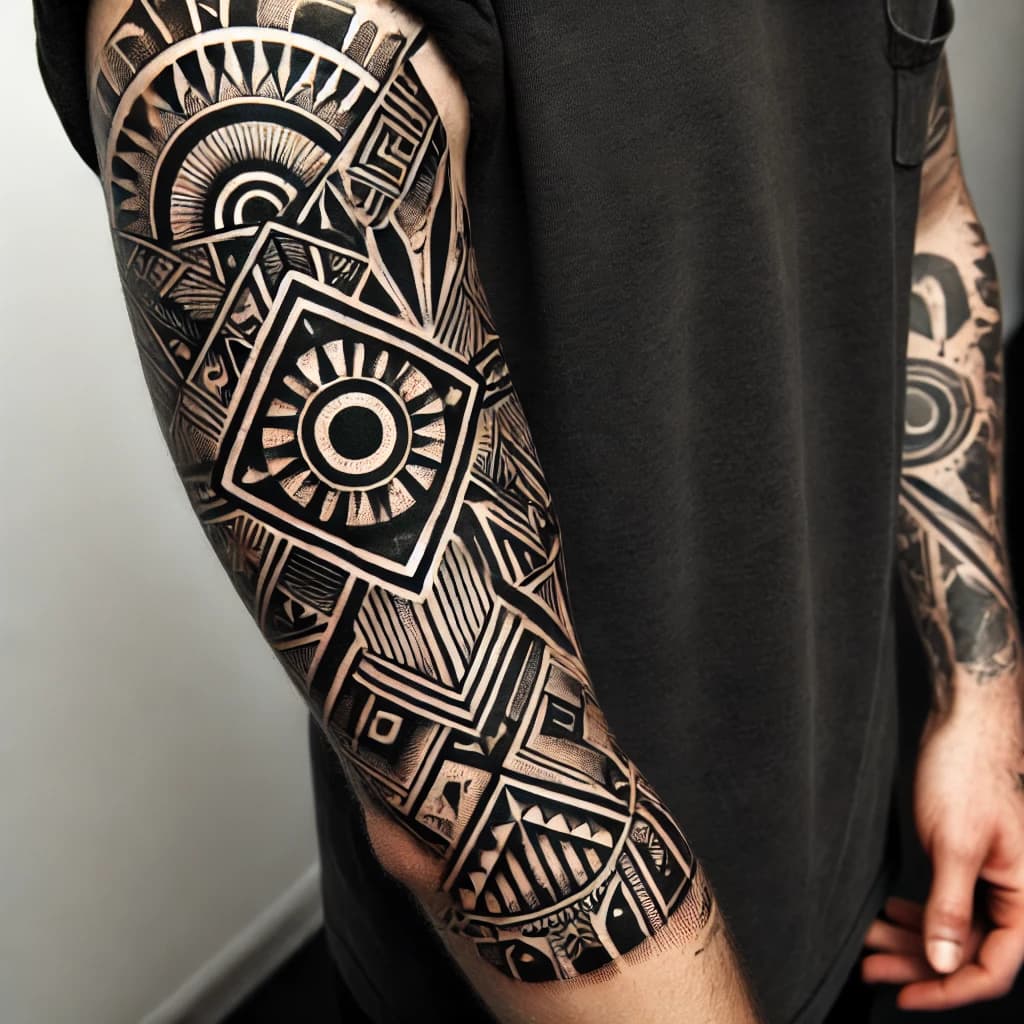
The better route is to treat the mandala as a framework, not a preset. That is where larger placements and custom geometry earn their keep. A full back mandala can hold the detail that a forearm cannot. A sleeve component can be built around a central mandala and extended with additional geometry or even tribal elements, as long as the composition stays coherent.
Ornamental beauty is part of the story too
Not every mandala tattoo needs to be heavy with meaning, and that is another reason the design has stayed relevant. Tattoodo’s ornamental tattoo guide makes a useful point: ornamental tattoos can work when you do not necessarily want or need your tattoo to mean anything, and just want it to be beautiful. That gives the style real range.
Still, beauty and meaning are not opposing forces here. The best mandala tattoos often do both at once. They can be purely visual on one level and deeply symbolic on another, which is exactly why they keep crossing from spiritual imagery into mainstream tattoo culture without losing their appeal.
The placement choices that make mandalas feel bold
If you want a mandala to feel assertive rather than dainty, placement is doing as much work as the pattern itself. The chest, shoulder, upper arm, forearm, and back all give the artist more room to build contrast and to let the circular structure settle into the body. Even neck placements and sleeve sections can work when the design is scaled to the area instead of squeezed into it.
The key is to respect the body as part of the geometry. A mandala succeeds when the artist uses the contours of the skin, not just the skin as a blank page. That is why the bolder pieces feel so satisfying: the symbol stays intact, the structure stays legible, and the tattoo lands with the kind of visual force that smaller, lighter versions usually cannot match.
The real lesson
Mandalas have survived because they can do two things at once: carry spiritual depth and look brutally clean when the geometry is right. The modern tattoo world may dress them up in gendered language, but the design itself has always been bigger than that. What makes a mandala feel bold is not who it is supposedly for. It is how much space it gets, how much black it carries, and how honestly it follows the body’s shape.
This article was produced by Prism’s automated news system from verified source data, official records, and press releases, then run through automated quality and moderation checks before publishing. The system is built and supervised by the people who set the standards it runs under. Read our full AI policy.
Did this article answer your question?