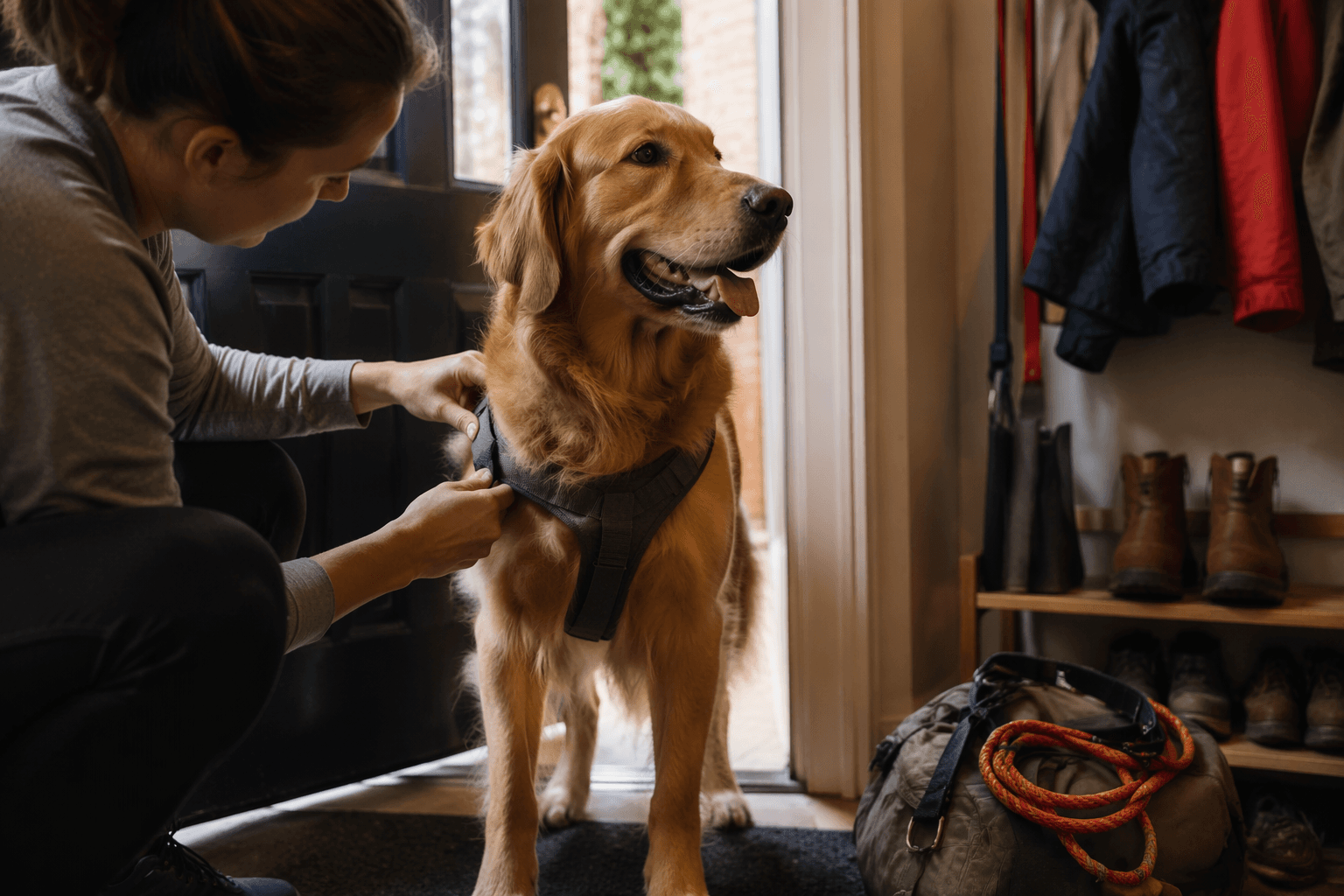
AKC says energetic dogs need exercise tailored to age and breed
There is no magic daily mileage for a hyperenergetic dog. AKC’s latest guide says age, breed, and health decide whether your dog needs more work, more brain games, or more rest.

The bad habit most energetic-dog owners fall into is chasing one daily number. The American Kennel Club’s May 19 exercise guide makes the better point: exercise has to fit the dog in front of you, not a template. A puppy, a fit adult herding dog, and a senior mixed-breed with creaky joints can all look “high energy,” but they need very different plans if you want the dog to stay sound, sane, and trainable.
Puppies need bursts, not marathons
The first mistake is treating a growing puppy like a tiny adult athlete. AKC’s puppy guidance says young dogs need both mental and physical exercise, but in short bursts because they are still growing and can be overtaxed by one hard session. That matters more than most owners admit, especially when the puppy is showing off with those frantic zoomies that can hit several times a day. Those bursts are normal; they are not a license to run a growing dog into the ground.
The real trap is overexertion. AKC warns that too much can lead to illness and injury in growing puppies, which is why a clever mix of play and rest beats a heroic “one long walk” mindset. If the puppy is mentally fried, physically sore, or getting wild at the wrong times, the answer is usually not more intensity. It is a better rhythm.
Breed matters, and it matters a lot
Once a dog is grown, breed starts pulling hard on the equation. AKC says high-energy breeds need more exercise than lower-energy dogs, and that is the part people ignore when they pick a future hiking partner, agility prospect, or adventure dog. A dog built to work all day is not going to be satisfied by the same loop around the block that keeps a calmer breed content.

That mismatch is where a lot of so-called “bad behavior” starts. A smart, athletic dog that does not get enough movement can turn bored, destructive, or impossible to settle. The point is not to wear the dog out until it collapses. The point is to match the dog’s engine with the right job.
If the dog is bored, the fix is not always more miles
A lot of owners assume a frantic dog just needs a longer walk, but boredom is often less about physical stamina and more about understimulation. Vetster’s 2026 wellness guidance describes boredom in dogs as a state of unmet behavioral needs, and it usually improves when the dog gets enough exercise, social interaction, and mental stimulation. That is the useful part for hyperenergetic dogs: if the brain is underfed, the body often looks overcharged.
The American Veterinary Medical Association makes the same case from a different angle. Walking is not just physical activity; it is mental work because dogs are taking in smells, sights, and sounds far beyond the yard. That is why a plain neighborhood walk can do more than people think, especially when it is structured enough to let the dog actually process the world instead of dragging the leash from curb to curb.
The best plan uses more than one kind of movement
AKC’s guide does not pretend that exercise has to mean one thing. It recommends walks, play sessions, swimming, fetch, biking, and hiking, which is the right range for a community built around dogs that want a real outlet. Different dogs thrive on different outlets, and the best routine often mixes physical exertion with jobs that make the dog think.
That is where a lot of owners get the best return on time. A walk can settle one dog; fetch can unlock another; swimming can be the difference for a dog that needs low-impact work but still has serious drive. The goal is not to pick the hardest activity possible. The goal is to find the one that fits the dog’s body and temperament without creating a new problem.
Know when exercise is the wrong medicine
Some dogs are not just underexercised. They are uncomfortable. AKC says owners should talk to a veterinarian if a dog has a condition such as hip dysplasia or heart or respiratory issues before building a new fitness routine, and that advice matters because a hard-charging plan can make a hidden problem worse.
Merck Veterinary Manual explains hip dysplasia as abnormal development of the hip joint, especially in large dogs, and says excessive growth, exercise, nutrition, and hereditary factors all play a role in whether it develops. Clinical signs can worsen after exercise, and lameness plus a bunny-hopping gait are among the signs to watch for. If a dog seems worse after activity instead of better after a short recovery, that is not a conditioning issue. That is a vet issue.
Senior dogs still need a job, just a different one
Older dogs are not supposed to become couch ornaments. AKC’s broader fitness guidance says senior dogs still need movement, but the intensity and duration should be adjusted to what their bodies can safely handle. The point is maintenance, not punishment. A senior dog that moves regularly often keeps more comfort, more mobility, and more engagement than one that gets pushed hard and then pays for it later.

That lines up with AKC’s advice to get veterinary clearance before starting a new fitness plan. It is simple common sense, but it is the kind of common sense people skip when they are focused on calories, mileage, or the idea that a tired dog is automatically a healthy dog. For older dogs, the safer target is usable movement, not exhaustion.
Weight control is part of the exercise picture
Exercise also matters because too many dogs are carrying too much weight. AVMA-linked research has estimated that roughly 35% to 40% of adult dogs are overweight or obese, which is a huge number for a problem owners still tend to normalize. When weight becomes part of the picture, a controlled exercise plan is not just about burning energy. It is part of protecting the dog’s overall condition.
A Journal of the American Veterinary Medical Association study found that when controlled exercise was paired with dietary weight loss, dogs avoided losing lean body mass. That is the detail worth keeping in mind when you see a heavy dog start a program. The goal is not just a smaller dog. The goal is a fitter dog that keeps the muscle it needs to move well.
The real lesson in AKC’s guide is the one hyperenergetic dog owners already learn the hard way: the right amount of activity is never a single number. It is the right mix of movement, thinking, recovery, and restraint, scaled to age, breed, and health. Get that balance right, and the same dog that was bouncing off the walls becomes exactly what you wanted in the first place, a dog with an outlet that finally fits.
This article was produced by Prism’s automated news system from verified source data, official records, and press releases, then run through automated quality and moderation checks before publishing. The system is built and supervised by the people who set the standards it runs under. Read our full AI policy.
Did this article answer your question?